Lawsuit alleges companies collected $30 million in ‘illegal wager on human life’
Sep 24, 2026 | 5:19 pm ET

Description
(Photo by Mohamad Faizal Bin Ramli/iStock/Getty Images Plus)
Another Iowa lawsuit has been filed based on claims of illegal wagering on people’s life expectancy through insurance policies.
The lawsuit involves the late George A. Neukom Jr. of Florida and two multimillion-dollar insurance policies that were allegedly taken out on Neukom’s life by people unknown to him. After Neukom died three years ago, a bank and two companies collected the policies’ death benefits. The lawsuit claims the estate is legally entitled to recover those benefits.
The lawsuit claims Neukom bore no financial risk from the policies’ purchase since it was strangers who paid the premiums on the policy, expecting to collect a profit either by receiving the policy’s proceeds when he died or by selling the policy to yet another group of investors who also were strangers to Neukom.
While the practice of wagering on the life expectancy of strangers through insurance policies dates back to the 16th century, the spread of stranger-originated life insurance, or STOLI, policies originated in the early 2000s. The policies are designed to serve the interests of institutional investors who hope to profit on people’s death through high-value policies that serve no traditional insurance-related need.
STOLI polices are widely considered to be illegal, and under the state law of Delaware, where many insurance companies are incorporated, a decedent’s estate can recover from the investors any proceeds that were paid out through a STOLI policy. Because of those laws, civil lawsuits seeking recovery of death benefits are on the rise.
In the newly filed Iowa lawsuit, Neukom’s estate is suing U.S. Bank, Wilmington Trust and two companies identified in court records only as “Company A” and “Company B.”
According to the lawsuit, Neukom was a resident of Florida when he died on Sept. 5, 2023. The lawsuit over his life insurance is filed in Iowa due to the involvement of Principal Life Insurance Company, which is based in Des Moines and which allegedly collected the premiums on Neukom’s life-insurance policies from U.S. Bank and Wilmington Trust.
According to the lawsuit, from 2011 until Neukom’s death in 2023, U.S. Bank was the owner of, and the beneficiary under, a $20 million insurance policy on Neukom’s life that was issued by Principal in 2008. After Neukom died, U.S. Bank claimed and received that policy’s $20 million death benefit, the lawsuit alleges.
After collecting the death benefit, U.S. Bank allegedly transferred the money to Company A, which had hired U.S. Bank to serve on its behalf as its agent, according to the lawsuit.
Separate from that policy, the lawsuit claims, Wilmington Trust was the owner and beneficiary of a $10 million life insurance policy on Neukom. After Neukom’s death, the lawsuit alleges, Wilmington Trust collected that policy’s death benefit and then transferred the money to Company B, which had hired Wilmington Trust to act on its behalf.
The lawsuit asserts that although U.S. Bank knows Company A’s true identity, and Wilmington Trust knows Company B’s true identity, the Neukom estate has not been able to ascertain that information.
The lawsuit notes that “virtually all jurisdictions” in the United States prohibit third parties from creating life insurance policies for the benefit of those who have no relationship to the insured. The policies, the lawsuit claims, “lack an insurable interest and are thus an illegal wager on human life.”
According to the Neukom estate, although human-life speculators have operated for hundreds of years, it has only been in the past 20 years that STOLI policies have been issued on a massive, multibillion-dollar scale. As part of that alleged scheme, STOLI promoters worked with a nationwide network of insurance producers, who, acting as agents for those promoters, identified senior citizens who met the promoters’ investment criteria.
“Not only do these STOLI policies violate public policy against wagering and insurable-interest laws, but they take advantage of senior citizens and otherwise convert a legitimate life insurance product into an illegitimate cash machine whereby a stranger to the insured is more interested in seeing the insured dead than alive,” the lawsuit claims.
In Neukom’s case, the lawsuit asserts, a STOLI promoter by the name of Oceanus, a Wisconsin-based company, procured the two policies at issue, along with 160 similar policies on other seniors.
The lawsuit alleges civil conspiracy, aiding and abetting, and violations of state insurance laws. The defendants in the case, which do not include Principal, have yet to file a response to the lawsuit.
Separate lawsuit names Cedar Rapids company
In March, the estate of the late Evelyn Zeman of Michigan sued a Cedar Rapids company called ULI Funding, alleging a group of individuals who had no ties to Zeman took out a $1.1 million life insurance policy on her in 2006 when she was 79 years old.
The lawsuit claims Zeman had no need for the policy and bore no financial risk as these strangers paid the premiums on the policy, expecting to collect a profit either by receiving the policy’s proceeds when she died or by selling the policy to yet another group of investors who also were strangers to Zeman.
The lawsuit alleges ULI Funding is the owner of the policy and collected its proceeds from the insurance company Transamerica Occidental Life Insurance Company. ULI Funding has denied any wrongdoing in the matter and the case is still pending, with discovery and depositions now taking place.
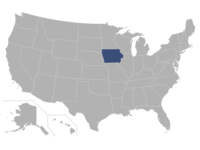
Des Moines, IA