Helene survivor: It’s time to move beyond market-based approaches to climate change
Sep 24, 2026 | 1:34 pm ET
Description
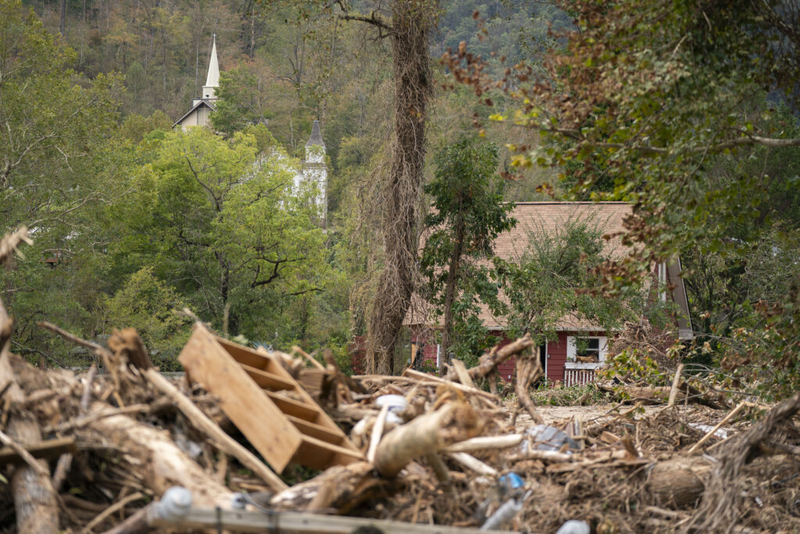
Flood debris piles left in the aftermath of Hurricane Helene in Bat Cave, North Carolina. (Photo by Sean Rayford/Getty Images)
If you’re a millennial like me, climate anxiety is practically in your DNA. I’ve lived through my fair share of climate change-induced disasters, and 2024’s Hurricane Helene was just the latest and gravest — though most certainly not the last or worst I’ll ever experience in my lifetime. And I consider myself lucky: many people in the global south have been affected by climate change impacts for decades, yet have contributed the least to carbon emissions.
Still, I fight for a livable future for all. That livable future depends on moving away from failed market-based “solutions” and toward intentional, coordinated policies that effective address the root causes of climate change and deliver benefits to all people.
As we approach the two-year anniversary of Hurricane Helene, the question remains: How many more global disasters will it take for climate change to be seen as the emergency it is? And when will we pivot from ineffective market-based solutions to deep decarbonization in the public interest?
With the latest UN report highlighting that the world will surpass the 1.5 Celsius warming mark set by the Paris Agreement in the next few years even under the best-case scenario climate scenarios, we must limit, adapt to, and return from higher temperatures if we want to avoid even more extreme heat, flooding, and irreversible climate tipping points. The report highlights some scenarios at 2 degrees warming, leading to even graver risks like destabilization of major ice sheets, permanent degradation of the Amazon carbon sink, and irreversible disruption of the Atlantic Meridional Overturning Circulation, currents that play a significant role in regulating the climate.
As frustrating as it is, the lack of meaningful, systemic government action up to this point makes sense. As it currently operates, our economic system depends on unfettered growth and high consumption that creates externalities like pollution, public health catastrophes, and otherwise preventable accidents. While some governments have attempted to regulate them, they have been prevented from doing so fully or effectively because of corporate capture of regulatory bodies, information asymmetry, and the interrelated webs of wealth, power, and influence.
Now, if the U.S. power sector (the largest emitter of greenhouse gas emissions) embraced 80% renewable generation by 2030 while also electrifying other sectors, we could start making real progress because it could realistically reduce greenhouse gas emissions by 50% below 2005 levels. But as market-based and largely voluntary approaches currently operate, no industry incentives are sufficient to meaningfully halt the role of accumulation and consumption that have driven climate change and the extreme exploitation of the planet and its people.
Of course, a truly “free-market” approach to the climate crisis would follow the declining costs of renewable energy and lead to the uptake at scale. However, that has not happened. In 2025, over 90% of new renewable energy projects were lower cost than even the lowest-cost fossil fuel alternatives (like coal and methane gas), with gas-fired generation cost even increasing over time due to fuel price volatility. But that’s not the current state of the dominant economic system, which leans on protectionism, legal monopolization, sky-high market entry barriers, and lack of true competition to maintain oligarchy-like control of wealth, power, and giant corporations. All of this stifles innovation, progress, and the benefits to all from deep decarbonization.
A better way to decarbonize with urgency is by planning for and then building an economy that runs on 100% renewable energy. We and the rest of the world have to get serious about planning for and taking coordinated, collective governmental action to decarbonize our economy while advancing climate and energy justice for all.
From one climate disaster survivor in western North Carolina to my neighbors around the world: Our current approaches to climate change aren’t working. They’re too limited, too fragmented, and too decentralized to prevent the worst impacts and prepare for the ones that are already here or on the way soon. We need to build something new, a system that prioritizes strong, effective protections, justice, and benefits for all while allowing businesses, individuals, and communities to thrive.
Real climate solutions already exist, including coordinated planning for a 100% renewable energy sector. The matter is too urgent to continue engaging with false and failing climate “solutions.” After all, no community deserves to suffer its own Helene.
Sophie Loeb has worked in climate policy and advocacy for over 4 years. She lives in Asheville, N.C.
Raleigh, NC