Budget outline offers glimpse into potential price of adding trial work for state public defender
Sep 23, 2026 | 2:12 pm ET
Description
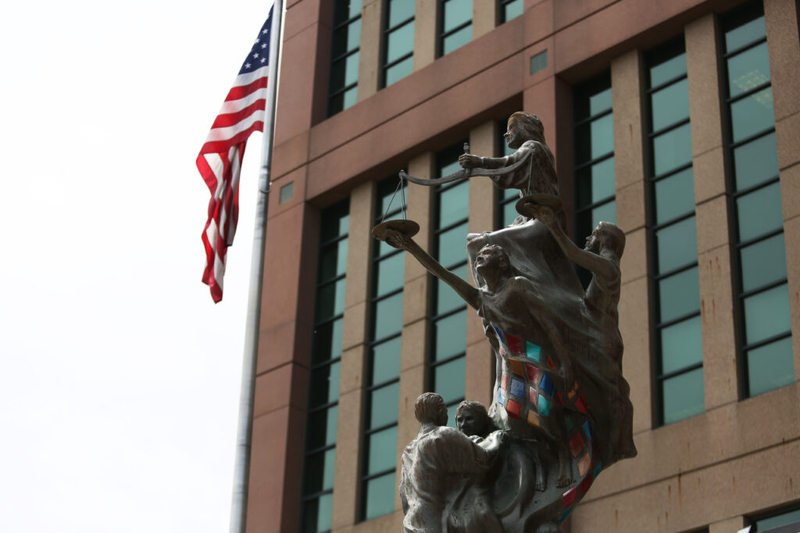
An equal justice statue stands outside the doors of the Minnehaha County Courthouse in Sioux Falls. (Photo by Makenzie Huber/South Dakota Searchlight)
It could cost up to $697,000 a year for South Dakota’s state-level public defender to begin taking on trial-level cases in the state, an advisory committee heard on Wednesday.
The Office of Indigent Legal Services opened in 2024 with the hiring of a director, and expanded the following year to add four additional attorneys and a paralegal. At the moment, the office handles appeals in criminal and abuse and neglect cases.
South Dakota was among the last states in the U.S. to saddle counties with the entire cost of providing lawyers to people who can’t afford one but are constitutionally entitled to representation in court. Counties remain responsible for trial-level legal fees, but handing off appeals to the state is expected to save them $2.1 million a year.
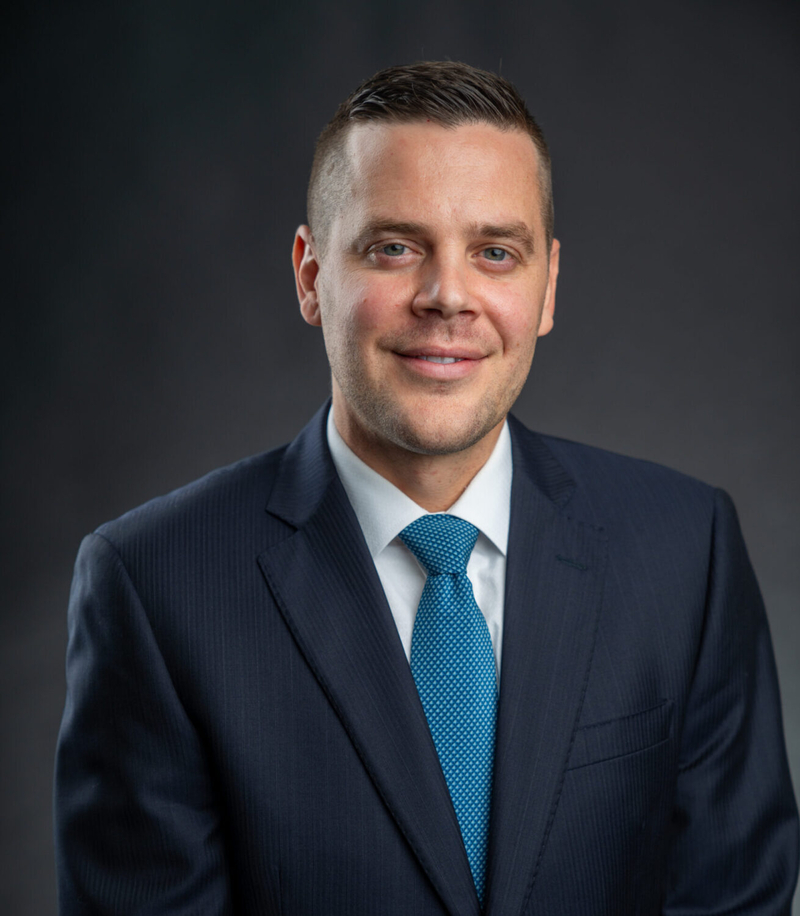
Adding five more lawyers would allow the state office to begin taking on “resource-intensive” felony cases in counties that lack the funds or qualified attorneys needed to guarantee a fair trial to indigent defendants, according to Christopher Miles, the state’s public defender.
“This would be less of an overhaul of the system and more of us picking up some of the overflow,” Miles said Wednesday during a virtual meeting of the Commission on Indigent Legal Services, which has overseen the rollout of state-level public defense operations.
Trial-level staffing would add between $627,000 and $697,000 to the office’s current budget of $1.45 million a year, but Miles told commissioners the proposal is “not necessarily something” he’d propose to the Legislature in the 2027 session.
“The primary purpose is to put the information out there and get some feedback from some other stakeholders in terms of what we’d want in an expansion,” Miles said.
Joe Kippley, vice-chair of the commission, told Miles that the budget rough draft is a good start, but recommended refining it to give lawmakers a sense of how much pressure a state-level staff of five public defenders would relieve for counties.
“You have to take this and quantify it in terms of the number of cases covered,” Kippley said.
The office would also need a framework for deciding which cases to accept, said commission member Larry Long, a former attorney general who retired as a circuit court judge. The attorney general’s office in South Dakota regularly steps in to assist in smaller counties with high-profile or time-intensive criminal investigations, Long said, but “a judge can’t appoint them” to prosecute a case the way judges appoint public defenders.
“At some point in time you need to have the ability to say no,” Long said. “I’m not sure how you want to do that or want to structure that, but there’ll come a point in time when you run out of money. And maybe for that reason, or maybe there is another series of reasons, you would want to say no.”
That’s part of the discussion, Miles said, noting that budget constraints would likely play a role. If the issue were more about workload for a trial team, Miles said, the office could look at contracting with trusted private attorneys.
Caseload increasing, staff needs
There are two more immediate staffing issues lawmakers could be asked to address in 2027, Miles said: another appellate attorney and a legal office assistant.
State public defenders deliver their first oral arguments to South Dakota Supreme Court
The office currently has 125 open appeal files, spread across 109 clients. About 25 of those are in the briefing phase, meaning the office’s attorneys are working through legal arguments at the state Supreme Court level.
This summer saw a “flurry of cases,” Miles said.
“This is maybe the first time our attorneys are having some time crunch issues, having to think about what briefs to prioritize,” Miles said.
Another appellate attorney might be necessary, but Miles said the legal office assistant position would be the lightest lift as a budget request.
The office has five attorneys and one paralegal at the moment, and Miles said the office spends 95% of its personnel budget to fund those positions.
The office is authorized to hire a legal office assistant, but hasn’t done so.
“Right now, it would be a salary that is just simply not appealing to anybody that’s looking to get into the workforce,” Miles said. “So if we are able to increase that ever so slightly — it would not need to be a big bump — that would give us enough room to fill that position.”

Pierre, SD