The Muehlebach in Kansas City keeps coming back for taxpayer subsidies
Sep 23, 2026 | 6:50 am ET
Description
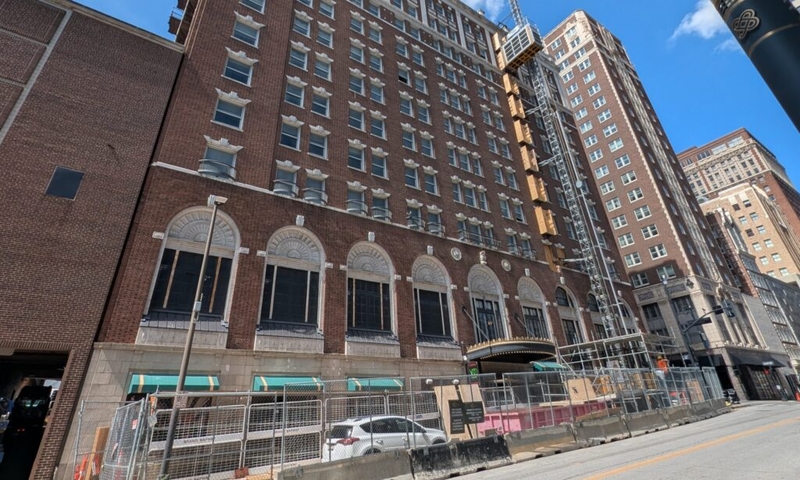
The historic 12-story Hotel Muehlebach building in Kansas City (photo by Patrick Tuohey).
Kansas City’s Muehlebach Hotel hosted every president from Theodore Roosevelt to Ronald Reagan. Harry Truman ran much of his political operation from the penthouse suite. It’s where he signed the Truman Doctrine in 1947 and awaited election results in 1948. Once referred to as White House West, it’s one of Missouri’s most storied buildings.
The building has also been bailed out by taxpayers at least three times in 34 years.
It’s 2026, and it’s time once again to subsidize the Muehlebach Hotel!
This time, the Kansas City Business Journal reports that Flint Development secured a 25-year property tax abatement to turn several floors of the Muehlebach Hotel into apartments. The project also received a sale-leaseback bond structure in which the Land Clearance for Redevelopment Authority issues up to $51.5 million in taxable industrial revenue bonds, paid back by the developer.
LCRA holds title to the property for the lease term — construction plus 25 years — which provides the property tax exemption. At the end of the lease, the title reverts to the developer. The project also includes a sales tax exemption on construction materials, an additional subsidy on top of the abatement.
And the result, of course, is going to be great! Hunter Harris, a partner with Flint, said in a statement, “The Muehlebach project will not only provide essential housing for local residents, but will also act as a primary driver for community vitality in the area. We are committed to delivering a community that meets the rigorous demands of today’s residents while contributing to the overall economic health of Kansas City.”
In 1992, Kansas City used tax increment financing to tear down Muehlebach Towers and renovate the hotel. A 1996 Business Journal piece about several subsidized projects downtown, including the Muehlebach, quoted UMB President Alexander Kemper as saying, “I think there’s a lot of great dynamic growth going in downtown Kansas City, and it’s about time.” The story also quoted Sean O’Byrne, then a broker for one of the properties to receive TIF, saying, “Grand Boulevard could become that in more than just name.”
Alas, the hotel opened in 1998 and struggled. David Martin at The Pitch wrote: A 1995 bond issue paid for renovations to the Marriott and a new Muehlebach Tower. Taxes generated by the hotels were supposed to retire the debt. Inadequate demand for rooms, however, has forced the city to find an additional $5 million to satisfy creditors.
Years later, in 2018, Platform Ventures proposed a $114 million plan to redevelop the whole block. It would turn the neighboring Kansas City Club building into a hotel, turn the Muehlebach into 117 apartments and build a new parking garage and office building. The city authorized a tax abatement: 75% off for 10 years, then 37.5% for 15 more, plus $12.6 million in historic tax credits.
It was going to be magnificent! The same effusive Sean O’Byrne, now vice president of business development for the Downtown Council of Kansas City, told the Star, “This is hitting on every cylinder that we want as far as downtown revitalization.” He gushed, “It’s also bringing back a wonderful landmark in the Muehlebach tower, something that’s been vacant for more than 25 years.” He’s as ebullient as he was 22 years earlier.
The Star also quoted Greg Flisram, executive director of LCRA at the time, as saying the project “would bring ‘new life’ to that part of downtown and especially the Muehlebach building.”
The Kansas City Club portion did get built, opening in 2020 as Hotel Kansas City. The Muehlebach didn’t.
In a recent Star piece, City Council member Kevin O’Neill defended ongoing public costs for the Power & Light District, saying, “we have one hell of a downtown because of the investment made.” If that’s true, why are we still subsidizing these projects?
I wish the new developers of the Muehlebach all the luck in the world. But history teaches us to be skeptical of taxpayer subsidies promising transformational success. A better way: Let developers do their best, with their own money, to meet the needs of the market. And if the market is telling us something is a bad investment for private investors, it’s a bad investment for public dollars, too.
With apologies to Truman, these bucks need to stop.

Jefferson City, MO