Carbon capture proposals draw mixed responses from environmental groups in Michigan House committee
Sep 23, 2026 | 6:33 am ET
Description
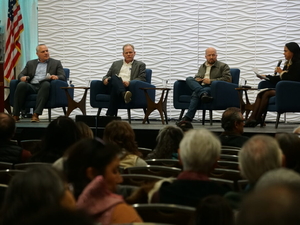
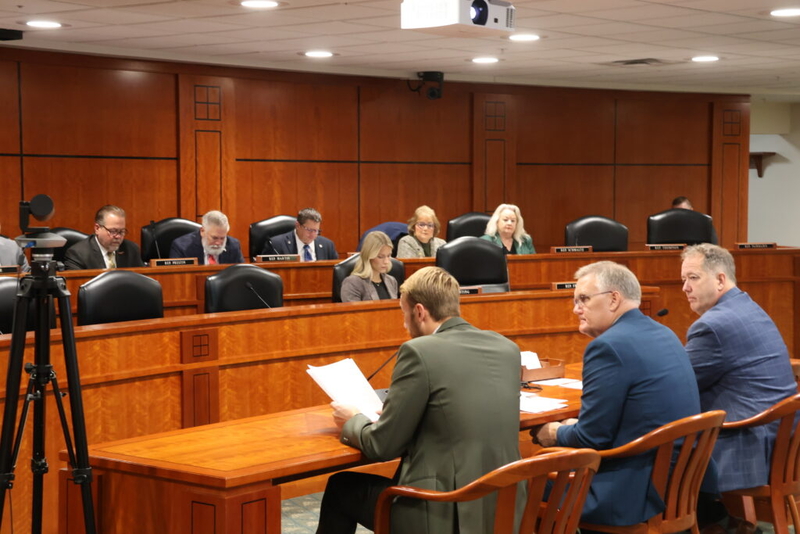
State Rep. Parker Fairbairn (R-Harbor Springs), Utility Workers Union of America Renewable Energies Director James Harrison, and state Rep. Cam Cavitt (R-Chebyogan) sit before the House Energy Committee on Sept. 22, 2026. (Photo by Kyle Davidson/Michigan Advance)
As Michigan continues to examine its options for meeting its 100% clean energy goal, members of the state House gathered to consider a slate of bills to give the state authority over efforts to capture and store carbon emissions.
The House Energy Committee heard testimony from Reps. Parker Fairbairn (R-Harbor Springs) and Cam Cavitt (R-Cheboygan) on House Bills 6247–6249, which aim to establish a state-based framework for carbon capture, utilization and sequestration efforts.
These projects capture carbon dioxide from sources such as power plants and industrial facilities. The emissions are either reused or injected into geological formations including depleted oil reservoirs or saline aquifers.
Fairbairn told committee members that the state is uniquely suited for carbon capture, utilization and storage, noting that Michigan has access to geological formations including deep saline reservoirs, porous basalts and depleted oil fields, which can be used to store liquid carbon dioxide.
Michigan is also an energy and manufacturing hub, Fairbairn said, noting that this technology provides a pathway for these facilities to reduce their carbon emissions.
He also pointed to the state’s clean energy law that requires electrical providers to meet a 100% clean energy standard by 2040. The law includes nuclear energy and natural gas plants using 90% effective carbon capture technology in its definition of clean energy resources.
While the U.S. Environmental Protection Agency oversees permitting for injection wells like those used in carbon sequestration, shifting that oversight to the Michigan Department of Environment, Great Lakes and Energy would allow the state to process those permits more quickly, Fairbairn said.
Fairbairn also noted that DTE Energy and Consumers Energy, two of the state’s largest energy utilities, support the proposals because they would provide the state with the regulatory framework needed to ensure their natural gas plants comply with Michigan’s clean energy law.
James Harrison, the renewable energies director for the Utility Workers Union of America, said the technology can help preserve jobs in industries that are difficult to fully transition to electricity, such as manufacturing, cement, steel, refining and chemicals.
However, the policies drew a mixed response from environmental groups.
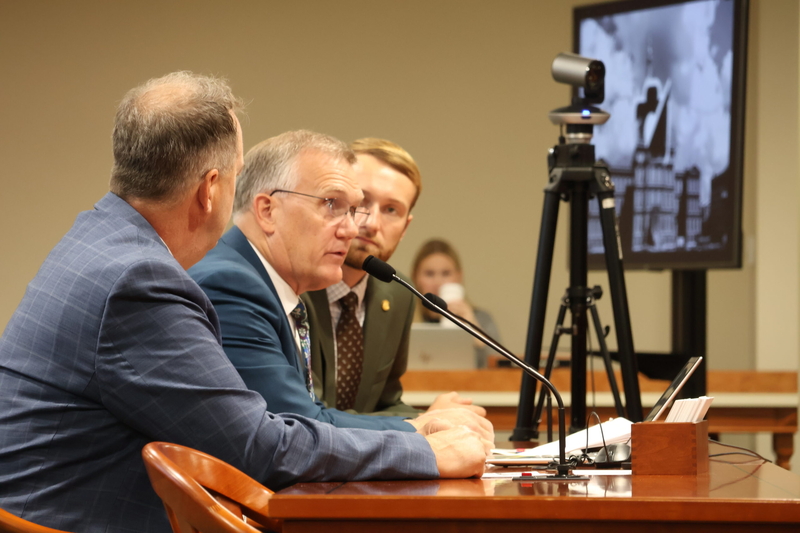
Wibke Heymach, senior midwest regional policy manager for Clean Air Task Force, offered support for the technology, noting that carbon capture represents one commercially available option for industries that would otherwise continue producing emissions.
“Michigan is home to several industrial facilities that emit harmful air pollutants, including particulate matter, sulfur oxides, and nitrogen oxides. CCS retrofit projects on industrial facilities can improve local air quality by reducing these emissions while capturing CO2,” Heymach said.
Ben Poulson, the state government affairs director for the Michigan League of Conservation Voters, stood in opposition to the proposals, questioning whether they created the proper framework for the growing carbon capture industry.
“The United States is existing in a period of electricity demand growth, largely driven by data centers, and if those are powered by carbon-producing technologies, it means further sources of carbon pollution,” Poulson said. “It’s smart that we are thinking about how to reduce carbon pollution, and as both these demand technologies and storage technologies scale, we’re going to see more facilities, more wells, more pipelines, more transportation of compressed carbon dioxide and more private investment from people looking to place carbon pollution.”
Whenever the state moves from regulating an emerging technology into a commercial industry, it’s important to make sure the state’s system of regulations is designed around the risk and incentives that come with that expansion, Poulson said.
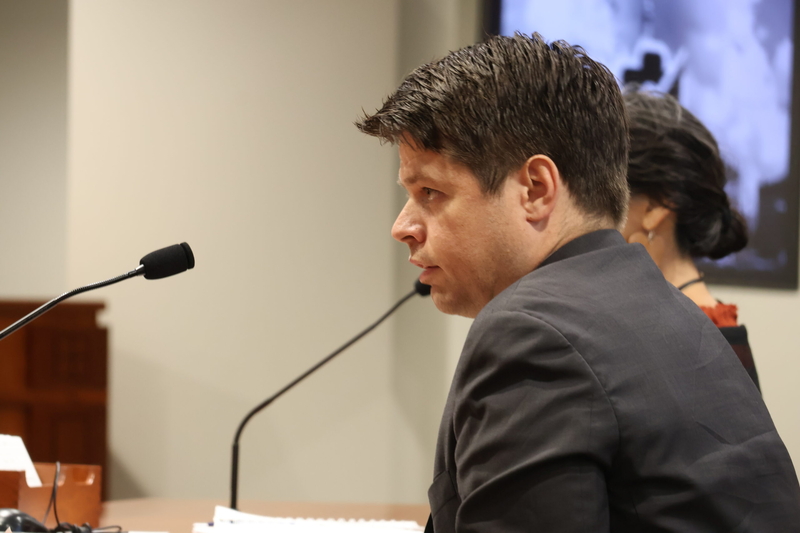
Echoing concerns from the Clean Air Task Force, Poulson argued the 20-cent fee per ton of carbon injected for storage was too low, drawing parallels with the state’s low waste tipping fee, which has resulted in a significant amount of waste from other states and Canada ending up in Michigan landfills.
The bills also do not address the source of the carbon that would be sequestered, Poulson said.
“If we are to store carbon here in Michigan, Michiganders deserve to know that the storage process is actually reducing the amount of atmospheric carbon, and that the process of capturing and storing is not creating more carbon than it stores,” he said. “And they also deserve to know that we are prioritizing pollution that could not easily be reduced otherwise.”
In a statement to Michigan Advance, EGLE Director of Communications Dale George noted that while they did not take a position or submit testimony on House Bills 6247–6249 during Tuesday’s hearing, the agency has consistently supported legislation to enable carbon capture, utilization and storage permitting at the state level, and would continue to work with lawmakers toward that end.
- 1:22 pmThis story has been updated to accurately reflect Clean Air Task Force's position on the legislation.
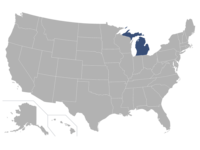
Lansing, MI