With dams across NH in disrepair, leaders disagree on where to focus
Nov 17, 2026 | 5:00 am ET
Description
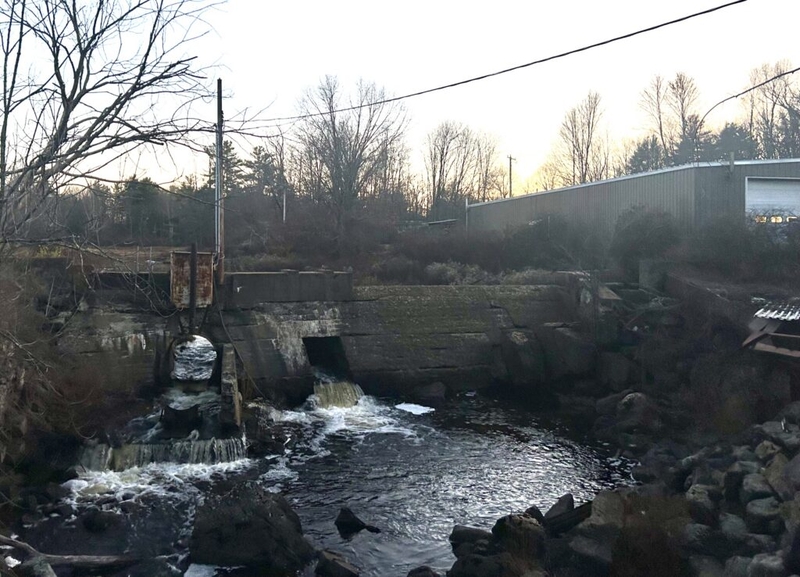
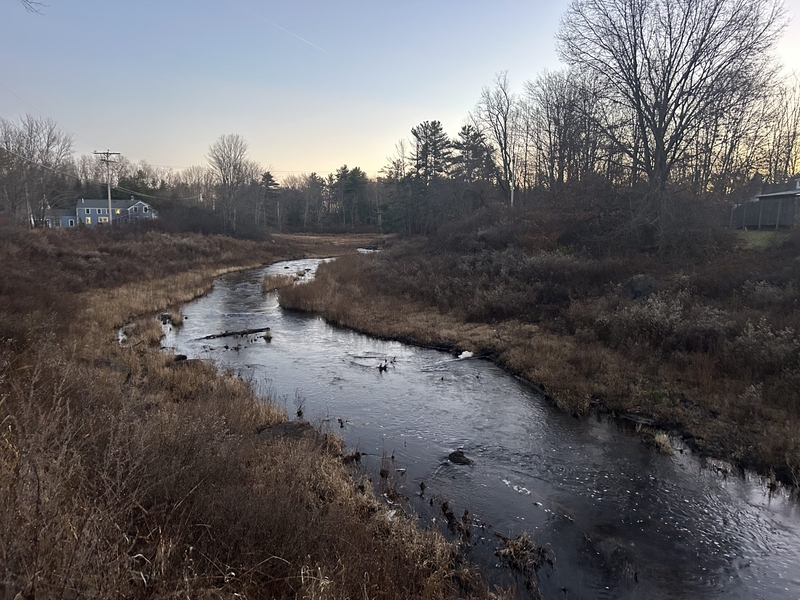
A privately owned dam on the Exeter River in Brentwood is among three dams slated for removal that had their funding stall before the Executive Council this fall. Councilor David Wheeler said he questioned whether it was appropriate to use public funds to finance the removal of private dams. Environmentalists say dam removals benefit wildlife while ridding river stewards of a costly and potentially hazardous burden. (Photo by Molly Rains/New Hampshire Bulletin)
New Hampshire’s aging dams have environmentalists and safety experts wringing their hands. But disagreements over how best to tackle the problem have stalled a handful of projects this fall.
The structures, of which there are thousands spread out across the state, are expensive both to maintain and remove, and pose obstacles to wildlife. Removing the most hazardous dams is the path forward that most experts agree is the safest and most efficient. But three proposed avenues that would partially fund such projects stalled this fall before the Governor and Executive Council, leading to frustration for those who crafted the proposals and calls from others for a more unified strategy.
Three of many
There are 2,500 active dams across New Hampshire, in varying states of disrepair, including 273 that are state-owned. The other two-thousand-plus are owned by an array of individuals, companies, utility districts and towns, according to state data.
Funding for three proposed dam removals are on the table before the Governor and Executive Council. One, in Bethlehem, is owned by Littleton Power and Light, a utility district. Another in Jaffrey is municipally owned. The third under discussion, in Brentwood, is privately owned by an LLC called Brentwood Dam Ventures.
Letters from New Hampshire Department of Environmental Services Commissioner Robert Scott to the Executive Council outline the environmental benefits of removing each dam, including reconnecting up- and downstream wildlife habitat and restoring normal river flow.
In Jaffrey, the town-owned dam slated for removal once held the local water supply, said utility superintendent Tony Cavaliere. Now, the town gets its water from another source, and the former reservoir behind the dam has been partly drained. The aging dam is costly to maintain and blocks what could become important upstream habitat for New Hampshire’s endangered brook trout, which are known to inhabit that waterway, Cavaliere said.
For more than a decade, the town has been told by the state that it needs to “do something” about the dam, he said. Scott’s letter to the Executive Council identifies that dam as “high hazard,” a designation that typically means a dam’s failure could endanger life and property.
Part of the issue with the dam in Jaffrey is its proximity to a major road that provides access to the town, Cavaliere said.
“The burden is, if that dam fails, Route 124, which is a state highway, could see damage, and that is one of the only main routes to get into Jaffrey if you’re coming from Keene,” he said. “That would not be good.”
Working with the nonprofit organization American Rivers, the town saw a path to securing grants to complete the dam’s removal. But it would be costly: American Rivers estimates the total price tag would be about $859,000, according to Northeast Regional Director Andrew Fisk.
That’s the least of any of the three projects, all of which are being organized by American Rivers. The removal of Brentwood’s dam, the organization projects, will cost $891,972, while the removal of the Bethlehem dam is projected at $1,168,444.
But keeping unhealthy dams in place can also carry a hefty price tag for communities.
“Sometimes, it can be a win, win, win situation to remove dams,” said Executive Councilor Karen Liot Hill, a Lebanon Democrat representing District 2. “… When it’s a municipally owned dam, removing it takes that ongoing cost of maintenance off of taxpayers, as well.”
Who should foot the bill?
Multiple proposals for funding that could help pay for removal of the three dams are currently tabled before the Executive Council.
Councilor David Wheeler, a Milford Republican who represents District 5, made the motions to table the funding decisions in September. Each of the three projects is different, he said in a phone interview, but he is concerned about whether dams are being prioritized appropriately for removal, and how much state funding is going to such projects — especially when the dams are privately owned.
Wheeler said he wants dams with the highest hazard level to be proposed for removal first, questioning whether the dams currently before the council are in fact in the most urgent need of removal.
“There’s a lot of questions here and a lot of policy that should be developed, and not just do this willy-nilly,” he said.
American Rivers has proposed a range of funding sources to pay for the dam removals, Fisk said, including money from the New Hampshire Charitable Foundation, U.S. Fish and Wildlife Service, private donors, U.S. Department of Agriculture and state funds.
For the Jaffrey project, two different funding sources are being held up.
One is $50,000 in “fisheries habitat funds,” a source administered by the New Hampshire Department of Fish and Game and funded with a surcharge on hunting and fishing licenses.
The recommendation to dedicate that funding to the Jaffrey dam’s removal passed the New Hampshire Fish and Game Commission, 4-3, in June 2025. Wheeler said that narrow margin and low participation from the 11-member committee raised a red flag for him that support for the use of the fund was lacking. He called for another commission vote, but that has not occurred.
Another source of funds, the same as the sources currently tabled before the Executive Council for the other two dams, is the Aquatic Resource Mitigation Fund. For the Jaffrey project, a contribution of $100,000 is proposed. (The project in Brentwood would see $650,000 in mitigation funding, while the Bethlehem proposal would see $150,000.)
Developers must pay into the mitigation fund when wetlands are compromised during a project. Then, the fund is meant to be used to make a positive impact on other wetlands.
“You can think of it as a penalty for disrupting wetlands,” Liot Hill said.
It’s common for Aquatic Resource Mitigation Fund dollars to be one source of funds for dam removals, because such projects help restore healthy wetlands to sites that have been human-impacted for years, Fisk said.
Liot Hill said she saw the projects as an appropriate use of the dollars.
Scott “has told the council that this is a good project, that all three of these are good projects that are appropriate uses for (Aquatic Resource Mitigation) funds, and are going to lower costs — whether it’s for taxpayers in Bethlehem or in these other communities,” said Liot Hill. “… It’s going to be helpful from both environmental and economic perspectives.”
But Wheeler said he needed more information before he could accept that the tabled proposals were the best use of funding.
In the meantime, the funding holdup has created an unexpected hiccup for those planning the dams’ removals. The actual work isn’t delayed, Fisk said, as it will not take place until next summer. But lining up funding ahead of time is an important step.
“It’s holding up getting the project done, so we can restore the land and help the native brook trout,” Cavaliere said.
Michele Tremblay, president of the New Hampshire Rivers Council, said she was disappointed to see the projects stalled. The council is generally a major supporter of dam removals, Tremblay said, which restore healthy ecosystem function and are a boon to wildlife.
Tremblay said the projects would already have been reviewed thoroughly before reaching the Executive Council.
“It is surprising that these went through such an intensive process and they’re not going to be approved,” she said. “Tabling sends a pretty strong message.”
A dilemma that isn’t going away
Wheeler has voted against removing the contracts from the table at recent Executive Council meetings — in other words, declining to move to a final vote on the allocations. So have Councilors Joseph Kenney and John Stephen, while Councilors Liot Hill and Janet Stevens voted in favor but were outvoted.
With all councilors beside Liot Hill — who is the only Democrat currently on the council — unseated during this month’s election, and a fully Democratic council poised to take their seats, the fate of the contracts could change.
But with dams across the state in need of costly intervention, the problem goes beyond those three projects.
In the long term, as New Hampshire slowly removes its most problematic dams, we can expect significant changes in our river ecosystems, Tremblay said.
When dams are removed, rivers can run cooler, flooding can be reduced, and wildlife that rely on clean, connected waterways thrive, she said.
Removal “has a tremendous impact,” she said. “(It) is a great option, and it really goes a long way toward river restoration.”
But finding the money to make that happen, and deciding where it is most needed, may continue to be difficult.
Liot Hill and Wheeler were united in their calls for a more coherent statewide strategy to assess and improve dams. Removing dams one by one is helpful, Liot Hill said, but the current rate of progress needs to increase to keep up with the state’s needs.
Addressing the situation will take continued monitoring and prioritizing of dams, seeking out federal money, taking opportunities to close and remove dams when possible, and crafting a statewide dam action plan, Liot Hill said. She called on the state Legislature to craft that more unified policy.
“Most of our dams are in a great state of disrepair,” Liot Hill said. “… It does present a pretty unique burden.”
Concord, NH