Wisconsin hemp industry hopeful about Democrats’ plan to end cannabis prohibition
Nov 17, 2026 | 4:45 am ET
Description
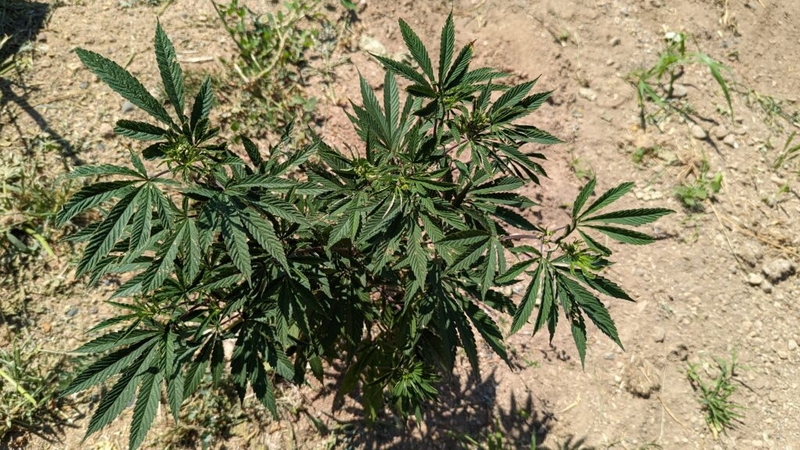
Hemp plant at a farm in Minnesota. (Photo by Baylor Spears)
The Badger State has a chance to end nearly a century of cannabis prohibition when a new Democratic majority takes control of the Legislature in January. The incoming leaders of the Senate and Assembly, as well as newly Gov.-elect David Crowley, have said they favor legislation to make hemp and marijuana products legal.
“People across the entire state have had these referendums saying they want to legalize marijuana,” incoming Senate Majority Leader Dianne Hesselbein said on WISN-TV’s UpFront on Sunday. “And we know that we’re losing money to our neighboring states. We need to get that done.”
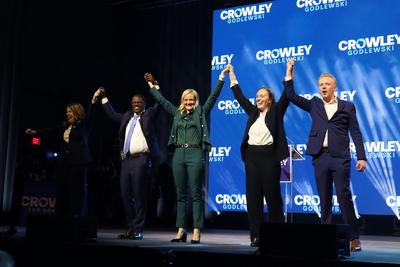
Cannabis legalization, a policy supported by nearly 70% of Wisconsin voters, will be a top priority for the newly elected Democratic trifecta. After losing control of the state Senate and Assembly following the midterm elections, Republican lawmakers can no longer block legalization efforts. Meanwhile, for people whose livelihoods depend on Wisconsin’s hemp industry — thrown in limbo by new federal regulations — anxiety is high that a solution might not come quickly enough.
By Dec. 11, hemp-derived products must contain no more than 0.4 milligrams of THC per container under federal law. The ban stems from a last minute addition to an agricultural appropriations bill passed by Congress last year which ended a government shutdown. It changed standards set by the 2018 Farm Bill requiring hemp products to contain no more than 0.3% of THC on dry weight basis, creating a new requirement that is out of sync with the natural THC content of the cannabis plant.
The vast majority of hemp products including smokable flower, vaporizers, edibles and creams will be affected by the ban. In Wisconsin, that could mean a $700 million industry evaporating overnight. Because Wisconsin has not legalized cannabis products as have its neighboring states of Illinois, Michigan and Minnesota, hemp-derived products are the only such products legally available for purchase. State Democrats are considering legislation that would allow both cannabis and hemp products to be sold in the state.
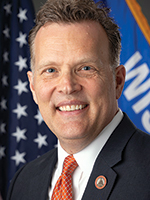
Rep. Andrew Hysell (D-Sun Prairie) is aware of the problem for hemp businesses. “I believe at the state level, it’s incumbent upon us as legislators to protect Wisconsin businesses and consumers,” he told the Examiner. Hysell pointed to an effort by Democrats last year to create a regulatory framework for hemp in Wisconsin. “And again, Republican leaders let those bills die,” he added.
In 2019, Wisconsin passed Act 68, protecting and regulating the state’s hemp industry, bringing the state into line with the 2018 farm bill. But according to state officials, that bill will not protect hemp producers from the new federal ban.
Gov. Tony Evers warned last session about the economic cost the ban would have. At the time, some Republican lawmakers introduced their own bills. Some wanted to ban THC-derived hemp products under state law, while others proposed competing visions for how hemp could be regulated. None of those bills made it through to Evers’ desk.
While Hysell believes that the hemp bill Wisconsin passed in 2019 “still provides protection to hemp industry participants,” he also stated that “it’s narrower and it creates uncertainty. And so that’s why in our adult [recreational] bill, we’ll be addressing hemp as well.”
“We are very concerned about the hemp industry, and the people that are currently producing products for consumers that are very popular,” Hysell said. “We’re concerned about the farmers, small businesses, and therefore we are aware of the possibility, if it comes to it, that there might be a need for an emergency, temporary lifeline or some sort of a fix to provide protection until the full bill can be passed.” Hysell added that Wisconsin’s hemp industry wouldn’t be in such dire straits had a bill been passed last year. “They knew this was coming, so now Democrats are going to be in a position to fix it,” he said.
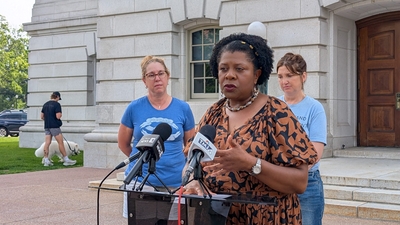
Sen. LaTonya Johnson (D-Milwaukee) also said that cannabis legalization should be an immediate concern. “I think it should have been a priority because we know over 70% of people feel like legalization should happen,” Johnson said. “We know that there are people who have invested their hard-earned money into opening CBD and THC stores and businesses because they were legal. … f those businesses aren’t open in a state where marijuana is legalized, they lose their business on Dec. 11.”
Johnson added, “We don’t want anybody operating outside the law.”
“Nobody who invested their money, who’s trying to make a legal living, should be forced to shut down just because the government changed its mind,” she said. “So, one thing that legalizing marijuana would do would allow those businesses to stay open. We also want to put parameters around it, too.” The details have yet to be worked out, she said.
Hysell joined other Democrats in February to introduce SB-1045, a bill to fully legalize recreational and medicinal cannabis in Wisconsin. The bill legalized medical and recreational use of cannabis, created a framework for regulating and taxing products derived from the plant, and also provided a carveout for “intoxicating hemp products” which were a target of those who favored banning hemp. The bill legalized possession of up to 2.5 ounces of cannabis flower for adults in a public space, and up to five pounds within their private residence, among other regulations for cannabis-infused products and concentrates.
The bill also would have created a process of review to expunge previous cannabis-related convictions, protect people against discrimination from their employer based on their consumption or possession of cannabis, and fund cannabis research efforts.
Adrian Holguin, founder and president of the California-based CannaShark Consulting, told the Examiner that the bill, SB-1045 was “almost pretty good.” Holguin said the bill had many positives. “If we could look at some of the pros that were proposed in there, stuff like being able to expunge past convictions, having a legal age limit on the product, allowing people to possess — humans in your society, free citizens — to possess a plant.”
Holguin cautioned Wisconsin lawmakers from making the same mistakes as other states which legalized cannabis. “One that I think could be easily controlled without too many politics involved…How long it actually takes them actually to get the first dispensaries or retail outlet available for the consumer. And if you look at how long it took in Minnesota, it took almost 25 months.” In Michigan, it took about a year.
Ensuring that there is speedy funding through the Department of Agriculture, Trade, and Consumer Protection for the necessary testing and licensing is also critical to prevent any delays. “Then they can quickly roll this out and bring safe, effective, clean product, tested product, to the market quickly instead of making the people of Wisconsin, citizens of Wisconsin, wait two years more when the federal government just closed the other window,” said Holguin, referring to the hemp ban.
He also advised against high taxes on cannabis products that could stifle the potential gains for agriculture. Wisconsin was once the nation’s top producer of hemp up until the end of WWII.
The Wisconsin Legislature didn’t hold a public hearing related to cannabis legalization until 2022. Republican Sen. Mary Felzkowski also tried unsuccessfully to introduce her own proposals for a restrictive medical cannabis program as recently as 2025. Gov.-elect David Crowley has said that he supports cannabis legalization.
Hysell says Wisconsinites have lost out. “I guess in 2022, the Legislative Fiscal Bureau said that we generated $36 million for the Illinois state coffers,” he said. “This is really common sense legislation. And I’m really excited that now that we have a trifecta, we can make it a reality, instead of having to constantly advocate and have that advocacy fall on the deaf ears of Republicans.”
For Hysell, cannabis possession and use is an issue of personal freedom. “The idea that we should give people the right to make choices, the choices they want to make, as long as they’re not hurting other people,” said Hysell. “I don’t know why Republicans have a problem with that. And I still don’t understand. But they did. And fortunately, now that we have the trifecta, we’re going to take action, as we promised, to finally fix this.”
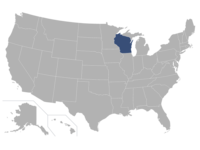
Madison, WI