ICE’s culture of fear in Ohio is an un-American betrayal of our fundamental values
Sep 23, 2026 | 3:35 am ET
Description
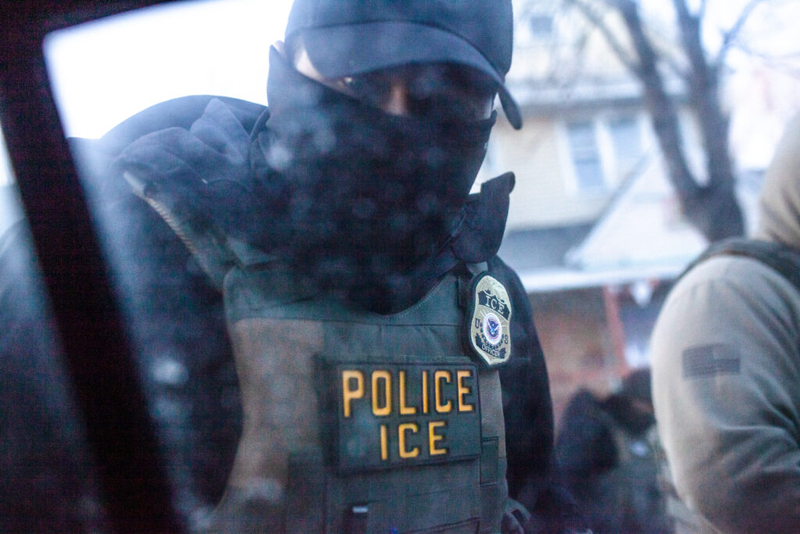
A U.S. Immigration and Customs Enforcement officer is pictured during an enforcement operation. (Photo by Nicole Neri, States Newsroom.)
On Aug. 27, Immigration and Customs Enforcement (ICE) released the details of a $16.7 million no-bid contract with Compliant Technologies LLC of Lexington, KY, for the purchase for their agents of 6,000 pairs of wearable gloves that are designed to deliver painful electric shocks.
The gloves, which the manufacturer, calls “Conductive Distraction and Deescalation Devices,” are, essentially, wearable tasers.
While the company advertises the gloves as a safe “use-of-force option,” as one critic observed, “Less than lethal doesn’t mean low risk.”
The company recommends that subjects not be shocked for more than 15 seconds, but ICE agents have a dismal record when it comes to any concern for the safety of their targets.
A new report by the American Civil Liberties Union documents more than 1,200 incidents of abuse by ICE agents.
The gloves are just one weapon in the agency’s arsenal of devices and policies designed to create a culture of fear among all immigrants residing in the United States, whether unauthorized or with full legal standing.
Tens of thousands of individuals have been kidnapped off the streets or pulled from their cars and hustled off to squalid detention camps where dozens have died.
ICE agents have shot 16 people since January, with four fatalities.
Masked agents driving unmarked cars have been involved in aggressive vehicular pursuits causing a number of serious crashes.
They have smashed their way into cars while small children cowered in the back seat. Detention center employees have force fed hunger-striking detainees.
We know that fear is the objective when the administration cheerfully publicizes its policy of deporting immigrants to destinations known to be politically unstable and extraordinarily dangerous.
To date, more than 23,000 immigrants have been deported to 26 countries where deportees have no ties, no history, and no knowledge of local languages.
These include the Central African Republic, the Democratic Republic of Congo, South Sudan, Equatorial Guinea, and Iran.
Recently, the administration has increased its deportation flights to Haiti, a country largely controlled by terror gangs. As the United Nations’ human rights expert for Haiti bluntly expressed, “This is insane.”
If fear is the intention, it is working. There is not one immigrant I know who hasn’t heard of “horrific” conditions in detention camps, of young children left on their own after masked agents spirited their parents away following a traffic stop, of immigrants shuffled from Ohio to Florida to Louisiana, just to keep them from their lawyers.
Even Puerto Rican friends, U.S. citizens by birth, ask me if they should always keep their passports with them.
With the beginning of a new school year, immigrant students once again fear bullying from white students who tell them to “Go back home.”
A survey of high school principles last year described the “climate of distress” faced by immigrant students who are “harassed” by peers demanding to “see their papers.” But distress doesn’t pay attention to citizenship.
Recent studies indicate that the fear cultivated by immigration enforcement raids has negatively impacted the test scores not just of foreign-born Spanish speakers, but of U.S.-born Spanish speakers as well, and that any child whose parent is taken away potentially faces depression, anxiety, and post-traumatic stress disorder.
Fear, to repeat, is not an unintended byproduct of the administration’s anti-immigrant policies. It is the desired outcome. And as such, the administration has placed the United States in the company of some of the most authoritarian regimes of the late 20th century: the military dictatorships of Argentina, Brazil, Uruguay, and Chile from the 1960s through the 1980s.
My own encounter with a regime that stoked the fires of fear was in Chile, where my wife and I were living when General Augusto Pinochet overthrew the government of Salvador Allende.
From the moment the military moved against the Chilean president on Sept. 11, 1973, those of us who had supported Allende — the country’s democratically elected head of state — felt fear surround us like a heavy blanket.
We were constantly aware that we could be stopped, detained, and even killed for who we were, not for anything we had done.
As the months and years went on, it became clear that any who fell afoul of the regime, whether common laborer or Army general, could be “disappeared” or blown up by a regime-dispatched agent.
These Southern Cone countries constructed systems of terror that combined a fear of the known with a fear of the unknown.
In the United States, the Trump administration advertises its ability to inflict suffering on immigrants daily; all immigrants know the dangers they face.
But the unknown, the uncertainty, the constantly changing set of rules and regulations, are equally disruptive.
Will I be detained if I file for a government benefit to which I am legally entitled?
As a U.S. citizen, can I be deported for incorrectly filling in a line on my naturalization papers?
Will my children come home to an empty house because I couldn’t convince the deputy sheriff that I have a green card?
It is challenging to fully enumerate all the ethical, moral, and political failures of a government that deliberately nurtures a culture of fear as a means of achieving its goals.
Such a policy is appallingly sadistic, undemocratic, at odds with every faith belief, and, one would hope to say, un-American.
Use fear to cleanse the country of immigrants, as Trump’s xenophobic adviser, Stephen Miller, desires, and we will become like the ancient image of the snake devouring its own tail, the ouroboros.
We will consume ourselves by fear.
Steven Volk is Professor of History Emeritus at Oberlin College, where he taught Latin American history for 30 years. In 2001, he was recognized by the government of Chile for his efforts in helping to restore democracy in that country.
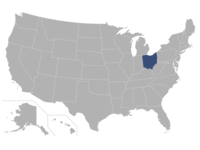
Columbus, OH