30 years of Republican dominance of Ohio politics: The results
Sep 23, 2026 | 3:30 am ET
Description
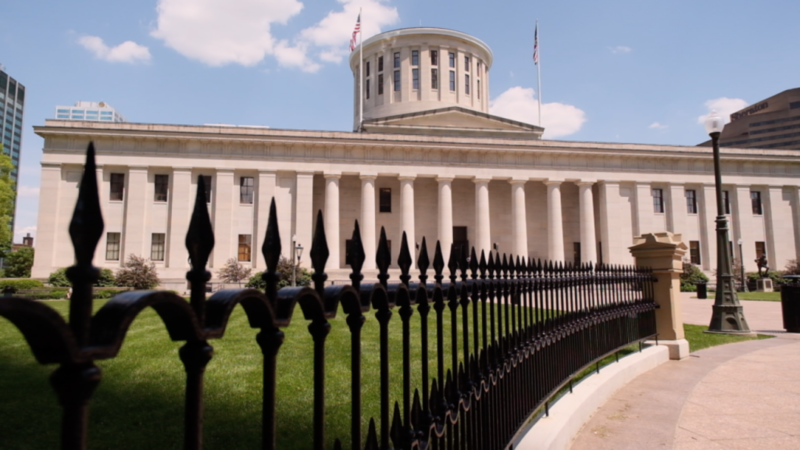
The Ohio Statehouse. (Photo by WEW.)
In July, 2026 CNBC named Ohio as the top-ranked state for business in the United States.
But looking at other Ohio rankings, the results can be different, very different.
Examining state rankings over time can give us an idea of how standards of living have changed. The Republican party of Ohio has dominated state government for the past thirty years. Let’s look at the job they have done in managing the state. The results may shock you.
Except for a brief period from 2007 to 2011, when Democrat Ted Strickland was governor and two years of Democratic leadership of the Ohio House, since around 1995 Republicans have had a lock on all three branches of state government, often with supermajorities in the Ohio House and Ohio Senate.
For that thirty-year period Republicans have controlled state taxing and spending, and many other policies. To a significant extent they are responsible for our current situation, and they can and should be held to account.
The truth is that compared to other U.S. states, Ohio has fallen well behind economically under Republican leadership.
In 1999, near the beginning of the GOP’s dominance of the state’s politics, the Census Bureau reported the Buckeye State’s median household income was $40,956. Adjusted for inflation to 2024 dollars, that figure was a record high of about $77,568.
Since then, Ohio has failed to recover from income losses suffered during both the 2001 and 2007-2009 recessions.
Last year the Census Bureau reported the state’s median household income in the previous year was $72,212 – more than $5,000 short of the record set a quarter century earlier.
Ohio also hasn’t kept pace with other states. In 1999, the state ranked 23rd in median household income. By 2024, it had fallen to 39th.
As a result, the gap between Ohio’s median income and the national median has grown over more than four decades.
The 1980 census found the state’s median household income was more than 5% higher than the nation as a whole. By 2024, the typical Ohio household was earning 11.5% less than the national median of $81,604.
Think about that: if Ohio today were in line with the nation, our households would be earning more than $9,000 a year more. While few were paying attention, Ohio has been transformed into a low-wage state.
Is it fair to hold the Ohio Republican party responsible for the relative decline of our living standards?
Yes, and this is why: To be sure the Ohio economy was badly hit by the twin crises of the housing banking collapse in 2008, and the COVID pandemic in 2020. But other states suffered through those crises as well, and came out the other side in better shape than Ohio.
And Ohio lost industries and jobs during those years, but of course other states did as well. In general, much of Ohio’s relative decline can be laid at the feet of the state Republican party.
But wait, there is more. In fact, other indicators, not just income, show Ohio’s decline in recent decades.
In areas of well being other than income Ohio has also failed to make improvements as other states have moved forward. One of these is child poverty.
According to the Children’ Defense Fund, in 1995 Ohio’s percentage of children living below the federal poverty line was 18% which ranked the state at 29th worst.
In 2025, the rate was still stuck at 18%, but the rank had fallen to 35th worst. Other states have made progress in reducing child poverty, but not Ohio.
Children are not able to do much for themselves, so they depend on family and the government for help. Ohio Republicans have let them down.
In education too Ohio has gone into reverse. According to the U.S. News & World Report, from a high of 5th place among the states in K-12 schooling in 2010, by 2023 the state dropped to 21st.
Ohio has given billions to private charter and religious schools in recent years, has greatly increased funding for education vouchers, and has reduced support to local public schools to the point that many of them face financial crises.
Higher education is doing even worse, and is now in 41st place.
Healthcare in Ohio is now facing a severe crisis.
In recent years the Republican party and the Trump administration have implemented drastic cuts to Affordable Care Act (ACA) subsidies and Medicaid.
Over 200,000 Ohioans have already lost coverage with a predicted 290,000 more to follow by 2034, according to Protect Our Care.
Ohio leads the nation in the decline of ACA enrollment.
The Ohio Republican Party has raised no objection to these federal cuts, and Ohio GOP U.S. Sens. Husted and Moreno voted for them. Gov. DeWine has been silent.
Because we do not have good information about Ohio’s ranks for corruption and gerrymandering from 1995, we cannot determine whether they have changed.
But Governing has Ohio in 11th place among states with the highest conviction rates per 10,000 employed by the government.
Furthermore, Independent Voter News in 2025 had Ohio as the 9th most gerrymandered state.
Gerrymandering and corruption feed off one another, and are mutually reinforcing — and not in a good way
Well, there you have it — a summary of what 30 years of Republican rule in Ohio has produced.
Arnold Oliver is professor emeritus of Political Science at Heidelberg University in Tiffin, Ohio. He lives in Sandusky, Ohio. Independent journalist David Knox, former computer-assisted reporting manager at the Akron Beacon Journal, contributed to this article.
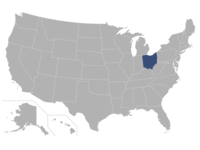
Columbus, OH