Judge suggests Trump’s most recent birthright citizenship orders may require new lawsuit
Sep 22, 2026 | 4:40 pm ET
Description
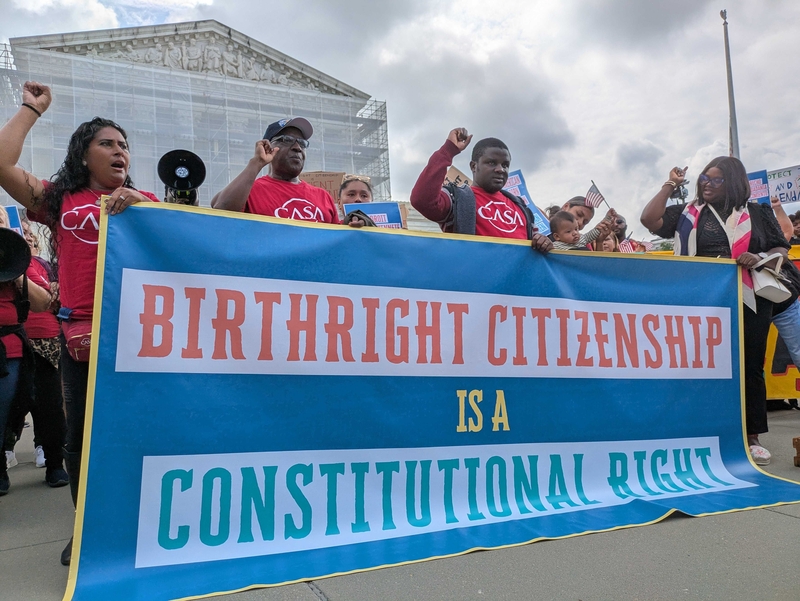
Demonstrators from the immigration advocacy organization CASA chant "Up, up with liberation, down, down with deportation" outside of the U.S. Supreme Court on May 15, 2025, as justices heard oral arguments on the Trump administration's legal challenge to birthright citizenship. (Photo by Ashley Murray/States Newsroom)
WASHINGTON — A New Hampshire federal judge seemed skeptical during a Tuesday hearing that a civil rights group could continue with a challenge to block President Donald Trump’s second attempt to redefine the constitutional right to birthright citizenship, suggesting that a new lawsuit might be needed.
The American Civil Liberties Union last month asked federal Judge Joseph Normand Laplante to clarify a preliminary injunction he issued that blocked Trump’s first executive order that tried to deny citizenship to certain babies. The ACLU wanted to know if the preliminary injunction also applied to Trump’s two new executive orders that would redefine birthright citizenship.
“I view the Barbara case as essentially over,” Laplante said, referring to the case initially filed in New Hampshire last year that went all the way to the U.S. Supreme Court. The high court affirmed the constitutional right to birthright citizenship.
Laplante said because the new executive orders apply to a different class than the original case, it seems like a new lawsuit.
Trump’s most recent executive orders would deny citizenship to babies born in the United States to parents deemed part of a designated terrorist organization and to parents who purposefully came to the United States to gain citizenship in what critics call “birth tourism.”
The executive order also aimed to deny citizenship to children born to foreign diplomatic staff and children born in U.S. territories where Congress has not passed a law granting citizenship, which is only American Samoa.
Maryland action
Earlier this month, Maryland federal Judge Deborah Boardman issued a preliminary injunction that barred the executive orders from taking place. Boardman handled the birthright citizenship lawsuit that stemmed from Trump’s 2025 executive order.
After the August executive orders, immigration advocacy groups asked her for another preliminary injunction through the initial lawsuit from 2025. That case, also on the first executive order, was separate from the New Hampshire case but the Supreme Court decision affected both.
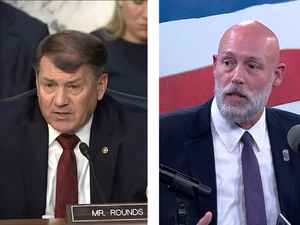
Arguing Tuesday in New Hampshire on behalf of the ACLU, Cody Wofsy said he understands if the court views it as a separate suit, but that the organization views the two executive orders as somewhat identical to the first executive order that the Supreme Court struck down.
“This is one kit and caboodle, really,” he said. “It’s a continuing effort to strip birthright citizenship.”
Wofsy, who is deputy director of the ACLU Immigrants' Rights Project, said if Laplante wants a new lawsuit, the ACLU would like to know as soon as possible.
“Our fundamental interest here is just in getting to the place where we can get some relief for this class, whether that’s before this court, in this district, another, it doesn’t really matter to us,” he said.
Special Counsel for the Justice Department Brad Rosenberg said the Trump administration’s primary concern is efficiency.
“We don’t want to have to expend resources responding to motions that may very shortly become moot,” he said.
Perceptions
Laplante, who was nominated by former President George W. Bush, also expressed concern about the perception created by the ACLU asking the same judge for another preliminary injunction.
“I'm concerned about the impression created by the very same judicial officer that handled the Barbara case, now handling new issues involving, not the same issue, but very similar, closely related issues involving birthright citizenship, and that's of concern to me,” he said.
“If this case were brought, and I think the proper way, it might be that … I receive it again by random assignment,” he continued. “If that's the case, we'll be off to the races and we'll litigate the case in the normal way I would approach preliminary injunctive relief.”
All States Newsroom content is free to republish. Read our republishing policy for more information.