Landry’s proposed 90-day pause on diesel exports ruffles industry group
Sep 22, 2026 | 2:07 pm ET
Description
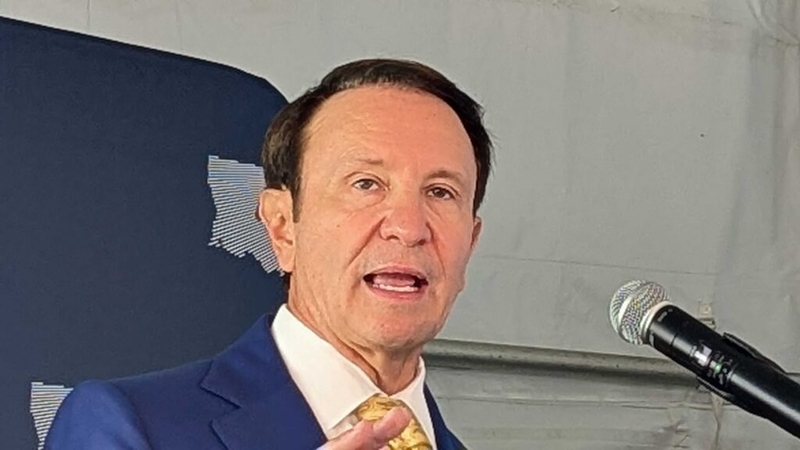
Gov. Jeff Landry wants Congress and the Trump administration to pause diesel exports for 90 days. (Photo by Julie O'Donoghue/Louisiana Illuminator)
Gov. Jeff Landry’s idea to pause U.S. diesel exports for 90 days to help bring down prices at the pump is a “misguided proposal,” according to a leading Louisiana’s fossil fuel industry group.
Landry used social media Friday to pitch the Trump administration and Congress on his diesel export embargo. He appeared on CNBC Monday morning to discuss his proposal, saying that Americans are subsidizing the cost of diesel in Europe. The limited fuel supply and higher costs there are connected to “issues in Iran” and Russia’s war against Ukraine, the governor said.
“Europe has done nothing to help America in either one of those two positions, but yet they’re sucking the energy out of America and making American citizens pay for it,” Landry said.
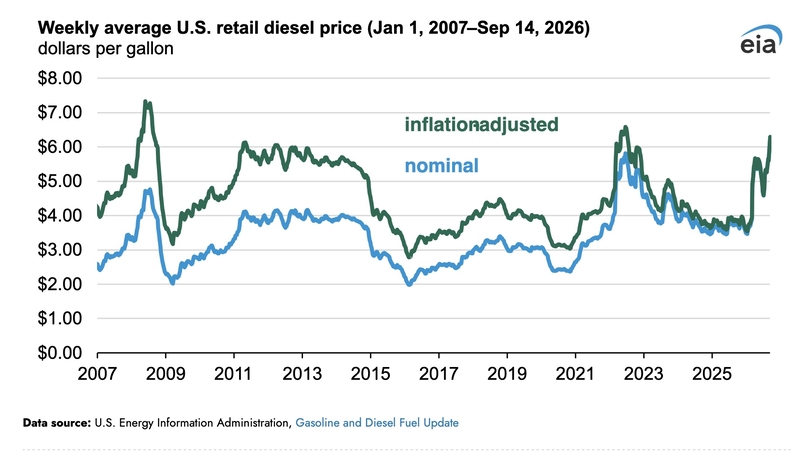
The U.S. average price for diesel reached a record $6.51 a gallon Monday, according to AAA, a nearly $1 increase from last month and approaching $3 higher than a year ago.
A 90-day halt to U.S. diesel exports would lower domestic fuel prices in the short term while Congress and the White House take steps to address lasting policy, the governor said.
Tommy Faucheux, president of the Louisiana Mid-Continent Oil and Gas Association, issued a statement Monday against Landry’s idea. His 103-year-old organization represents all sectors of the industry doing business in the state and the Gulf of Mexico.
“Pipelines for domestic diesel transportation are already at max capacity. Without available capacity to redirect supply, halting the export of American diesel would force refineries to reduce production which would also decrease the production of gasoline,” Faucheux said. “This is a misguided proposal that would cause more harm and increase, not decrease, costs for American families and businesses.”
Fuel market analysts have said restricting diesel exports would most likely lead refineries to cut back production and fail to alleviate high prices, which are influenced by global demand. As long as overseas shortages linger, the cost per gallon in the U.S. isn’t expected to drop.
Every day, U.S. refineries produce more than 5 million barrels of distillate, which primarily consists of diesel fuel, according to the U.S. Energy Information Administration. Historically, about a quarter of that amount has been exported, but the Iran war and sanctions against Russia for its aggression against Ukraine have elevated foreign shipments to more than 35% of the supply.
Until this year, Mexico and Brazil were the top destinations for U.S. distillate. World events have since steered more shipments to Europe. Although domestic fuel prices have increased, the U.S. has not typically seen diesel shortages because it produces more of the fuel than it consumes.
The American Fuel and Petrochemical Manufacturers, a trade group representing refineries, has said this excess diesel is helping address demand in regions that rely more on the fuel, especially Europe.
“Instead of cutting prices for consumers, it would result in less U.S. fuel production, tighter supplies, greater energy security risks and higher prices,” the group said Monday in response to proposals to ban fuel exports.
Landry’s call for an embargo echoes appeals from U.S. Sen. Chuck Grassley, R-Iowa, to President Trump over the weekend to turn off the flow of diesel to foreign markets. He has stressed the harsh impact of high fuel prices on farmers in his agriculture-rooted state.
“If our govt can embargo chips to China it can embargo diesel to help American farmers & truckers,” Grassley wrote Sunday on X. “We need our family farmers who feed & fuel the world (to be) on the strongest footing possible no matter what’s happening across the globe.”
Until Tuesday, the White House had been cold to the idea of a fuel shipment stoppage. In an interview with The Daily Caller last week, U.S. Energy Secretary Chris Wright said exporting less diesel fuel would lead to a corresponding decrease in refining, sending gasoline prices higher in the process.
“The thing we need when the prices are high is more supply. We need to do everything we can to grow supply,” Wright said. “If you start putting barriers on flows, pretty quickly you’ll reduce the production, and you’ll have less supply.”
President Donald Trump seemed open to the possibility of a fuel export ban Tuesday when speaking with reporters after his speech to the United Nations’ General Assembly. A decision on whether the ban diesel shipments would come “fast, one way or the other,” he said.
“I’ve said let’s not send out the diesel. We make a lot of diesel,” Trump added, though he did acknowledge that stopping diesel shipments could lead refineries to make less.
Along with a 90-day export halt, Landry also wants the Trump administration to give small refineries a permanent exemption from meeting federal renewable fuel standards. Starting in 2007, refineries that process fewer than 75,000 barrels of crude daily were not required to produce blended fuels. The blanket exemption was pulled in 2011, when small refineries had to start applying for it and justify their reasons.
In 2025, the Environmental Protection Agency granted the exemption to 34 small refineries, including three in Louisiana.
The EPA has already issued an emergency waiver for refineries to end production of summer blend gasoline slightly earlier than usual to boost fuel supplies. As of Sept. 1, facilities were allowed to switch to winter blends, which are cheaper for refineries to produce but create more harmful emissions. The summer-winter switch typically takes place in mid-September, though states like California can require summer blend production through October.
- 4:48 pmThis report was updated to reflect comments Tuesday from President Donald Trump and his administration.

Baton Rouge, LA