Trump administration’s WA voter roll lawsuit dismissed
Sep 22, 2026 | 2:00 pm ET
Description
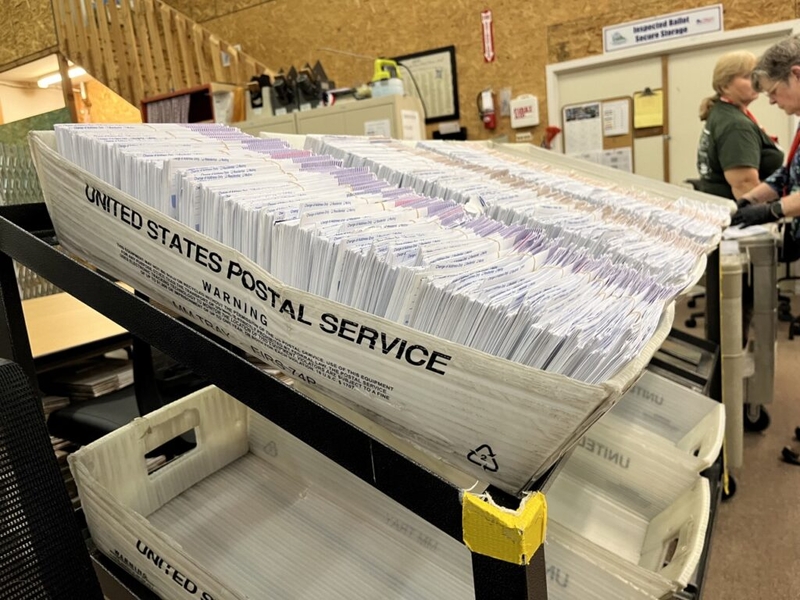
Ballot envelopes sit in the Thurston County elections center. (Photo by Laurel Demkovich/Washington State Standard)
SEATTLE — A federal judge in Seattle on Tuesday tossed the Trump administration’s lawsuit against Washington seeking the state’s voter rolls, in line with many rulings across the country.
This marks the 25th case that the U.S. Department of Justice has lost in its push to access sensitive voter information. The Justice Department has sued many states for voter rolls, and has yet to have a judge rule in its favor. An appeals court has also ruled against it in a lawsuit against Michigan. The federal government has appealed many of its other losses, as well.
Both sides had been waiting for weeks for a decision from U.S. District Court Judge Kymberly Evanson after an early August hearing in federal court in Seattle.
In her order Tuesday, Evanson, who was appointed by former President Joe Biden, said the Trump administration’s argument is “not persuasive as a matter of statutory interpretation, nor is it consistent with the purpose” of federal law.
Washington Attorney General Nick Brown called the decision “the likeliest of victories for democracy.”
“Trump’s DOJ is now 0 for 25 nationwide in efforts to plunder the private information of states’ voters,” he continued in a statement. “We should not have to spend election season defending voters from their president, but victory after victory reminds us there is hope for the rule of law.”
Secretary of State Steve Hobbs said the decision “reaffirms that my office has every right to protect voter’s private data.”
“These baseless demands for state voter rolls are part of a broader pattern of federal overreach in states’ elections,” he added. “The DOJ does not have the authority or any reason to interfere with state election administration.”
Since that hearing, the Justice Department has threatened Hobbs over election records, directing him early this month to preserve documents from the 2024 election. Failing to do so “may constitute spoliation of evidence, which may subject you to civil and criminal sanctions,” according to the letter to Hobbs.
The conflict here began last September when Hobbs refused to provide the Trump administration with the personal information contained in the state’s voter rolls.
Hobbs reported he’d be willing to provide voter names, addresses, genders, years of birth, voting records, registration dates and registration numbers. But he wouldn’t give dates of birth, driver license numbers and the last four digits of social security numbers, since that information is protected under Washington law.
In the hearing last month, Tera Heintz, of the Washington state attorney general’s office, called the demand “unprecedented and dangerous.”
“There is simply no authority for DOJ’s claim that they should be able to superintend on a line-by-line, individual-by-individual basis who is allowed to register and vote in state and federal elections,” she said. “That is not DOJ’s authority. It usurps the constitutional authority.”
Hobbs, a Democrat, feared the information would be shared with immigration authorities to fuel President Donald Trump’s crackdown, or that it could be used as pretext to remove voters from the rolls. Trump has repeatedly claimed massive voter fraud without evidence. Federal officials insisted the request was to ensure the state was properly updating its voter list under federal law.
The federal government filed the litigation in December, but the case was delayed for months as the Justice Department’s attorneys failed to serve Washington state officials with the suit.
The Trump administration alleges the records are needed to ensure states are complying with National Voter Registration Act requirements to remove voters who are ineligible from their voter rolls and the Help America Vote Act prohibition on processing voter registration applications without verifying the applicants’ identity. Also the Civil Rights Act of 1960, which federal attorneys claim forces election officials to provide this voter information to the U.S. attorney general if it is demanded.
The state counters that this argument is wrong, that these federal laws don’t authorize the voter roll demand. The Civil Rights Act provision was meant to help prevent racial discrimination in elections in the segregated South.
In the hearing, Evanson noted many other courts have decided similar cases across the country.
“Is there any meaningful basis on which to distinguish this case?” Evanson asked Justice Department attorney Raymond Yang.
He responded that the cases are mostly identical, but other judges have “misconstrued” federal law.
The Department of Justice didn’t immediately respond to a request for comment on the ruling.
At least 16 states led by Republicans have provided or said they would provide their full voter registration lists, according to the Brennan Center for Justice.
This is just one of the state’s flashpoints with the Trump administration over elections. Washington has also been at odds with the president over his unsuccessful efforts to restrict mail-in voting.
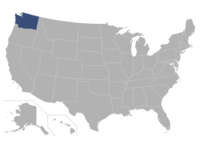
Olympia, WA