Independent US Senate candidates from Plains states say they would not caucus with either party
Oct 12, 2026 | 5:31 pm ET
Description
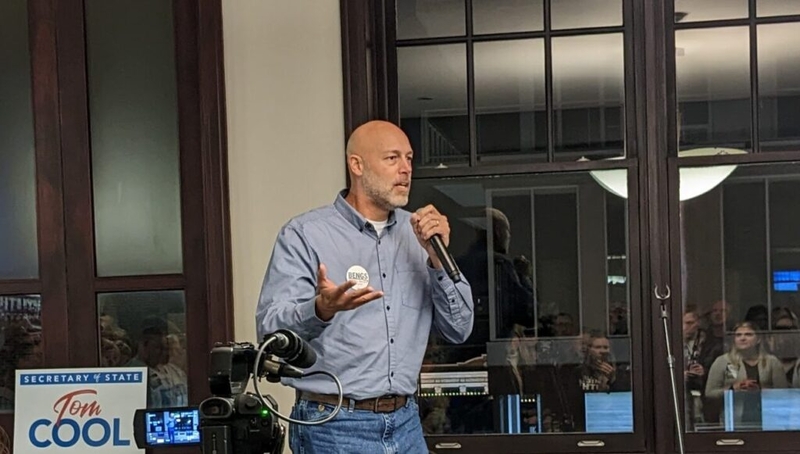
U.S. Senate candidate Brian Bengs speaks to supporters on Nov. 7, 2022, at the Washington Pavilion in Sioux Falls. (Photo by John Hult/South Dakota Searchlight)
Three independent U.S. Senate candidates from Great Plains states said Monday they will not caucus with Republicans or Democrats if elected, while the National Republican Senatorial Committee accused them of being Democrats in disguise.
Brian Bengs of South Dakota, Seth Bodnar of Montana and Dan Osborn of Nebraska made the commitment during a virtual press conference.
Bengs, a Hot Springs resident and military veteran who formerly worked as a professor and park ranger, is running his second U.S. Senate campaign in South Dakota. He ran as a Democrat against Republican Sen. John Thune in 2022 and received 26% of the vote. This time, he is running as an independent against Republican Sen. Mike Rounds in the Nov. 3 election. A Democratic nominee dropped out of the race.
Bengs and the other two candidates criticized corporate influence in Washington and said they would support policies from both parties if they benefit the people of their states.
“South Dakotans deserve a senator who answers to them, not to national party leaders in Washington,” Bengs said.
Meanwhile, the National Republican Senatorial Committee issued a statement dismissing the pledges.
“The Fake Independent circus is fooling nobody,” said Committee National Press Secretary Bernadette Breslin. “Bengs, Osborn, and Bodnar are Democrats who would caucus with Democrats and fight for the radical left’s agenda if elected to the U.S. Senate.”
Rounds’ campaign spokesperson Rob Skjonsberg echoed that sentiment in a statement to South Dakota Searchlight.
“Their policies are consistent with Bernie and AOC — they’re not fooling anyone,” Skjonsberg’s statement said, referencing independent U.S. Sen. Bernie Sanders of Vermont, who has caucused with Democrats, and U.S. Rep. Alexandria Ocasio-Cortez, D-New York.
The Republican committee also alleged that senators who do not caucus with either party would lose access to Senate committee positions, limiting their ability to represent constituents.
The candidates acknowledged that remaining independent could complicate efforts to secure committee assignments but argued their votes could carry significant weight in a closely divided Senate, which could allow them to negotiate for committee assignments.

Pierre, SD