DOJ presses case against in-state tuition for undocumented Maryland students
Sep 21, 2026 | 5:01 pm ET

Description
Students walk across a college campus on a sunny day. The Justice Department is challenging laws in 21 states, including Maryland, that grant in-state tuition at state campuses to undocumented immigrants who live in the state. (Photo by Klaus Vedfelt/Getty Stock Images)
The Department of Justice is asking a federal judge in Maryland for summary judgment in its lawsuit challenging a 2011 state law that provides in-state tuition and other education-related assistance to undocumented immigrants living in the state.
Maryland is one of 21 states where federal attorneys have filed similar lawsuits. Last month, the Maryland Office of the Attorney General asked that the federal government’s case be dismissed, a motion the Justice Department pushed back on.
“Maryland does not challenge the sufficiency of the factual allegations in the complaint, but rather challenges the legal bases for the claims,” federal attorneys said in a brief filed last week. “The United States now opposes that motion and cross-moves for summary judgment on all claims.”
The Justice Department originally filed suit in July seeking to block a 2011 state law known as the DREAM Act. The law — which went into effect following a referendum challenge — grants in-state tuition rates to some undocumented immigrants.
To be eligible, the law requires students to have attended a public or private high school in the state and received a diploma or its equivalent in Maryland; to register for college within six years of receiving that diploma; and to prove that the student or a parent or guardian paid taxes in the state for the two years prior to enrolling in college.
Immigrant rights, advocacy groups sue Trump administration for ‘warrantless arrest’
If successful, the DOJ lawsuit could also end other education-related programs such as legislative scholarships and in-state community college tuition rates that incorporated the DREAM Act eligibility standards.
The Justice lawsuit claims the state act is superseded by federal law.
The department is also seeking a permanent injunction barring the state from providing any financial aid or scholarship programs that might benefit undocumented immigrants who are residents of the state.
Two weeks ago, Attorney General Anthony Brown’s office filed a motion to have the case dismissed, citing the Justice Department’s “failure to state a claim upon which relief may be granted.”
“Indeed, courts throughout the country have already rejected the federal government’s express-preemption challenges to state laws similar to Maryland’s that do not condition eligibility on residency, but rather on residence-neutral factors such as high school attendance and graduation,” lawyers for the state wrote in their motion.
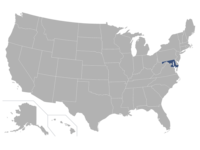
Maryland is one of 21 states with laws providing in-state tuition to undocumented immigrants that have been challenged by the federal government. Those include four new lawsuits filed last week in Arizona, New Mexico, Oregon and Washington.
Federal attorneys won court orders in five states — Illinois, Kentucky, Nebraska, Oklahoma and Texas. In Florida, the state Board of Education voted to bar people who do not legally reside in the United States from attending a state college or university.
“This is a simple matter of federal law: colleges cannot provide benefits to illegal aliens that they do not provide to U.S. citizens,” Assistant Attorney General Brett A. Shumate of the Justice Department’s Civil Division said in a statement issued by the Department last week. “This Department of Justice will not tolerate American students being treated like second-class citizens in their own country.”
Annapolis, MD