Higher education in Pa. should challenge itself the same way we challenge our students.
Sep 21, 2026 | 2:35 am ET
Description
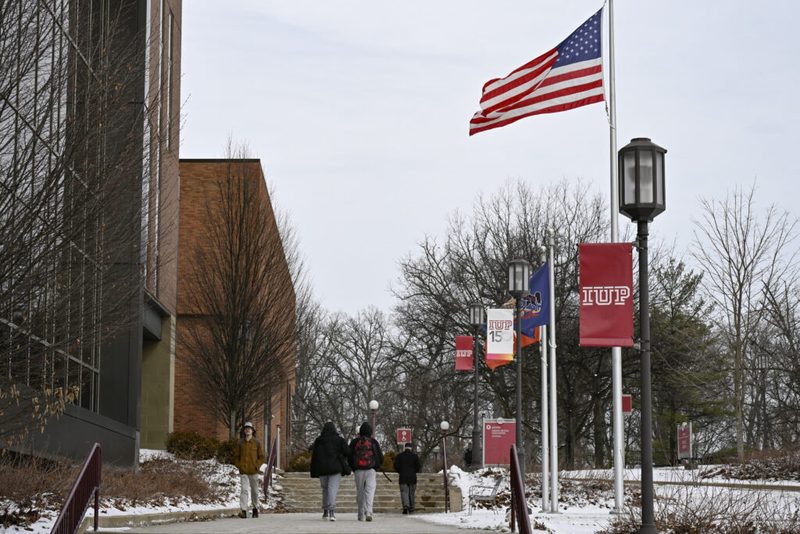
Indiana University of Pennsylvania (IUP) campus on Jan. 21, 2026. (Photo by John Beale for the Pennsylvania Capital-Star)
Higher education teaches our students to ask hard questions. Colleges and universities should be ready to do the same.
That was the thought I shared recently during a summit of higher education leaders from across Pennsylvania. While I am chancellor for the 10 state universities of Pennsylvania, I believe it applies to every institution represented in that room and across the industry.
As the fall semester begins, colleges are urging students to be curious and brave, to push beyond their expectations, understand that taking a thoughtful risk can move them forward, and not to accept something simply because it’s always been that way.
Colleges and universities must do the same because the students we serve, and the world we’re preparing them to lead, are rapidly changing.
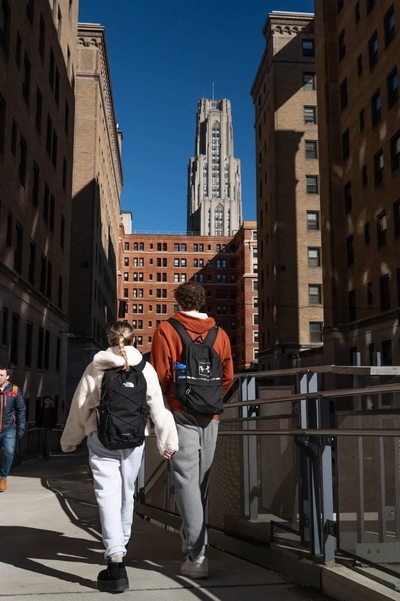
Pennsylvania is changing. It’s an aging state with fewer young people and a declining population in many regions, which leads to an overall shortage of workers. By 2032, our state is projected to have 218,000 jobs without enough workers with postsecondary credentials. What is our solution?
The universe of students who want a college education is also changing. Most higher education institutions are structured to teach 18-year-olds fresh out of high school. But increasingly, we need to educate working adults, such as mid-career workers who are balancing jobs, children, mortgages and more. What is our solution?
What about those who started college, but life “happened” and they got derailed? They took jobs, gained experience, and now want to strengthen their skills so they can advance their careers. But going back, or starting college for the first time, can be overwhelming. Pennsylvania has 1.2 million people who started college but left without a credential. What is our solution?
These are just some of the hard questions that Pennsylvania’s colleges and universities cannot ignore. We must be willing to push the boundaries of who we serve and how we serve them if we are going to find solutions.
The good news is we have remarkably talented faculty and staff who know how to solve problems. They know that the most critical skills our students graduate with will serve them throughout their lifetimes. The ability to think critically, solve complex problems, communicate clearly, work in teams and adapt to new circumstances are all skills that will allow humans to direct artificial intelligence, not be directed by it.
We should design every course, whether in the sciences, humanities, business or the arts, to strengthen these core skills. Doing it well takes time, something in short supply on busy campuses where people are pulled in many directions. We already do it well, but we can do it even better.
Addressing the workforce shortage means connecting with and supporting those working adults. It means awarding course credit for learning on the job, in the military and in life. That is harder than it sounds, but it’s worth the effort.
It’s also time to ask whether we should build more pathways to a degree. For some students, in a limited number of carefully selected programs, that could mean earning a degree in three years instead of four. Those programs would be built around the competencies that a graduate needs, but with fewer classes. That could give some students new options that better fit their lives while still meeting licensure requirements and demonstrating to employers that they can do the jobs.
Of course, challenging the status quo raises legitimate questions about quality and impact. I welcome that scrutiny because it leads to better solutions. We ask our students to assess difficult problems, challenge assumptions and find new opportunities. Shouldn’t higher education be willing to do the same?
No one can do it alone. It will take trade schools, community colleges, state universities, state-related institutions and independent colleges doing their part. Some are already leading the way. Many have room to improve, including my own system.
Higher education cannot control the future, the impact of artificial intelligence, or shifting cultural and economic forces. But we can control how we respond.
We can ensure that every course strengthens the thinking and communication skills students need throughout their lives, better serves working adults and others who need more flexibility, and creates new pathways to a degree without sacrificing quality.
None of those solutions will be easy. But asking hard questions, considering new ideas and solving problems is exactly what we expect from our students. We should expect the same from ourselves.
Higher education changes lives. I am confident we can change too.
Harrisburg, PA