Idaho’s invasive quagga mussel population is ‘very small,’ state director says
Oct 15, 2026 | 6:10 am ET
Description
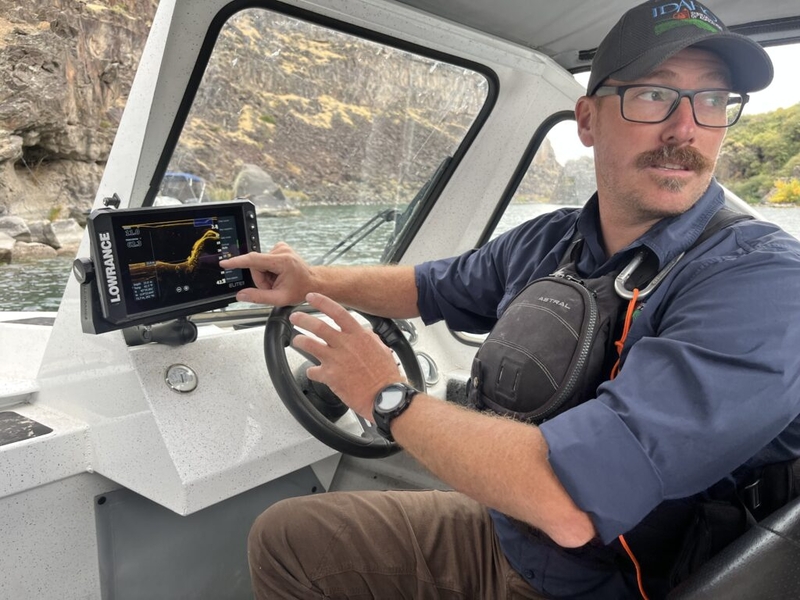
Jeremey Varley, the Idaho State Department of Agriculture's southern chief treatment engineer, explains the state's strategy for eradicating invasive quagga mussels during a boat tour of the infested portion of the Snake River on Oct. 3, 2025. (Photo by Clark Corbin/Idaho Capital Sun)
Idaho State Department of Agriculture Director Chanel Tewalt told a committee of state legislators Tuesday that she believes Idaho’s population of invasive quagga mussels is very small and confined to limited sections of the Snake River.
In September 2023, state officials used water sampling to confirm the presence of quagga mussel larvae for the first time in state history.
During water sampling this year, state officials found eight veliger mussels, the larvae form of the mussels, Tewalt said during a meeting of the Idaho Legislature’s Natural Resources Committee at the Idaho State Capitol in Boise.
Scuba divers also found what Tewalt described as “a number of adult mussels” while searching the Snake River.
The mussels, which were discovered in the Snake River near Twin Falls, can reproduce extremely rapidly, clog pipes and cover boat hulls. If left unchecked, Tewalt said the spread of quagga mussels poses serious threats to the state’s drinking and irrigation water, recreation industry, state budget and economy.
In an effort to completely eradicate all of the invasive species, officials with the Idaho State Department of Agriculture have been administering lethal copper chemicals into the affected part of the Snake River each year since the mussels were first detected.
Compared to previous years, the amount of mussels discovered in water sampling is lower and the affected section of the Snake River is smaller this year, Tewalt told legislators.
“What it would signify is a very small population,” Tewalt said.
After detecting the mussels again this summer, the ag department moved forward with another round of copper-based treatments – with scuba divers injecting the chemicals in harder to reach nooks, crannies and fissures in rock.

“Copper in the water means that reproduction cycle (for the mussels) is halted,” Tewalt said.
Along with mussels, the copper also kills fish and other aquatic life in the river. This year, Tewalt said there have been fewer fish killed and that state officials are not stocking the sections of the river being treated with copper with new fish.
Although the mussels were first discovered in water samples in 2023, Tewalt told legislators the mussels have likely been in the Twin Falls pool of the Snake River for longer.
Water sampling and monitoring for quagga mussels is an ongoing, years-long process. When water temperatures warm up again next year, state officials will resume water sampling to check for more quagga mussels, state officials said.
Boise, ID