Alabama executes Jeffery Lee by lethal injection
Sep 17, 2026 | 8:03 pm ET
Description
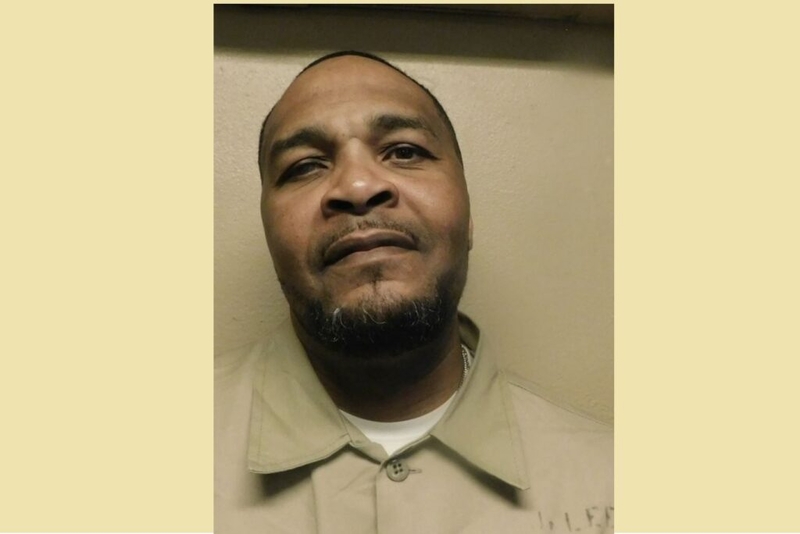
Jeffrey Lee, seen in an Alabama Department of Corrections photo, was executed Thursday evening for the murders of Jimmy Ellis and Elaine Thompson during a pawn shop robbery in 1998. A trial jury voted 7-5 to sentence Lee to life in prison, but the trial judge overrode the jury and sentenced Lee to death. (Alabama Department of Corrections)
The state of Alabama executed Jeffery Lee, 49, Thursday for the murders of Jimmy Ellis and Elaine Thompson during a pawn shop robbery in Orrville in 1998.
Lee was executed by lethal injection just over two months after a federal district court rebuffed Alabama’s attempt to put him to death by nitrogen gas, and after an unsuccessful campaign for clemency by death penalty opponents, who said a jury’s initial recommendation of sentencing Lee to life without parole should be respected.
“All is well, I just want to say to my family, I love them,” Lee said during his final statement. “To my brothers on life row, I love them.”
Media witnesses did not observe any complications during the execution. Lee was pronounced dead at 6:22 p.m.
It was the second execution conducted by the state this year. Jeremy Williams, 41, was put to death by lethal injection last month for his role in the sexual assault and murder of a 5-year-old girl in Russell County in 2021.
Gov. Kay Ivey said in a statement that she reaffirmed her commitment to justice by following through with Lee’s execution and that the “promise was fulfilled for his victims.”
“This case underscores exactly why the law passed in 2017 ending so-called ‘judicial override’ did not apply to existing death sentences like Mr. Lee’s,” Ivey said. “These victims have waited long enough, and I pray they can feel peace and have closure.”
Lee was convicted of the murders of Thompson and Ellis in 2000. During the trial, Lee’s attorneys sought to avoid the death penalty, noting Lee’s youth at the time; the fact he was a father to two children and what they described as an intellectual disability.
A jury voted 7-5 to recommend sentencing Lee to life in prison. However, Dallas County Circuit Court Judge Jack Meigs overruled the jury and imposed the death sentence, writing that Lee had “mercilessly” killed Thompson and Ellis.
Alabama allowed judges to impose the death penalty against a jury’s recommendation for decades. The practice, known as judicial override, was abolished by the Alabama Legislature in 2017, but the bill doing so did not apply retroactively.
Death penalty opponents petitioned Gov. Kay Ivey to commute Lee’s sentence, citing the original jury determination. Ivey earlier this year commuted the death sentence of Charles “Sonny” Burton, sentenced to death for being present during the robbery of a Talladega AutoZone in 1991 in which Doug Battle, a customer, was killed.
Burton did not pull the trigger and was not in the store when Battle was killed, and opponents of Burton’s execution noted that Derrick DeBruce, who shot and killed Battle, had his death sentence commuted to life in prison.
Ivey also commuted the death sentence for Robin “Rocky” Myers in February 2025 amid questions about Myers’ conviction for the murder of Ludie Mae Tucker in 1991. There was no physical evidence that linked him to her death.
However, Ivey spokeswoman Gina Maiola said Wednesday that the 2017 law abolishing judicial override “made very clear that it would not apply retroactively.”
Lee’s attorneys said in a statement following the execution Thursday that Lee’s death sentence rested solely on judicial override. They wrote that it was “a moral failure, not just a legal formality.”
“A state that no longer stands behind the rule that condemned a man, but kills him under it anyway, has not delivered justice,” the statement said. “It has revealed how little its own standards constrain it when it is determined to carry out an execution.”
Lee was originally scheduled to be executed by nitrogen gas in June, but he sued to block the method, arguing that it would subject him to unconstitutionally cruel and unusual punishment and that the state could carry out an execution by firing squad.
Though other inmates subject to nitrogen gas had previously challenged the method, Lee’s suit led to an unprecedented bench trial over the state’s use of nitrogen gas, which witnesses to nitrogen gas executions described as leading to drawn-out deaths for those subjected to it.
U.S. District Judge Emily Marks in late May ruled that while the nitrogen gas process would produce air hunger, that did not rise to the level of cruel and unusual punishment. However, a three-judge panel with the 11th Circuit Court of Appeals reversed Marks, saying air hunger went “over and above the mental distress that typically accompanies the knowledge of impending death by execution.”
The judges directed Marks to rule whether death by firing squad was a feasible alternative. Marks ruled that it was and blocked the state’s use of nitrogen gas, which the U.S. Supreme Court declined to overturn.
The following day, the state moved to execute Lee by lethal injection. Lee’s attorneys argued in federal court that a 2018 settlement of a lawsuit brought by Lee against lethal injection prevented the state from using the method, but Marks ruled in the state’s favor, saying circumstances had changed.
The state did not make any serious efforts to attempt an execution by firing squad, Lee’s preferred method, and his attorneys did not refer to it much.
The state plans to execute Michael Shannon Taylor in November.
Montgomery