Nearly 6,700 Arizona homicides remain unsolved. The victims’ families deserve better.
Sep 17, 2026 | 3:36 pm ET

Description
(Photo by Douglas Sacha/Getty Images)
September is National Cold Case Month and on Sept. 20, my cousin Loretta Lynn would have turned 65 years old.
Instead, my family has spent nearly four decades waiting for the identity of who killed her.

On June 14, 1988, I was traveling in Europe when I picked up a pay phone and received the news that changed my family forever: Loretta had been murdered in her own home.
She and her husband had just moved into a duplex in Mesa the Saturday before she was killed. She was a beautiful young mother with a loving husband who was in awe of her presence. My cousin and her husband had a seven-month-old baby together, with another on the way.
When I heard what happened, it felt like someone had reached into my chest and ripped out my heart. I desperately wanted to come home, but I stayed in Europe. I was left trying to process that Loretta had been murdered with a child in her womb while I was grieving with one in mine.
Life kept moving after that phone call. Children grew up. Careers changed. Decades passed.
One thing did not change: Loretta’s murder remained unsolved.
Eventually, waiting wasn’t enough for me.
When Bryan Patrick Miller, known as the Phoenix “Canal Killer,” was arrested in 2015, I became increasingly interested in advances in DNA testing and the investigative genetic genealogy that was used to catch Miller. I started researching cases, attending DNA conferences and learning everything I could about the technology that was helping investigators solve crimes that had once seemed impossible to resolve.
What I learned also made me frustrated.
At the time, the Mesa Police Department did not have a dedicated cold case detective or unit. The homicide detective assigned to Loretta’s case had other responsibilities and could only return to her case when time allowed.
I found myself learning about advances in forensic technology that weren’t being explored in Loretta’s investigation. I didn’t understand my rights as a victim’s family member. I didn’t know we could obtain the police report. Too often, I felt as though I was the person responsible for keeping Loretta’s case alive.
No family should have to become an amateur investigator just to make sure their loved one isn’t forgotten.
Loretta’s case is not an isolated tragedy.
From 1965 through 2024, Arizona recorded approximately 18,490 homicides. About 6,695 of them remain unresolved — roughly one out of every three.
Those aren’t simply old case numbers sitting in filing cabinets.
They are somebody’s daughter. Somebody’s son. Somebody’s mother, father, sister, brother, cousin or friend.
And every unresolved case leaves a family living in a strange space between grief and hope. You mourn someone you love while wondering whether the next phone call could finally bring an answer.
We should invest in modern forensic laboratories and technology, expand dedicated cold case resources, strengthen DNA collection and testing, and improve information sharing among law, public safety agencies and detention systems.
Families also need something much more basic: consistent communication and a clear point of contact. Whether a homicide gets another serious look should not depend on whether a police department happens to have extra staff, funding or someone familiar with the newest forensic technology.
But improving how Arizona handles unresolved cases also requires us to have a difficult conversation about where we put our public safety dollars.
For many years, I believed the person who murdered Loretta deserved the death penalty.
But 38 years of living with an unsolved murder changed how I think about justice.
Executing Loretta’s killer would not bring her back. And if pursuing the death penalty requires enormous amounts of public money and government resources, I have to ask a different question now: What if some of those resources were used instead to help us find the killers we haven’t caught?
What if we invested more aggressively in new DNA testing, forensic genealogy, cold case investigators, missing persons investigations and support for families?
Arizona continues to devote significant resources to punishment, including capital punishment. Since 2007, providing defense in the hundreds of death penalty cases pursued by Maricopa County prosecutors has cost $289 million alone, while thousands of unresolved homicides sit alongside missing-person cases, unidentified remains and other unsolved violent crimes.
Public safety should not only be measured by how severely we punish someone after a case is solved.
It should also be measured by whether we can solve the case in the first place.
My experience ultimately led me to create the Missing or Cold Podcast, where I tell the stories of people who have gone missing and victims of unsolved homicide. After 17 years working in talk radio, I knew the power of giving people a microphone. I wanted families like mine to have one.
Today, there is finally reason for me to feel hopeful. Loretta’s case now has the support of a dedicated cold case detective, and for the first time in a long time, I believe there may be a path forward.
But it should not have taken 38 years.
On Sept. 20, Loretta should have been celebrating her 65th birthday surrounded by the people who loved her — her husband, her children and the family who still carries her with us.
Instead, we are still waiting for answers about why she never got the chance.
Thousands of Arizona families are waiting, too.
They deserve more than our sympathy. They deserve a public safety system willing to invest in finding answers.
Thirty-eight years is too long to wait.
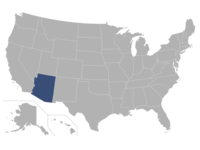
Phoenix, AZ