New NC poll shows voters strongly favor constitutional amendments on taxes, voting
Sep 17, 2026 | 4:06 pm ET
Description
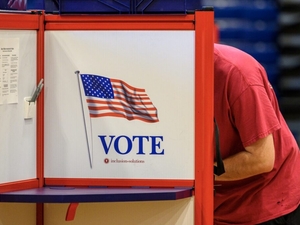
(Photo: Clayton Henkel/NC Newsline)
With less than seven weeks to go until the midterm elections, a new Elon University poll has found that likely voters in both parties strongly favor three constitutional amendments on the ballot this fall in North Carolina.
Voters will be asked to consider amendments requiring photo IDs for all forms of voting, lowering the cap on the state’s personal income tax rate from 7% to 3.5%, and requiring limits on property tax increases by local governments.

“All the amendments on the ballot, we’re finding have much stronger for than against,” Jason Husser, director of the Elon University Poll, told NC Newsline’s Rob Schofield.
“This isn’t totally surprising. If we look back historically at constitutional amendments in North Carolina, Ballotpedia did a very clear count, and they found that 72% of amendments that had been on the ballot in the state have passed,” Husser said
The poll found that 72% of likely voters favor the amendment limiting property tax increases, while 14% oppose it. Another 14% were unsure.
The largely Republican-backed amendment grew out of complaints from homeowners, particularly seniors and others on fixed incomes, who say rapidly rising property taxes may force them out of their homes.
Republican lawmakers have accused some local governments of out-of-control spending and lack of transparency.
“Families are getting ripped off as some, but by no means all, local governments rake in billions more than inflation and population growth warrant,” House Speaker Destin Hall (R-Caldwell) said in May.
NC groups launch campaign to defeat two tax amendments on November ballot
But critics of the amendment have warned that limiting property tax levies could have dire consequences for local governments, which could be forced to cut services. Local property taxes help pay for vital needs like public safety, education, and public health.
Democratic lawmakers argued local governments are being forced to raise their property tax rates because the state isn’t supplying enough funding.
“I think if we were really serious about fixing the property tax problem, we would begin here looking at ourselves and figuring out how we can support these communities in both their education, their law enforcement, all of those things, and stop creating unfunded mandates,” Rep. Eric Ager (D-Buncombe) said during a House debate on the amendment.
If approved, the constitutional amendment would cap growth in total dollars collected by local governments. Lawmakers would enact laws to define revenue limits and exceptions.

On Thursday, Senate Leader Phil Berger (R-Rockingham) formed the Senate Select Committee on Property Tax Reform to evaluate proposals to address growing concerns about “skyrocketing tax bills.”
“This committee will provide valuable insight and feedback as we rein in local policies that drive up property tax rates and consider proposals to ease the tax burden for all North Carolinians,” Berger said.
The bipartisan committee will be led by Sens. Lisa Barnes (R-Nash), Tom McInnis (R-Moore) and Buck Newton (R-Wilson).
The Elon Poll also found that 63% of likely voters support the constitutional amendment to require a photo ID for all forms of voting. Twenty-five percent of likely voters opposed it while 12% were unsure.
The amendment would require all voters — not just those voting in person — to present a photo ID before voting.
In 2023, the NC Supreme Court ruled that absentee voters must include a photocopy of their Photo IDs with mailed-in ballots or complete the ID Exception Form. The amendment will lock the requirement into the state’s constitution so it can’t be changed by lawmakers.
When it came to the income tax amendment, 67% of likely voters favored it while 18% were opposed and 16% were unsure.
The state’s current individual income tax rate is a flat rate of 3.99%, down from 4.25% in 2025. The rate is scheduled to drop to 3.49% in 2027 and 2.99% in 2028. The amendment would set a constitutional cap at 3.5% starting next year.
Critics say if the income tax amendment is approved, it would prevent state lawmakers from raising revenue to quickly respond to changing economic conditions. If they needed to raise the income tax rate beyond 3.5%, it would require another constitutional amendment approved by the voters.
Raleigh, NC