He championed vaccine mandates. Will that record help him unseat a party-shifting conservative?
Sep 17, 2026 | 8:00 am ET
Description
When California voters approved political maps that gave Democrats an edge in the midterms, they set two candidates in the state’s newly redrawn 6th congressional district on a collision course. The outcome of that race could help decide which party controls a narrowly divided House of Representatives — and with it, the fate of federal health policy.
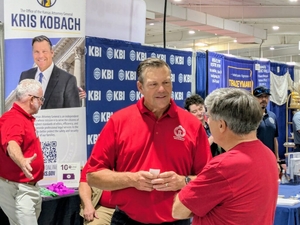
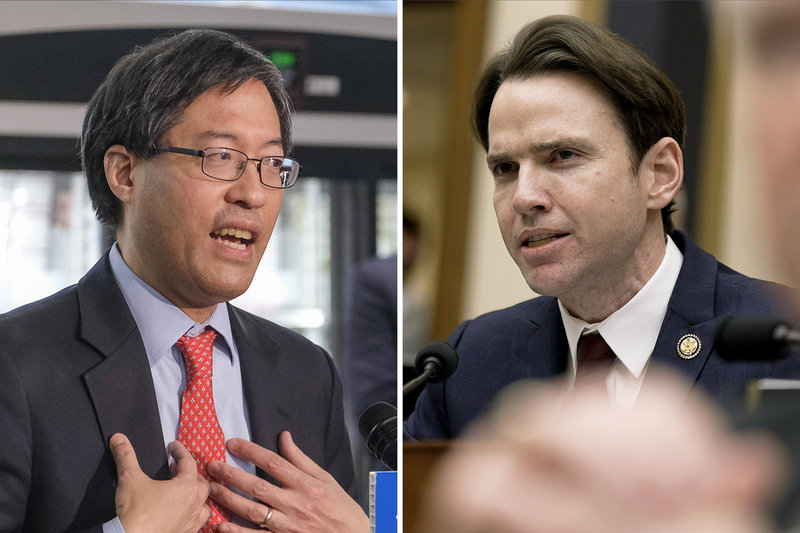
Dr. Richard Pan, a pediatrician and former state senator, is challenging Rep. Kevin Kiley, a two-time incumbent and Republican-turned-independent, in a district that encompasses portions of Yolo, Sacramento and Placer counties. Their positions on healthcare sit squarely on opposite sides of the political divide.
That matters in an election where healthcare costs are an increasingly prominent issue for voters. In many areas of the state, health insurance premiums will rise more than 10% next year. The number of uninsured Californians will too.
Seven in 10 Californians say they are “somewhat or very dissatisfied” with the affordability of healthcare, according to a new poll from the Public Policy Institute of California. Two-thirds of likely voters also believe the federal government bears responsibility for ensuring all Americans have access to healthcare.
“These are big numbers,” said Mark Baldassare, survey director at PPIC. “We often talk about gas prices and grocery store prices, but we need to think about the cost of healthcare as something that has Californians concerned right now.”
Last fall, in a similar PPIC survey, just 1 in 4 California adults said they approved of President Donald Trump’s One Big Beautiful Bill Act, which enacted the most sweeping changes to Medicaid, the public insurance program for poor and disabled people, since President Barack Obama signed the Affordable Care Act in 2010.
“There’s a lot of this that ends up becoming part of the Trump agenda and it’s hard to untangle,” said Andrew Acosta, a Democratic strategist in Sacramento, noting that in House races candidates are largely responding to policies made in the first two years of Trump’s second term.
The law created tough fiscal challenges for California’s already strained budget, and reignited policy debates about whether healthcare is a right or a privilege.
“People forget that before the Affordable Care Act emergency rooms and community clinics were overwhelmed…small, and they didn’t have a lot of resources,” said Anna Marshall, deputy director of federal policy at the California Primary Care Association. “Medicaid expansion really changed the game.”
The law helped community health clinics — which previously provided free care to uninsured patients — open in rural areas and offer new services like behavioral health. California now has more than twice as many community clinics as it did before the Affordable Care Act. The California Primary Care Association, which represents clinics, opposed the One Big Beautiful Bill Act, but has not taken a position on the District 6 race.
California, once at the vanguard of universal health coverage, now stands to double its uninsured rate, with 2.2 million people losing coverage over the next few years. Most will fall off Medi-Cal, the state’s version of Medicaid, while rising premiums will price several hundred thousand middle-income earners out of coverage on the Affordable Care Act exchange.
Whether a new Congress moderates or reverses recent federal policy changes depends on who is in control in November. California’s gerrymandering gave registered Democrats a nine-point lead in District 6, but Acosta said he still views the race as semi-competitive.
“Candidates have to defend their record and these are two candidates with a lengthy record,” Acosta said.
Two records, one district
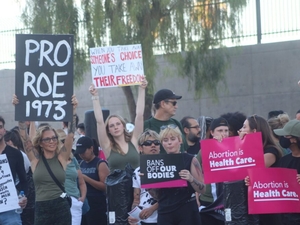
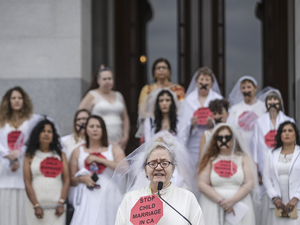
Pan, depending on who tells the story, is famous or infamous for writing California’s strict school vaccine laws. An anti-vaccine activist once shoved him in downtown Sacramento; another threw menstrual blood from the public gallery onto state lawmakers.
Kiley, a Placer County native who ran in the failed recall of Gov. Gavin Newsom, vociferously opposed California’s COVID-19 school closures and vaccine mandates and supported Trump administration efforts to curb health spending last year.
Democrats nationwide are hoping to ride a wave of discontent with Trump — particularly on healthcare — to retake the House of Representatives in November. California’s redistricting gave Democrats a five-seat advantage to offset a similar move made by Texas Republicans last summer.
Matt Fleming, a conservative columnist and District 6 resident, agreed the race would be competitive, partially because Kiley has a strong personal brand and is well-known to the local electorate. Some have accused Kiley of switching his party affiliation inauthentically to appeal to the left-leaning district, but Fleming — who was a legislative staffer at the same time Kiley served in the Assembly — said Kiley was “not a tool for leadership” even then.
“I don’t really see Richard Pan as someone who is going to blaze a trail and be an independent voice even as a Democrat,” Fleming said. “Kevin Kiley is not a rubber stamp for Trump or Mike Johnson.”
Kiley said in an interview with Semafor this week he will stop caucusing with Republicans if reelected. Doing so would be a challenge, requiring a majority of the House to adopt new rules that allow independent members who do not caucus with either party to maintain committee assignments.
Affordability is king
Trump’s One Big Beautiful Bill Act reduces federal Medicaid spending by nearly $1 trillion over the next decade, the Congressional Budget Office estimates. It does so primarily through work requirements and shorter eligibility periods expected to kick millions of people off the program over time. California will lose tens of billions of dollars annually as a result.
Earlier this year, Covered California enrollees also saw monthly premiums jump sharply after enhanced federal subsidies expired, contributing to roughly 50,000 fewer people enrolling. A typical plan now costs $570 a month, and rates will rise another 9.9% on average next year. Many areas of the state will see double-digit rate growth.
Kiley, who voted for the bill, argues Congress didn’t cut Medicaid — spending continues to rise over time, he notes, largely because the underlying cost of healthcare is also rising. What’s falling, he says, is the number of people enrolled, which is why the government’s long-term projected bill goes down. Opponents say eliminating people from the program amounts to a cut.
He supports the work requirements and changes to Medicaid but said Congress made a mistake letting the Affordable Care Act subsidies expire. California received about $2.1 billion to offset premium costs for nearly all enrollees. Kiley last year coauthored a bipartisan bill with Democrat Sam Liccardo of San Jose to extend federal subsidies for two years. The bill quickly stalled, and Kiley blames the leaders of both parties for the increased costs many Americans now face.
“It’s a very clear case study in how the brokenness of Congress is directly costing Americans in many ways,” he said.
On the subsidies, Pan and Kiley agree. Pan supports reintroducing them, arguing it’s taxpayer money that should go back to taxpayers. California’s middle class is the most vulnerable to rising costs, he said, because it rarely qualifies for assistance but still feels the price increases.
The candidates diverge on who is to blame. Pan, who sits on the state’s affordability office board, points to Trump administration policies that will push up the uninsured rate as a primary driver for cost growth. Kiley blames Sacramento lawmakers, whom he says pass policies that make the state less affordable.
He singles out a new tax on health insurers, passed earlier this year, projected to add $100 annually to premiums per person. The tax’s revenue is meant to backfill some of the federal health cuts.
“Life is already way too expensive in California,” Kiley said. He and Republican colleagues have asked the federal government to block approval of the new tax.
Pan countered that, even without the new tax “costs will start to show up in premiums anyway.”
Pan argues that with 2.2 million more people showing up to hospitals and clinics without the ability to pay, the system will pass those costs on to commercial insurers. Economists dispute how much of that cost gets passed down. Most agree hospitals absorb the bulk of uncompensated care, but some put the added cost at about $100 per person each year.
Pan also said bureaucracy shouldn’t punish people who need and qualify for government help.
“We have to ultimately recognize that we’re trying to respond to what the Trump administration, the Republican Congress, including Kevin Kiley, voted for,” Pan said.
Redistricting injects new energy into race
Julann Brown, chair of the Placer County Democratic Party, said last year’s redistricting, which split Placer into three left-leaning areas, injected new energy into the election.
“Now we have three winnable Democratic seats,” Brown said. “We’ve become relevant in a way that we didn’t expect.”
Local Democrats are excited for the first time in decades about the congressional races and the down-ballot races, she said. The party endorsed Pan and is focused on unseating Kiley who votes “religiously with the MAGA vote.”
The Placer County Republican Party did not respond to requests for comment. It has endorsed Kiley.
Brown said healthcare is an important issue for rural voters, who often have limited access and must drive hours to the nearest clinic, hospital or specialist. If providers reduce services or close, she said, the community will suffer.
In 2008, during the Great Recession, Brown said her family lost health insurance after her husband’s company laid him off. This was two years before the Affordable Care Act expanded healthcare options. During that time, the family relied on a special program to cover their children’s healthcare, while Brown and her husband went without. She fears more people will have to live that way following federal health cuts.
“My family had a choice between making our house payment and having health coverage,” Brown said. “That’s where we’re headed again.”
Supported by the California Health Care Foundation (CHCF), which works to ensure that people have access to the care they need, when they need it, at a price they can afford. Visit www.chcf.org to learn more.
Sacramento