Will a new federal education tax credit be available in Washington?
Sep 16, 2026 | 6:30 pm ET
Description
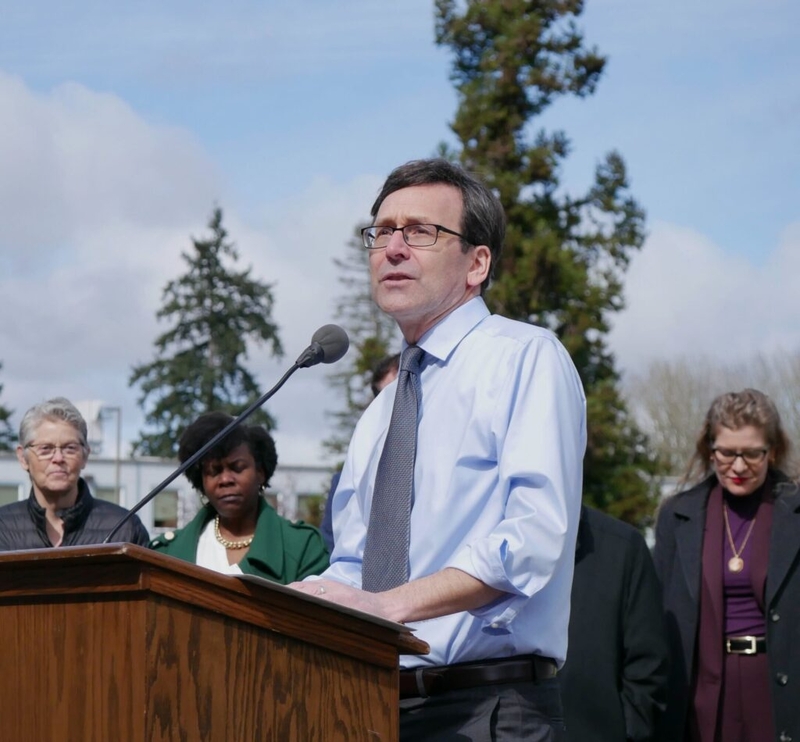
Gov. Bob Ferguson has not publicly stated whether or not Washington will opt into a new federal tax credit program. (Photo by Aspen Ford/Washington State Standard)
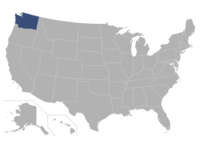
Gov. Bob Ferguson has yet to decide whether Washington will join 31 other states that have opted into a new federal tax program aimed at driving more private dollars into the education of K-12 students.
Beginning in January, taxpayers in participating states will be able to donate up to $1,700 to an approved nonprofit organization. Those groups will provide “scholarships” to students to defray expenses, which will vary depending on whether the person attends a private or public school. Contributors will receive a dollar-for-dollar credit on their federal tax liability.
The Education Freedom Tax Credit program is open to any state whose governor opts in. Participating states must submit a list of scholarship granting organizations to the federal government by Jan. 1.
Advocates say participating should be a no-brainer for Washington as it potentially could bring in hundreds of millions of additional dollars for students. Critics consider the tax credit a voucher program with a different name and worry it will divert funding to private institutions.
Arne Duncan, who served as the U.S. Secretary of Education under Democrat President Barack Obama, called it “not just an educational opportunity,” but a “moral obligation,” during a panel on Tuesday hosted by the Washington Policy Center, a conservative think tank.
“I just desperately hope we choose the right thing for kids and the right thing for our country,” Duncan said. “It doesn’t replace a single dollar. It’s additional. It’s additive.”
The program is gaining momentum in some Democrat-held states including Colorado, Virginia, and more recently New York. Others – Oregon, New Mexico, Hawaii — have publicly declined participating.
“This program has the potential to convert ordinary Americans, ordinary taxpayers, and to create millions of new philanthropists,” said Jorge Elorza, CEO of Democrats for Education Reform, during the panel. Elorza’s organization estimated donations could net over $700 million in added spending on students in Washington.
Scholarship eligibility is limited to students from families with household incomes 300% or less than the area median income, according to the Congressional Research Service. In King County where the median income is nearly $125,000, the limit is around $374,000.
But critics warn it won’t remove the threat of budget cuts for public schools.
During the past legislative session, state lawmakers cut the Transition to Kindergarten program, reduced access to college courses for high schoolers and did not make planned increases to a program that supports rural school districts.
For private school students in Washington, a scholarship could pay for their tuition, room and board, and other fees.
For public school students, the money cannot be used to pay for their basic education. They could use it to offset costs of certain special needs services, tutoring sessions, computer equipment and other activities not paid for by the school district or state.
“It’s especially problematic if those services come through this program instead of what’s already constitutionally mandated in the state of Washington,” which requires ample funding for basic education, said David Knight, an associate professor of education finance at the University of Washington, who recently authored an op-ed opposing the program.
The largest public school teachers’ union in the state is wholly opposed to the program, calling it a federal voucher scheme that diverts public money into private hands.
“With public schools, we have very transparent accountability standards that ensure high quality instruction,” said Toni Lindquist, vice president of the Washington Education Association. Private schools aren’t held to the same standards, she added.
Waiting on the governor
For weeks, state Rep. Michael Keaton, R-Puyallup, has been trying to speak with Ferguson. He said his office has been in contact with different staff members, but he is hoping to meet with the governor by the end of the month.
Keaton, the assistant ranking member in the House Education committee, says opting into the program “is an easy decision.”
“It’s not a voucher, it’s free federal dollars for our state’s education,” Keaton said. “Is the governor gonna let people know [this program] exists?”
Earlier this year, Keaton and state Rep. Jim Walsh, R-Aberdeen, urged Ferguson to opt in.
The governor hasn’t spoken publicly on the issue and his office did not respond for comment.
Brionna Aho, communications director for the governor, previously told the Standard that Ferguson was waiting until the program’s rules were final to make a decision.
They still aren’t, but they are expected to be in the coming weeks.
Superintendent of Public Instruction Chris Reykdal has said the program “needs a substantial rewrite” as it “pulls future opportunities away from young people to primarily enrich existing private providers” in a February letter to Washington’s congressional delegation.
“Marketing of the tax credit program make it clear that the program is not intended to support public schools at scale as a substitute for state funding,” said Katy Payne, chief strategy officer for the superintendent’s office.
Even if Washington doesn’t opt in, taxpayers can still contribute to scholarship granting organizations in other states.
“If I have a choice of sending money to Washington, D.C. … versus keeping that money in my state and funding kids who are struggling, I can’t think of an easier choice to make,” said Duncan, former U.S. Secretary of Education.
Olympia, WA