NV senators voted against it, but Trump’s flagrant self-enrichment is what killed the crypto bill
Sep 16, 2026 | 6:08 pm ET
Description
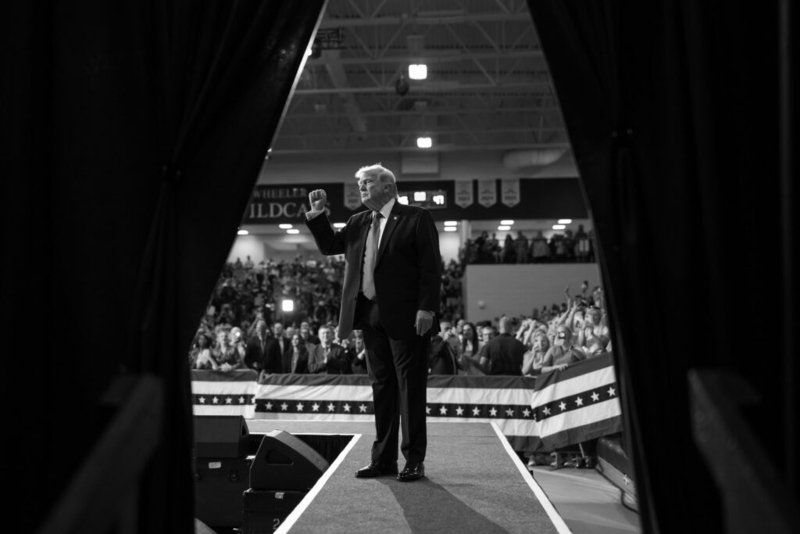
"The cryptocurrency industry’s top legislative priority was torpedoed by the wildly pro-crypto president’s very own cryptocurrency corruption." (Official White House Photo by Molly Riley)
Nevada Sens. Catherine Cortez Masto and Jacky Rosen joined the rest of their Democratic Senate colleagues Tuesday, along with a handful of Republicans, in killing a cryptocurrency bill the industry really, really wanted.
The industry believed that if the Clarity Act, which the House passed last year, was enacted into law, the legislation would bestow upon cryptocurrency something it is not widely identified with — intrinsic value and purpose; the product would be legitimized, its “use cases” stamped for approval by none other than the United States government.
That, so the industry’s thinking went, would allow crypto to creep into all sorts of corners of the U.S. financial system — including your moderate-risk plain-vanilla indexed retirement fund. Whether you like it or not.
Or as the folks at the American Federation of State, County & Municipal Employees (AFSCME) put it Tuesday following the Senate’s rejection of the bill: “This is a major victory for retirees and all working people who want to retire with dignity. The so-called CLARITY Act would have allowed Wall Street to gamble with workers’ pensions and 401(k)s by making it easier to invest their retirement savings in cryptocurrency. Working people do not want to see their hard-earned money put into an unregulated, unpredictable crypto casino.”
Though loyally pro-casino as a rule, Cortez Masto voted against the measure in May when it advanced out of the Senate Banking Committee.
But at that same hearing she indicated she really, really wanted to vote for the bill eventually.
“It’s clear we need to pass market structure legislation, and I’ve worked for months with colleagues on both sides of the aisle to negotiate a bill that provides clear rules of the road for a growing industry,” Cortez Masto said at that committee hearing.
“I’m committed to finding solutions that allow us to take on bad actors – the criminals, not the everyday coders – while giving the millions of U.S. crypto users the certainty they need,” she said.
For most Senate Democrats, a more pressing issue was not your everyday run-of-the-mill crypto criminal, but the one in the White House.
Trump monetized the presidency to the tune of $1.4 billion in cryptocurrency revenue in 2025 alone — most of which would have never ended up in his pocket if people and interests the world over weren’t trying to curry favor with The Transaction President.
“Ethics” language in the bill sent to the floor by Republicans would not have stopped Trump from continuing to engage in and profit from cryptocurrency transactions while still president.
“All President Trump wants is for the Senate to give him time to crime,” Arizona Democratic Sen. Ruben Gallego said in a statement following Tuesday’s vote.
“I won’t support any piece of legislation that enables him,” added Gallego, who unlike Cortez Masto, voted to advance the Clarity Act out of the Banking Committee in May.
Alas, Trump made it clear to Senate Republicans that if they supported a bill that cracked down on or – gasp! – halted the rampant crypto corruption of the sort that’s been serially perpetrated by Trump and his friends and family, Trump would banish them to the cornfield or whatever.
So Senate Republicans refrained from displeasing the Tantrum Thrower in Chief, and wrote a crypto bill that allowed him to keep raking in digital assets from people … interests … monarchies … who want something from him.
And the Clarity Act lost votes from Cortez Masto, Gallego, and a handful of other Senate Democrats the cryptocurrency industry has spent years lobbying to get its bill passed.
In other words, the cryptocurrency industry’s top legislative priority was torpedoed by the wildly pro-crypto president’s very own cryptocurrency corruption.
The cryptocurrency industry is bummed now. It knows there’s no way the next Congress is going to pass legislation designed to prop up and perpetuate respectability and worth of a product that at best just annoys/bores average people, and at worst poses yet another dire threat to society in the form of a government-blessed Ponzi scheme, and all while increasing the demand for data centers.
Cryptocurrency political action committees raised more campaign money than PACs connected to any other industry in the 2024 campaign cycle (this year they’re merely second, behind AI, with which there is some crossover). Apart from some primaries, the crypto campaign cash has been sort of cooling its heels this cycle. Now we’ll see it the industry will try to exact punishment by uniting with a preponderance of billionaires spending millions against Democratic Senate and House candidates in competitive races.
None of Nevada’s three House Democrats — Dina Titus, Steven Horsford, and Susie Lee — are viewed as particularly vulnerable as they seek reelection this year. And, perhaps with a fearful eye on the industry’s warchest, each of them, like Cortez Masto and Rosen, have previously voted to support some portion or other of the Trump-cryptocurrency agenda. And neither Nevada senator is on a ballot this year.
So Nevada might be spared the crypto industry’s typical attack ads against Democrats, i.e., ads that might mention anything and everything — except cryptocurrency.
Besides, thanks in large part — perhaps almost entirely — to Trump’s refusal to stop enriching himself through crypto deals while he’s president, the crypto industry’s political arm looks a little limp right now anyway.
Portions of this column were originally published in the Daily Current newsletters, which is free and which you can subscribe to here.
Las Vegas, NV