Hunters, anglers and nearly everyone else supports the roadless rule
Sep 16, 2026 | 2:54 pm ET
Description
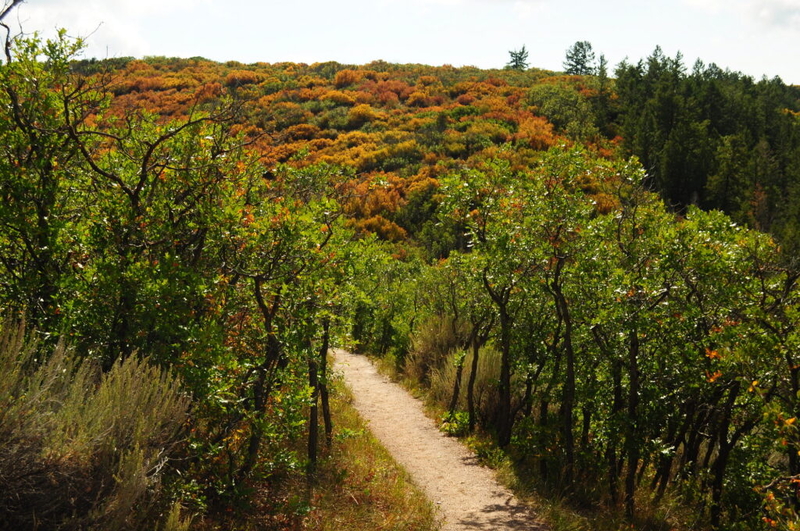
A view of Oak Flat Trail in Black Canyon of the Gunnison National Park, Montrose County, Colorado, in 2012. (Photo courtesy of NPS)
The roadless rule is the single most important regulation that benefits hunting and fishing in America. The rule has been in place for 25 years, a habitat-enhancing force of nature since I started hunting elk some 20 years ago, with nearly universal popularity from the start.
As Trout Unlimited President and CEO Chris Wood explained, “1.6 million comments with 93% in favor came when the Roadless Rule was originally established in 2001.”
The roadless rule is a U.S. Forest Service policy that protects 58.2 million acres of roadless areas in national forests and grasslands from being sold for timber, roadbuilding, mining, or oil-and-gas drilling. The rule itself doesn’t prohibit hunting, fishing, motorized recreation, or other public uses — it regulates land management options in these areas. It places limits on industrial logging and mining, and the associated road-building those activities require.
While serving as chief of the U.S. Forest Service, Mike Dombeck was struck by the Roadless Area Conservation Rule (i.e., “roadless rule”) support.
“We are hard-pressed to think of many other policies carried on through six presidents — three Republican and three Democratic,” Dombeck and Chris Wood said in a September 2025 Seattle Times opinion piece. “The roadless rule’s staying power reflects its popularity.”
Unfortunately, last summer the Trump administration announced its intention to rescind the rule. The move is wildly unpopular among hunters, anglers, and nearly everyone else. During the 2025 public comment period, out of 625,930 comments received 99% opposed repealing the roadless rule. As hunters know from boots on the ground experience, roadless areas protect some of the best elk, mule deer and black bear habitat in Colorado and the country.
However, two states — Colorado and Idaho — have their own roadless rules, which are not currently being considered for rescission. A recent analysis by onX Hunt Maps looked at hunting and other recreational opportunities in roadless areas. Here’s a snapshot: 58% of roadless rule areas overlap elk habitat; 78% overlap black bear habitat. In Wyoming, 99% of roadless rule areas serve as elk habitat; in New Hampshire, 97% protect black bear habitat; and in Arizona, 96% serve as mule deer habitat.
In addition, the nation’s 370,000 miles of existing national forest roads (the Earth’s circumference is only 24,000 miles) have a $10-billion-plus maintenance backlog. We don’t need more roads. Also, roadless areas include 17,715 miles of hiking and biking trails, 7,201 miles of full-size motorized trails and roads, nearly 1,500 miles of mapped backcountry ski routes, and 3,000 climbing areas. From the sounds of it, there’s something for everyone in roadless areas.
The onX analysis also shows that a mere 3% of the country’s historical wildfire ignition points over the past 50 years occurred within roadless areas. The rule explicitly allows for wildfire suppression and fuel reduction, including road construction in emergency situations. Studies have also shown that 90% of all wildfires start within a half mile of a road, likely due to increased human interaction.
In addition, these lands were never roaded for a reason. They’re often steep, rocky and have marginal timber values. There’s simply no way to build more roads and make timber sales pencil out for the American taxpayer. That’s why Taxpayers for Common Sense is one of the biggest supporters of the roadless rule. “Repealing the 2001 Roadless Rule risks billions in new taxpayer liabilities from subsidized road construction and money-losing timber sales,” the organization says.
“Roadless areas pay for themselves through hunting, fishing and recreation dollars flowing into gateway communities every year,” said Devin O’Dea, Western conservation and policy manager for Backcountry Hunters & Anglers. “This isn’t fixing a broken system — it’s bulldozing one that already works, putting productive fish and wildlife habitat at risk while undermining the outdoor recreation economies they support.”
“Roads fragment habitat, disperse wildlife, and push elk and deer onto private land, out of reach for the average hunter,” BHA explained in a Sep. 6 Instagram post. “This isn’t a bureaucratic footnote — it’s wholesale elimination of protections for the backcountry habitat hunters, anglers, wildlife, and rural communities depend on,” said Ryan Callaghan, BHA president and CEO. In 2025, we fought like heck to keep our public lands from being sold off, but the war continues.
“There is a war being waged against public lands on a scale we haven’t seen in ages, where … the idea of shared ownership by all (is) replaced by profit and privilege for a few,” New Mexico BHA board member Kyle Klain wrote in the Winter 2026 Backcountry Journal. “BHA is one of the few groups willing to meet those pressures head-on, without apology.”
Join us to take action.
Denver, CO