State Treasury flagged $1.4B in improper payments; lawmakers say greater oversight needed
Sep 16, 2026 | 2:11 pm ET
Description
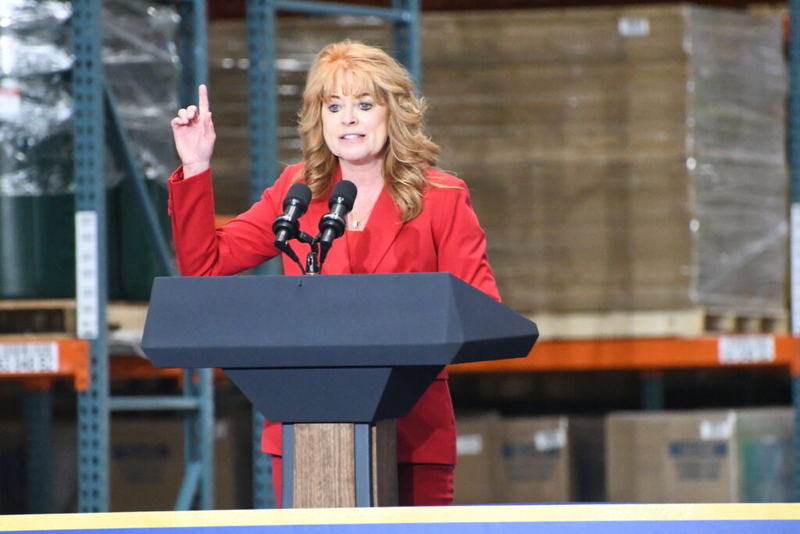
State Treasurer Stacy Garrity announced Wednesday details on her office’s efforts to curb waste as it processes payments for more than 70 state agencies. (Photo by Peter Hall/Pennsylvania Captial-Star)
Pennsylvania’s fiscal watchdog halted about 20,000 improper state government payments worth $1.4 billion last fiscal year.
State Treasurer Stacy Garrity announced Wednesday details about her office’s efforts to curb waste as it processes payments for more than 70 state agencies.
“During the last fiscal year, Treasury processed more than 21 million payments totaling $145 billion,” she said, noting that’s a payment ever three seconds.”As demonstrated by the results of the Payment Production and Improper Payments report, Treasury does not provide an automatic rubber stamp when payments are requested.”
A pair of state lawmakers want to expand efforts to track improper payments by state agencies by requiring them to review and assess programs that fall outside of federal oversight of wasteful spending.
“At a minimum, we must hold state government to the same level of responsibility which we hold ourselves to in our own personal finances,” state Sen. Kristen Phillips-Hill (R-York) said.
She noted the lawmakers spend a lot of time debating the budget, often facing disagreements within their own parties.
“But one thing that we should all agree on is … every single cent that we send out should be done properly. It should be transparent, and we must be accountable to the people,” Phillips-Hill said.
Phillips-Hill and Sen. Chris Gebhart (R-Lebanon) said they plan to introduce legislation that would require agencies to perform a review and assessment of each program that is not already subject to the federal Payment Integrity Information Act of 2019 to determine which programs are vulnerable to improper payments.
Additionally, each agency would be required to perform the assessment every two years and post it to a publicly accessible website with detailed information on each agency’s improper payment assessment.
Garrity, who is also the Republican nominee for governor, noted her office released the first ever public report on payment production and improper payments for the 2024-2025 fiscal year.
This year’s edition, for the 2025-2026 fiscal year, shows the Treasurer’s Office saved taxpayers $75 million by preventing payments that were directed to ineligible recipients, addressed incorrectly, duplicates, not supported by a contract or had other procedural and technical errors.
Garrity noted that while the value of the flagged payments was $1.4 billion, the savings were less because the majority went through after the errors were corrected.
Over the last five years, she said, the Treasurer’s Office has stopped nearly 120,000 improper payments totaling $5.5 billion with a savings of more than $325 million.
According to the report, the departments with the largest share of flawed payments are Revenue, at 49.9%; the Liquor Control Board, at 19.8%; Human Services, at 7.3%; the Pennsylvania State Employees Retirement System, at 5.9%; and Transportation at 4%.
While the process usually goes largely unnoticed, this year her office determined that it could not authorize more than $1 million in payments for security upgrades at Gov. Josh Shapiro’s private Montgomery County home.
The security measures were installed at Shapiro’s Abington residence after state police recommended them following the April 2025 arson attack on the official Governor’s Residence in Harrisburg.
“My team and I did our due diligence and made our decisions as required by state law,” Garrity said. “After extensive back and forth with Pennsylvania State Police, as a result of Treasury’s inability to legally make this payment, the Attorney General issued a settlement agreement, and that was to save taxpayers’ costly litigation.”
Gebhard said Pennsylvania has a mixed track record of preventing improper payments. In 2019, the federal government found Pennsylvania had an error rate of 14% in Medicaid payments. That improved in subsequent years, he noted.
And he noted the commonwealth was cited in a 2024 report by the U.S. Department of Health and Human Services Office of Inspector General for improperly claiming $551 million in Medicaid funds for its school-based health programs.
Commonwealth agencies are required to report improper payments only when they involve federal funds. Gebhard said the legislation he and Phillips-Hill are proposing would address that limitation.
In addition to biennial reporting, each program would be designated as having low, moderate or high risks for improper payments. For high-risk programs, agencies would be required to identify flawed payments and error rates and create a corrective action plan, Gebhard said.
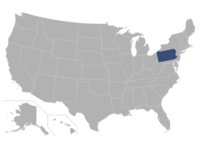
Harrisburg, PA