South Lyon City Council directs staff to examine impacts of canceling Flock contract
Sep 16, 2026 | 12:45 pm ET
Description
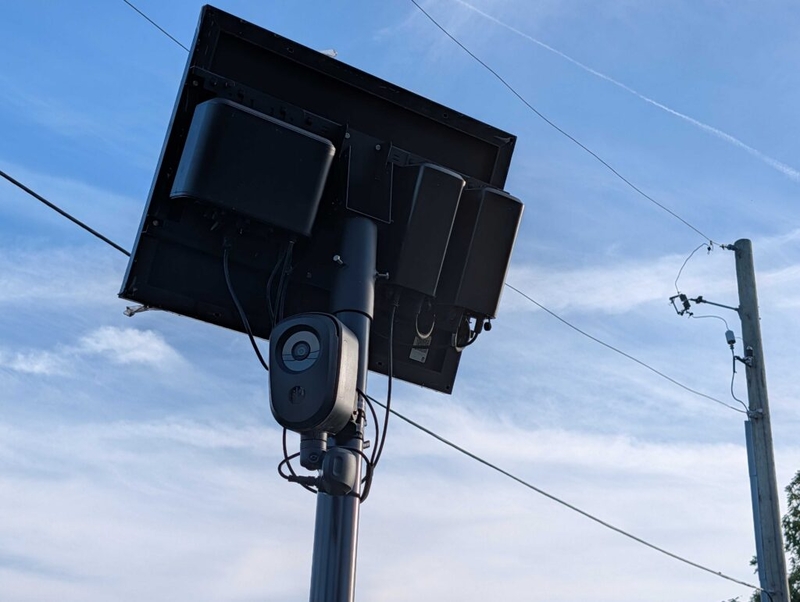
Flock license plate reader camera in South Lyon on Sept. 14, 2026. (Photo by Kyle Davidson/Michigan Advance)
SOUTH LYON — Members of the South Lyon City Council met this week to discuss whether it should renew a contract for a set of automated license plate reader cameras located along 10 Mile Road.
But the discussion held Monday resulted in the South Lyon City Council directing its staff to examine the legal and financial impacts of canceling the contracts for Flock cameras that were approved for installation in 2025.
The initial request for cameras came from South Lyon Police Department Chief Bonnie Unruh, Hometown Life reported. While law enforcement officials say the cameras can be used to help locate missing persons and stolen vehicles, civil rights advocates like the American Civil Liberties Union have raised concerns over how the data these cameras collect is being used and stored.
Of note, 22 police and sheriff’s department officials across the country have been arrested, fired or placed on leave following a USA Today investigation into alleged misuse of the technology. In one case, a former Florida Police Officer was charged with four felony counts of accessing a computer network without authorization after allegedly using the service to search a woman’s license plate at least 189 times over a period of eight months.
On its website, the South Lyon Police Department states that it uses the cameras “to capture objective evidence without compromising on individual privacy.”
“The South Lyon Police Department utilizes retroactive search to solve crimes after they’ve occurred,” the website reads. “Additionally, the South Lyon Police Department utilizes real time alerting of hotlist vehicles to capture wanted criminals.”
The department’s Flock transparency page says license plate and vehicle data is stored only for 30 days. The Michigan Department of Corrections, Livingston County Sheriff”s Office, Oakland County Sheriff’s Office, Oak Park Department of Public Safety and police departments in Brighton, Farmington, Hazel Park, Lathrup Village, Milford, Novi, Southfield, Troy, Waterford Township and Wixom have all been granted access to the data from South Lyon’s cameras.
Monday’s meeting was meant to address community stakeholder concerns, drawing South Lyon locals and residents of neighboring townships to the community’s city and school administration building this week to discuss the contract’s renewal.
Councilmember Lisa Dilg said she had previously supported the installation of Flock cameras, but had changed her stance.
“I had not done enough research into the experiences of other communities, the broader privacy questions surrounding the license plate reader technology, or the ways this data could potentially be accessed or used beyond our own police department,” Dilg said. “I should have. That was my responsibility as a council member, and I apologize to the residents for not doing the due diligence that I should have done.”
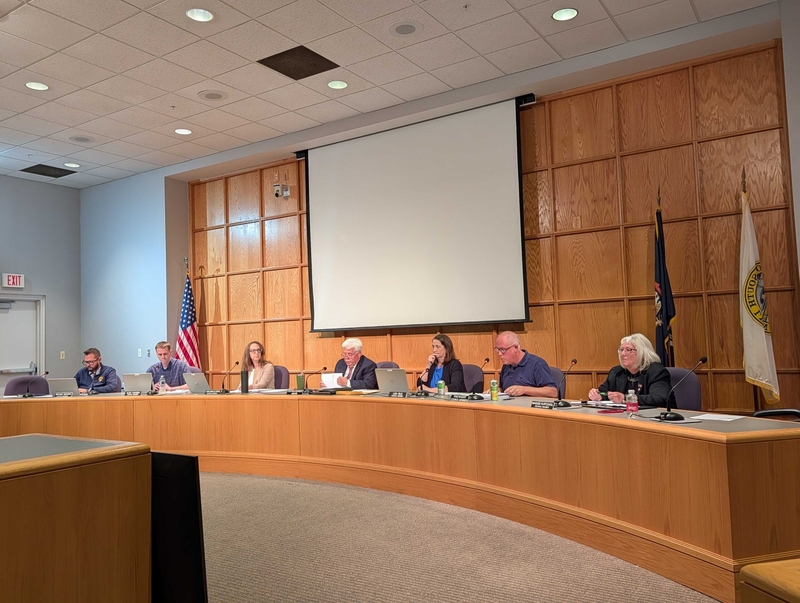
Councilmember Alex Hansen put forth a motion to cancel the city’s Flock contract, remove the cameras, request reimbursement for any unused credits, and requested an affidavit from Flock stating any and all data related to the city asset line has been deleted.
However, South Lyon Mayor Stephen Kennedy raised concerns about the potential legal and financial ramifications that could result from Hansen’s motion, suggesting there may be a benefit in speaking with the city’s attorney and its finance director.
After further discussion, Hansen eventually withdrew his initial motion and made another motion to direct the city’s finance director, and the city attorney, to look into the Flock contract and examine if there were any implications — financial or otherwise — for canceling the contract for discussion at the council’s next meeting.
The motion passed with unanimous support.
Residents overwhelmingly opposed the contract’s renewal
Several residents of South Lyon and its neighboring communities spoke out against renewing the city’s contract with Flock, pointing to privacy and safety concerns, as well as the growing opposition to the cameras in other Southeast Michigan communities.
Julielyn Gibbons, a 46-year-old South Lyon resident, raised concerns about the lack of legal guardrails at the state and national level dictating how data collected by automated license plate reader companies is used.
License plate reader searches by Grand Rapids PD point to need for guardrails, legal advocates say
“It’s not the South Lyon Police that I’m worried about,” Gibbons told council members. “It’s bad actors sharing data that is not theirs to share.”
Ryan Mathewson, another resident, directed his comments to individuals who wrote off concerns about the cameras by saying residents “have nothing to hide, but you still have something to protect.”
“This was never about doing something wrong,” Mathewson said. “It’s that there’s now a permanent, searchable record of everywhere you drive, time-stamped, stored where you can’t see it and can’t delete it.”
Mathewson added that the data collected by license plate readers creates a map of someone’s life, and warned that companies stockpiling that data are ripe for a breach.
“It’s not a question of if, but when,” Mathewson said.
Amy and Jeremy Pavlov, who live in Green Oak Township, are just a stone’s throw away from one of the city’s Flock cameras. Jeremy Pavlov said the cameras had changed his feelings about coming into town, describing it as a big “you’re kind of not welcome” sign.
While other community members had raised concerns about the accuracy of the license plate readers, pointing to instances across the country where individuals were detained when a camera misread their license plates, Amy Pavlov argued that the issue is the surveillance itself.
She also noted that there are other license plate reader companies outside of Flock, voicing opposition to any contracts the city might consider with an automated license plate reader company.
At least once councilmember stood up for Flock
However, one council member, Margaret Kurtzweil, made it clear that she would not support canceling the Flock contract, offering a lengthy argument against the concerns raised during public comment.
Kurtzweil questioned why opponents focused their ire on Flock, rather than types of video surveillance present in other settings. She pointed to federal court cases which had upheld the use of automated license plate reader cameras under the Fourth Amendment; and discussed different responses various lawmakers and leaders at the state and national level had made in response to concerns around Flock.
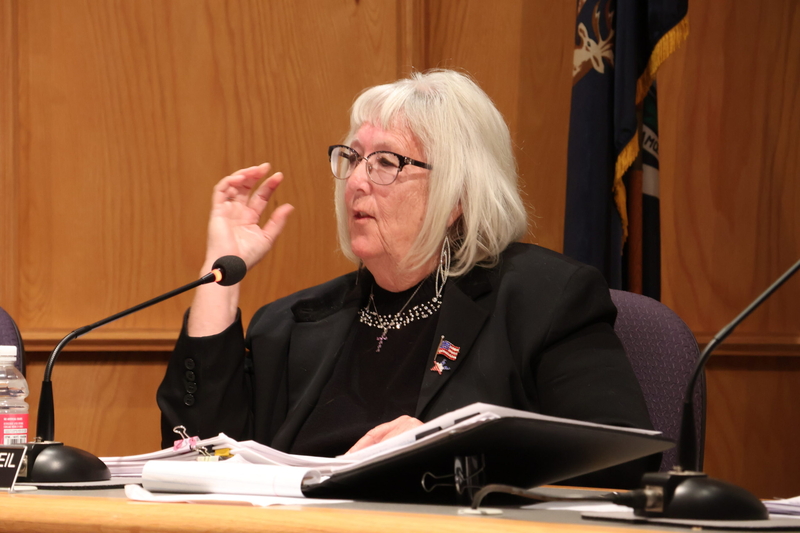
Councilmembers Thad Bogert and Michael Squires voted against the motion to place license plate readers within the community. Bogert responded to Kurtzweil by noting that the difference between Flock and other types of surveillance cameras is that the city council holds control over the license plate reader cameras.
Bogert told his fellow council members that he understands the appeal of the technology, but that his role on the council goes beyond asking whether a technology can be useful.
“I also have to ask what powers are we giving government, what infrastructure are we creating, and what those powers could become in the future?” Bogert said.
Bogert later noted that although there will always be a compelling reason to give government one more tool in the name of public safety, elected officials hold the responsibility of deciding where that line should be.
“For me, continuously collecting, collecting, and creating searchable records of the movements of people who are not suspected of committing a crime crosses that line,” Bogert said.
The City Council’s next meeting is scheduled for 6:30 p.m. on Sept. 28.
Lansing, MI