Minneapolis looks to close as many as 16 schools amid declining enrollment
Sep 16, 2026 | 12:26 pm ET
Description
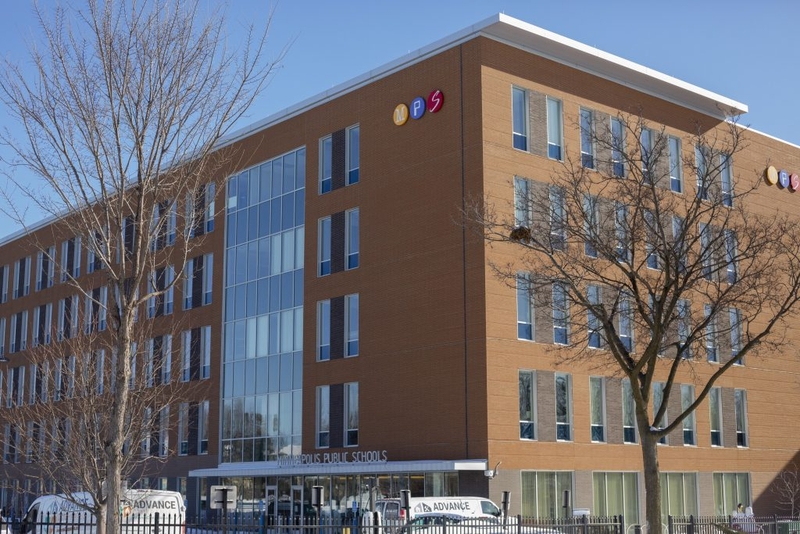
(Photo by Will Jacott/Minnesota Reformer)
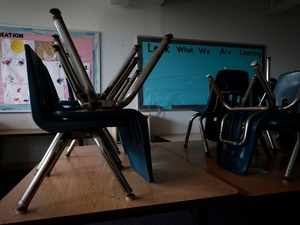
Minneapolis Public Schools is taking the first steps toward closing as many as 16 schools after years of declining enrollment has left it with an expansive real estate portfolio that includes more than 12,000 empty desks.
District leaders unveiled on Tuesday three options for school closures, which they say will allow them to provide more consistent educational offerings, like art and music. School leaders didn’t mention the budget concerns looming over the district — a $39.7 million deficit this year — or even how much the proposals might save.
“We’ve been talking for a long time about the challenges facing our district,” Superintendent Lisa Sayles-Adams told the board Tuesday. “Tonight, after years of analysis, listening and planning, we will be looking at what we might actually do about it.”
At the earliest, the board will vote to select a plan in November, after school board elections, but before families begin the enrollment process for next school year. The board could also choose to make no changes. The district has been discussing the potential for school closures, calling the process “transformation,” since 2023.
School closures face fierce opposition from many parents, who don’t want to see their neighborhood school shutter, as well as the powerful teachers’ union, which fears consolidation will lead to further enrollment declines.
In a press release, the Minneapolis Federation of Educators called the proposals “three different worst-case scenarios for the future of MPS.” The district did not include any information on which jobs, if any, would be eliminated as part of their proposals.
Across all three options presented Tuesday, the district proposes closing seven elementary schools — Bethune, Pratt, Lake Harriet Lower Campus, Lake Nokomis Wenonah, Loring, Kenny and Hmong International Academy — and a single middle school, Anwatin. Five additional elementary schools would be closed in one or two of the options presented — Field, Hiawatha, Howe, Webster and Cityview.
None of the proposals include closing any of the district’s seven community high schools. But under all options, the district would relocate four of its specialized high school programs, currently located in their own separate buildings, within existing community high schools.
Heritage High School, which focuses on Somali language and culture, would relocate to Edison High School. Longfellow High School, which serves pregnant and parenting students, would relocate to North High School, which also serves these students. FAIR, an arts magnet high school, would relocate to North. Wellstone, which provides legally mandated services for immigrant students ages 18-22, would relocate from leased space at Minneapolis College into South High School.
Minneapolis Public Schools assessed $5.3 million in tax penalties in past four years
The district’s estimates 12-14% of students would be impacted by the proposals.
The proposed closures would happen across the city, but be particularly pronounced in the north and southwest parts of the city. Both areas would lose two elementary schools under all three options. Schools that feed students to Washburn High School would be the least impacted under the three options, while also retaining the highest enrollment compared to any other area of the city.
The plan expands the Montessori program at Seward from K-6 to K-8. In two scenarios, Kenwood Elementary School would be moved back to the Southwest High School from North, reversing an unpopular attempt five years ago to integrate what was a predominantly white elementary school into a predominantly Black high school.
Principals at the schools proposed for closure were notified shortly before the board meeting Tuesday night.
In January, the district laid out what it considers the minimum level of enrollment necessary to support the minimum level of services schools should provide. For elementary schools, the minimum size ranges from 360 to 477, depending on the number of low-income students enrolled at the school. At the middle school level, the range is 594 to 756, and at the high school level the range is 888 to 1064.
Community engagement sessions are scheduled in September and October across the district, and there is also an online survey. The board will hear a summary of feedback on Oct. 20.
The district promised Tuesday that if one of the three options were enacted, it would be able to guarantee sufficient funding going forward to provide a consistent set of services across all schools. The only specific staffing the district promised, however, was at least two academic intervention teachers per building, and full-time art, music and gym teachers at all elementary schools.
The district has struggled for many years to provide some basic services, like elementary art, music and gym, at its lowest-enrolled schools.
The district presented only limited information on the financial impact of closing schools. Deputy Superintendent Ty Thompson said that addressing the district’s long-term financial challenges was not part of the board’s directive on “transformation” to the superintendent.
The district’s finances have been deteriorating since 2018, according to its annual financial projections. The district was able to delay budget cuts when it received over $264 million in federal pandemic aid. It used much of the money to prop up its sprawling portfolio of schools which have capacity for around 42,000 students, while the district’s enrollment is below 30,000.
A combination of reasons have left the district in an ongoing cycle of cuts in recent years. Some factors outside the district’s control include education funding that hasn’t kept up with inflation, state funding that doesn’t cover the full cost of mandated English learner and special education services, and new unfunded state mandates like paid medical and family leave and summer unemployment benefits for some school workers.
But the district has also failed to manage many of the financial levers within its control. It made a series of blunders that led to steep enrollment losses and the associated funding, including keeping schools closed during the pandemic longer than any other in the state.
The district also implemented an unpopular plan that redrew boundaries to reduce segregation while closing popular magnet schools in the district’s wealthy Southwest corner.
The district has failed to control its labor costs, agreeing to significant pay raises and mandated staffing levels that have raised its costs faster than its funding has increased.
And, the district has made several multi-million dollar financial errors which the Reformer has uncovered this year.
Minneapolis is not the only district closing schools in the state. St. Paul Public Schools voted to close six public schools in 2021, and Robbinsdale Public Schools started this school year with three fewer school buildings.
The same factors at play in Minnesota are also impacting districts across the country. In recent years, Oakland, San Francisco, Los Angeles, Seattle, Portland, Denver, Chicago, Houston, San Antonio, Memphis, Miami, and thousands of other districts have faced enrollment decreases and cost increases that have led to discussion of school closures, and in some cases action to close schools.

Saint Paul, MN