US Supreme Court justices doubtful of Colorado rule in Catholic preschool case
Nov 03, 2026 | 2:26 pm ET
Description
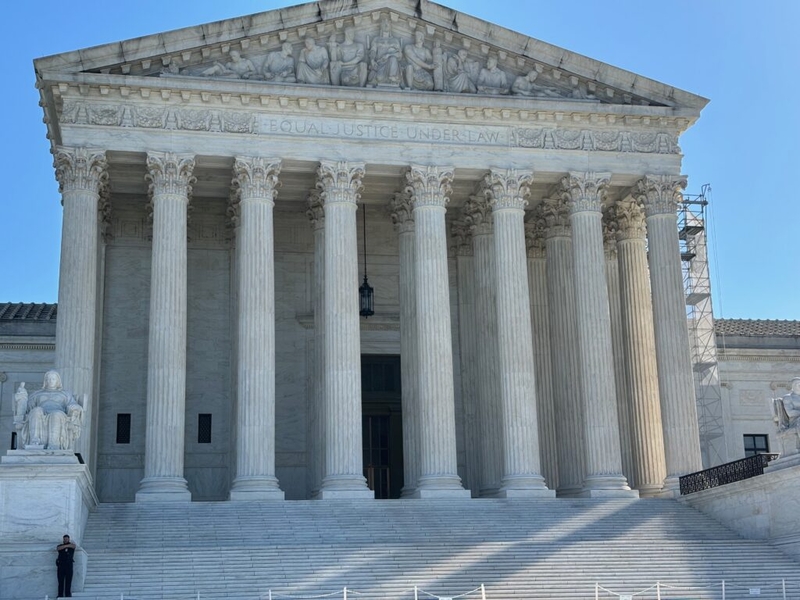
The U.S. Supreme Court heard arguments Tuesday in a Colorado case over the balance of protections for LGBTQ+ people and religion. (Photo by Jane Norman/States Newsroom)
Conservative U.S. Supreme Court justices appeared doubtful Tuesday of yet another Colorado policy involving the balance of state anti-discrimination protections for LGBTQ+ people and religious exemptions.
The Archdiocese of Denver and two Catholic preschools say in a lawsuit that they were unable to participate in Colorado’s universal preschool program, known as UPK Colorado, because the state will not allow the religious educational institutions to exclude LGBTQ+ children and parents.
Attorneys for the schools and the state Tuesday argued before the Supreme Court about whether Colorado’s anti-discrimination policies improperly target Catholic schools for their sincerely held beliefs, violating the free exercise clause of the First Amendment, or if Colorado applied the requirement universally with no intention to exclude the schools.
Justice Brett Kavanaugh said that with 2,000 preschools and only 34 of them Catholic in Colorado, there are plentiful opportunities for families to find a preschool that suits their needs, so the state can respect both religious beliefs and the rights of LGBTQ+ parents.
“It seems like this is a … would-be solution in search of a problem that is unnecessary to create this clash,” Kavanaugh said. “Why has this been provoked when there’s an ability for everyone to go to the school, a good school that’s a fit for them, and respect religious rights?”
Your Catholic schools will reject the child merely because their parents are homosexual.
Nicholas Reaves, attorney with the Becket Fund for Religious Liberty, who represents the plaintiffs in the case, said he does not think the state has presented a “really good reason” to prevent religious schools from receiving the public benefit of UPK funding, as is required by the legal standard of strict scrutiny. Sarah Harris, principal deputy solicitor general for the U.S. Justice Department, also argued before the court in support of the plaintiffs in the case.
Liberal justices said the Catholic schools are looking for a specific accommodation and exemption to a universally applied principle, while in previous cases, religious schools were just asking to be treated the same as other schools, Justice Elena Kagan said. Laws shut down by previous rulings explicitly discriminated against religious schools, while Colorado’s UPK rules do not.
Justice Ketanji Brown Jackson said that many other religious schools, including Catholic schools, agreed to Colorado’s anti-discrimination provisions. Justice Sonia Sotomayor said the Catholic schools involved in the case chose not to participate in the program because they will not receive a special exemption allowing them to exclude children from a specific protected class.
“Your Catholic schools will reject the child merely because their parents are homosexual,” Sotomayor said. “If it’s a sincere religious exercise to exclude Blacks, this principle would permit the exclusion of those Black children.”
Religious preschools welcome
Helen Norton, deputy solicitor general for Colorado, argued that the state holds all preschools to the same standards, including teacher training, student-teacher ratios and equal opportunity. Religious schools are welcome to teach their beliefs on sex, gender and marriage. All of those standards are generally applicable to all participants.
“Colorado welcomes religious preschools to UPK,” Norton said. “The only thing Colorado asks is that they comply with the same conditions that every publicly funded preschool must meet, religious and secular alike.”
The St. Mary Catholic Parish in Littleton and the St. Bernadette Catholic Parish in Lakewood both operate preschool programs that were not part of UPK since the state requires providers to accept applicants without regard to the family’s religion, sexual orientation or gender identity.
The schools applied for public funding through the universal preschool program and were denied when they requested religious exemptions from the state’s equal-opportunity rule. They claimed their rights under the free exercise clause of the First Amendment were violated by their exclusion.
A U.S. District Court of Colorado judge ruled in June 2024 that the UPK requirement that prohibits discrimination against LGBTQ+ families is valid. The Denver-based 10th Circuit Court of Appeals upheld the district court’s decision in October 2025, and the Supreme Court accepted the case in April. The church and schools filed the lawsuit against Lisa Roy, executive director of the Colorado Department of Early Childhood.
The Supreme Court will weigh in on aspects of a 1990 ruling in another case that raised the question of religious exemptions to state laws. The court held in Employment Division v. Smith that a person’s religious beliefs are not an automatic exemption from compliance with a law against conduct the state is free to regulate. Attorneys for the state heavily relied on this ruling.
The initial lawsuit made several references to past cases related to LGBTQ+ discrimination in Colorado that made their way to the nation’s highest court. That includes a case in which the Supreme Court said a Colorado web designer does not have to make websites for same-sex couples, and another in which the court said a cake shop owner could deny a same-sex couple a wedding cake based on religious beliefs.
Most recently, the court sided with a Christian counselor against Colorado’s law that bans licensed providers from conducting “conversion therapy,” a discredited practice of trying to change a person’s sexual orientation, such as to eliminate same-sex attraction, or gender identity.
Conservative justices wondered how Colorado did not predict a conflict such as the one posed in the preschool case, given the state’s history of court challenges to LGBTQ+ protections.
Six of the justices on the Supreme Court are Catholic — five in the conservative majority, and one, Sotomayor, in the liberal minority. Justice Neil Gorsuch, who is Episcopalian, was raised Catholic.
The court is expected to announce a decision in the case by June.
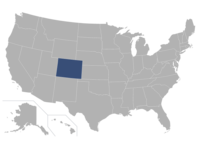
Denver, CO