Kansas legislators compete in cattle showmanship, learn about beef industry at state fair
Sep 15, 2026 | 8:53 am ET
Description
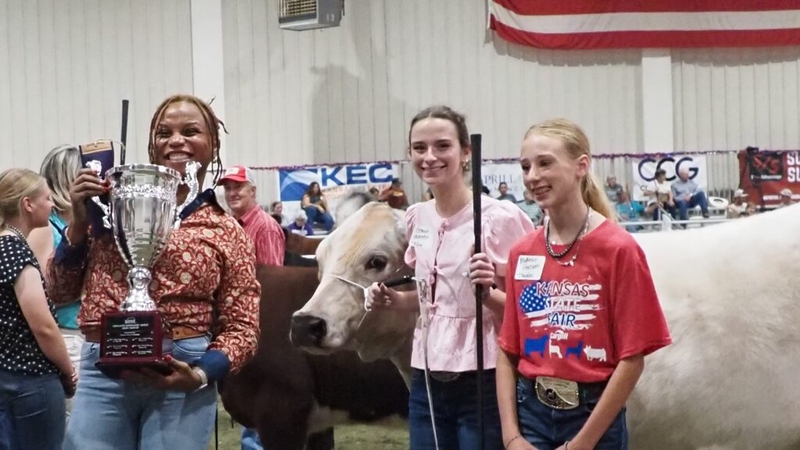
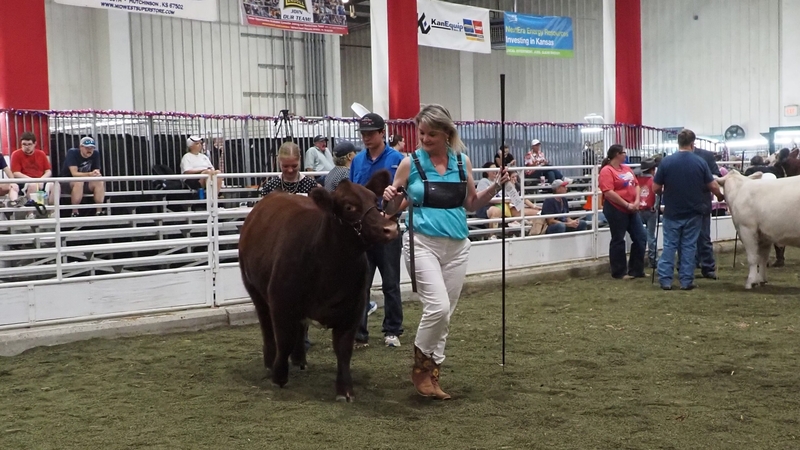
Rep. Brooklynne Mosley celebrates a first-place win in the Kansas Legislative Showmanship event at the State Fair on Sept. 12, 2026. She learned how to show the heifer from 4-H members Genayla Warnken, left, and Makenzie Fishburn. (Photo by Morgan Chilson/Kansas Reflector)
HUTCHINSON — Rep. Brooklynne Mosley stepped into the Prairie Pavilion arena at the Kansas State Fair Saturday, leading a heifer around the ring while smiling broadly
Mosley, a Lawrence Democrat, had never spent time with cattle until she began working with two 4-H participants, Genayla Warnken of Manhattan and Makenzie Fishburn of Lawrence to learn about how to show a halter-broken heifer.
Mosley and four other Kansas legislators were participants in the annual Legislative Showmanship competition.
“This is the closest I’ve ever been to cattle in my whole life,” Mosley said. “I was really looking forward to doing this as something different. I had great teachers, Makenzie and then Genayla. They were really patient, and they taught me everything that I know. Literally.”
Warnken said they begin working with cows when they are young, teaching them to adjust to wearing a halter.
“That can take some time because they’re pretty stubborn,” she said. “We start getting them on a regular feed diet, and then working with their hair, which makes them look really big and fluffy.”
Fishburn said she loves being part of 4-H because the community is large and she can meet people from across the state.
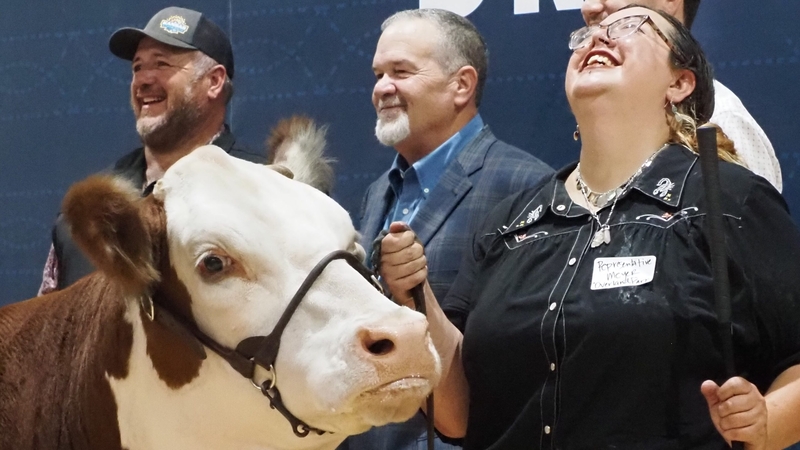
Their work with Mosley paid off, as she took first place and earned a traveling trophy that will be engraved with her name. Competing against Mosley were Sen. Cindy Holscher, Rep. Mike King, Rep. Heather Meyer and Rep. Gary White. Meyer, who was also handling a cow for the first time, won second place.
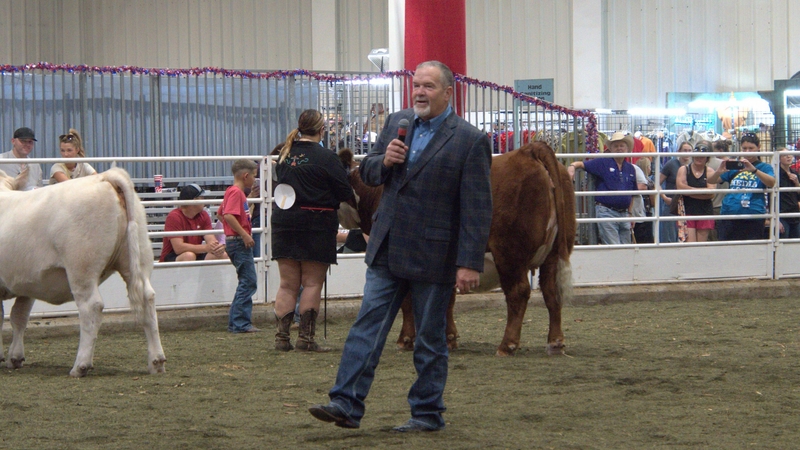
Monte Ball, a third-generation rancher, and Rylee Hayes, of Jacam Catalyst, judged the event. They examined how well the legislators handled the cows and asked questions about general beef animal knowledge.
While legislators walked the heifers around the arena, Ball spoke about the event, which he said gives Kansas leaders a chance to learn about the field.
“These are exciting times in the ag industry right now, particularly in the beef industry,” he said.
“We’re experiencing record high prices. Unfortunately, we’re also experiencing record high inputs. So these are very stressful times for farmers and ranchers.
“We need our legislators to understand what the beef industry means to us and what it means to Kansas,” he added.
Ball said young 4-H members represent the future of the beef industry, and the program prepares them for the future.
“They’re learning about taking care of an animal and being responsible for that animal,” he said.
Ball described himself as a “leadership junkie,” pointing to 28 years in public education as a teacher and coach and then in his current position heading up human resources at Conklin Automotive Group.
“I thought I knew what leadership was. I thought leadership was having titles. I thought leadership was about position, having people in your charge,” he said. “What I’ve learned is leadership is a long way from that. Leadership is about doing hard things and building relationships, and getting other people to buy in and invest in the places that you want to go.”
It’s also, Ball said, about asking questions, which he encouraged from legislators at the event.
“We need to eat, and the best way for us to have a secure food source is to raise our own,” he said. “We have to do a better job in the U.S. of taking care of our farmers and ranchers because they’re the ones that are going to feed us in the future.”
After the event, Ball said the market volatility is concerning.
“You get a headline each day, the markets turn and run, so to speak,” he said. “Volatility is at an all-time high right now in a lot of markets, but the beef industry in particular is experiencing that and uncertainty.”
In January, the U.S. cattle herd was at its smallest size in about 75 years, according to the U.S. Department of Agriculture. Ball attributed the decrease to normal cyclical changes, and also to four-plus years of drought conditions in many areas.
When prices are high, herds tend to grow in size and then as prices fall, they shrink, he said. But drought leads ranchers to make tough decisions.
“Cattlemen have had to sacrifice part of their herd in order to keep it going,” Ball said. “Drought’s been a big factor in this. It’s been a perfect storm almost.”
Topeka, KS