Secretary of State Evnen certifies Nebraska’s fall 2026 ballot after lawsuit-heavy summer
Sep 11, 2026 | 3:08 pm ET
Description
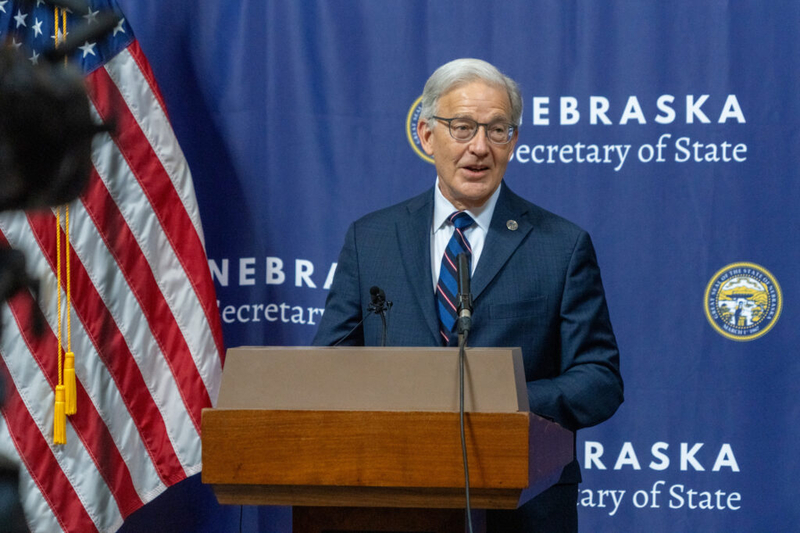
Nebraska Secretary of State Bob Evnen announces the finalization and certification of the candidates and issues that will be advanced to voters at the Nov. 5, 2024, general election. Sept. 13, 2024. (Zach Wendling/Nebraska Examiner)
LINCOLN — Nebraska Secretary of State Bob Evnen has officially finalized Nebraska’s fall 2026 ballot, closing a chapter on a lawsuit-heavy, winding path toward certification.
At least nine lawsuits were filed to the Nebraska Supreme Court, either directly or on appeal, against candidates, political parties and ballot measures since Nebraska’s May 12 primary. Some were not resolved until Thursday, the day before Evnen needed to certify the ballot, and two remain pending before Nebraska’s highest court.
Criminal fraud arrests have also clouded multiple petition efforts.
“County election offices and the Elections Division have done an excellent job verifying petitions and ensuring candidates were properly filed so that we could certify the general election ballot on time,” Evnen said in a statement. “We are confident that all the appropriate checks have been completed and confirmed despite the rather unusual number of issues we faced this year.”
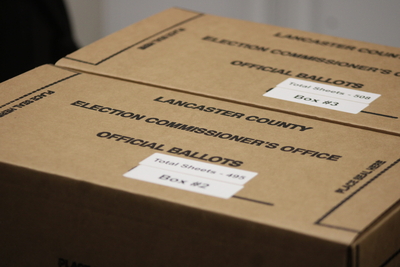
With Friday’s certification, the following candidates and issues are set for the ballot:
- 92 candidates for federal (U.S. Senate and three House seats) and state-level races (governor/lieutenant governor, attorney general, secretary of state, treasurer, auditor, Legislature, State Board of Education and University of Nebraska Board of Regents).
- 48 judges who face an up-or-down vote to remain in office for six more years.
- Three statewide ballot measures — two related to online sports betting and the other related to sex-based restrictions for K-12 and collegiate sports.
- Another constitutional amendment, referred by the Legislature, on whether to expand legislative term limits.
The first finalized ballots must be sent to military and overseas voters by Sept. 18.
Under state law, any candidates wishing to run a write-in campaign must file by Oct. 23 to have votes cast for them counted. If not, votes will not be reported for candidates not on the ballot.
The Nebraska Examiner will launch its 2026 General Election Voter Guide next week, building on the Examiner’s 2026 Primary Election Voter Guide with additional office-specific, policy-heavy answers for candidates and more details on judges and ballot questions.
Lawsuit-heavy election year
Ten candidates joined the ballot after the May 12 primary, all petitioning to do so. They consist of two nonpartisans for federal races and others for new political parties. Leadership of the parties also had to petition to create the new Nebraska Working People Party (three candidates) and America First Party (five candidates). Others petitioned but did not have enough signatures.
The new parties fought to exist before the Nebraska Supreme Court. The chair of the Working People Party, who is running for U.S. Senate, survived a Democratic challenge to her candidacy, too.
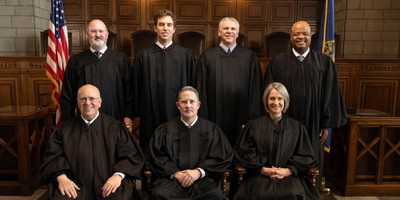
One ballot measure from the Respect Nebraska Voters campaign failed to overcome a legal challenge and will not appear on the ballot, the Supreme Court confirmed Thursday.
The measure, if successful, would have raised the threshold for state lawmakers to tweak voter-approved laws from 33 of 49 lawmakers to 40 of 49 lawmakers and implemented that same four-fifths threshold for any laws seeking to change how petitioning operates in the state.
The ballot measure related to K-12 and collegiate sports, from the Fairness for Girls campaign, will appear on the ballot, but its ultimate validity to appear is still being challenged. The proposal would enshrine in the Nebraska Constitution part of a 2025 law requiring public and certain private schools, colleges and universities to designate sex-separate athletic teams and sports.
The Nebraska Supreme Court will hear the challenge Sept. 30. The justices initially refused to hear the case. The lawsuit was then refiled in Lancaster County District Court. The issue is whether the group’s petition language was legally compliant, which a Lincoln voter disputes. She says the language led her to sign the petition without knowing what the measure would do.
A Lancaster County judge upheld the validity of the Fairness for Girls campaign this week.
In Nebraska’s capital city, voters will also see three proposed amendments to the Lincoln City Charter. The proposals would limit Lincoln City Council members to two consecutive four-year terms, align odd-year city elections with even-year statewide elections and let certain residents within a 3-mile buffer around Lincoln city limits vote in municipal elections, excluding bond votes.
The Nebraska Supreme Court said Lincoln city officials must place the issues on the Nov. 3 ballot Wednesday. City officials said they will, and they suggested they might still pursue their constitutional authority to also offer “alternatives” for Lincolnites’ consideration.
In other lawsuits this year:
- A Nebraska Democratic Party candidate had to sue to appear on the ballot this spring because she had said she would drop out if she won. The Democratic Party then had to sue to defend its decision not to replace her when she upheld her promise.
- The Republican National Committee sued to overturn a state law allowing U.S. citizens who have never resided in Nebraska but have a parent registered to vote in one Nebraska county to register in one county. The RNC lost the case but is appealing.
Petition scrutiny
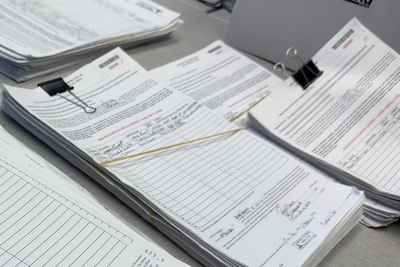
Petitioning this year generally faced heavy scrutiny as significant allegations of fraudulent signatures plagued at least eight different petitions for five different campaigns, including the city charter effort, all four statewide ballot measures and one failed nonpartisan bid for governor.
Six out-of-state circulators have so far been arrested in the ongoing criminal investigation, which is centered in Lancaster County.
Nebraska Gov. Jim Pillen, Evnen and county election officials are calling for legislative changes to the petition process. Nebraska Attorney General Mike Hilgers has called the situation a “sad period in Nebraska history.”
This month has marked the end of two lawsuits filed in 2024 against voters’ approval of the legalization and regulation of medical cannabis. The Nebraska Supreme Court last week unanimously upheld the validity of those ballot measures, over objections from longtime marijuana opponent former state Sen. John Kuehn as well as Evnen and Hilgers.
And this week, the justices unanimously affirmed the dismissal of another Kuehn lawsuit trying to challenge the constitutionality of the same medical cannabis laws.
2026 ballot questions
Evnen certified three ballot measures for the November 2026 general election ballot, which were assigned a measure number between 440 and 442, at random. An additional question, which the Legislature forwarded to voters in May 2025, will also appear on the ballot.
- Legalize online sports betting — Legalize online sports betting if conducted through vendors at Nebraska’s six licensed racetracks, in Grand Island, Ogallala, Lincoln, Omaha, Columbus and South Sioux City. (Initiative Measure 440)
- Regulate online sports betting — Define online sports betting and require the Nebraska Racing and Gaming Commission to adopt any needed regulations, no later than June 1, 2027. (Initiative Measure 441)
- Sex-separate requirements for K-12, collegiate sports — Make permanent part of a 2025 state law requiring public K-12 schools, colleges and universities, and any private schools or colleges in the state playing against those schools, to designate sports and athletic teams as male, female or coed. The ballot measure itself would not additionally define “sex,” instead relying on the 2025 law. (Initiative Measure 442)
- Legislative term limits — Allow state lawmakers to serve up to three consecutive four-year terms, instead of two consecutive terms. (Constitutional Amendment 1)
Evnen’s office will host public hearings on the three statewide, voter-initiated measures in each of Nebraska’s congressional districts in October.
The general election is Nov. 3.
Lincoln, NE