Attorneys urge Pa. Supreme Court to apply second-degree resentencing ruling retroactively
Sep 10, 2026 | 9:00 am ET
Description
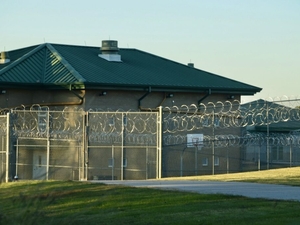
Some aging prisoners who have served decades in prison under a now-unconstitutional life sentence for second-degree murder don't have time to wait for a lengthy resentencing process, attorneys argue. (Pennsylvania Capital-Star file photo)
A coalition of attorneys urged the Pennsylvania Supreme Court on Thursday to apply its ruling striking down mandatory life sentences for second-degree murder retroactively. The group shared four examples of aging prisoners it says require immediate attention.
They did so by filing what’s known as a King’s Bench petition, allowing the court to take the rare step of skipping a longer trial process.
“We thought it was important to show that people have been serving for such a long time that there is a danger that if the court does not act soon, some people will not live to see the benefit of this ruling,” said Quinn Cozzens, with the Abolition Law Center. “We do think it is an urgent situation that the court will hopefully act on quickly.”
Roughly 1,200 people are serving life sentences in Pennsylvania prisons for second-degree murder, also known as felony murder. The charge is applied when a victim dies during the commission of another felony, whether or not the perpetrator intended or planned to kill.
What happens when the clock runs out on felony murder legislation?
The majority of those serving sentences are Black men over the age of 50 who have spent decades behind bars.
In March, the commonwealth’s highest court struck down the mandatory life sentence, finding it violated the state constitution’s ban on cruel punishments. But the ruling didn’t address the question of whether or not it should impact those already serving life sentences.
Instead, they delayed the ruling from taking effect for 120 days, allowing state legislators the chance to come up with a solution and adopt a new sentencing structure. Lawmakers failed to reach a consensus by the July deadline, and aren’t due to convene in Harrisburg again until later this month.
The King’s Bench petitions, shared in advance with the Capital-Star, are all represented by the Abolition Law Center and Phillips Black. The Pennsylvania Innocence Project signed on as co-counsel on two of the filings.
The legal action allows the state Supreme Court to consider a matter of “immediate public importance,” according to the Unified Judicial System of Pennsylvania, and is used “only on rare occasions.” Former instances include election disputes, public employee strikes, prison overcrowding and the powers of the General Assembly.
“Each day the retroactivity question remains unresolved prolongs this unjust situation,” attorneys argued in one case. “People who have served decades in prison … are at significant risk of never seeing the benefit of this court’s ruling with further delay.”
“Resolution of this issue serves the public interest by preventing the continued enforcement of unconstitutional cruel sentences at substantial expense to taxpayers,” they continued. “Without the Court exercising its King’s Bench authority … (Those imprisoned for felony murder) are currently stuck in a procedural catch-22.”
According to Cozzens, the decision to file four separate petitions was not out of legal necessity, but “to make sure it was clear this is a statewide issue, and that there are people with a diverse range of circumstances coming from a diverse background.”
All four have served decades on felony murder charges and were not directly responsible for the deaths of the victims. Two of them have maintained their innocence.
More on the individual cases
Marsha Scaggs, 62, had no adult criminal record when she was arrested in 1987 after a drug deal gone wrong resulted in murder. She was 23 at the time.
She and a group of accomplices drove a man named James Supples, who some suspected of being an undercover officer, to the woods.
Scaggs testified at her trial that one of her co-defendants handed her a gun, pointed his own gun at her, and ordered her to shoot Supples. When she refused, the co-defendant shot the victim himself.
The King’s Bench petition notes Scaggs’ long history of childhood trauma. She frequently witnessed her stepfather assault her mother. At 15, she was a victim of rape, and soon after began abusing drugs. Because of the mandatory life without parole sentence that comes with a second degree murder charge, a sentencing court wasn’t able to consider mitigation evidence regarding her trauma.
But, despite the circumstances of her arrest, Scaggs “profoundly transformed herself” in prison, earning a GED and an associate degree alongside a braille certification, which she used to transcribe books.
Scaggs has also participated in numerous rehabilitative programs, and served as a peer facilitator with others in drug and alcohol treatment. Recently, she became a certified peer specialist, assisting other incarcerated women with mental health struggles.
But, according to the petition, her health has deteriorated, resulting in seven hospitalizations since January.
“She is concerned that her health may continue to get worse, jeopardizing her opportunity to leave prison before she suffers greater debilitation,” the petition reads. “Ms. Scaggs’ health concerns underscore the urgency of the need to redress her unconstitutional sentence.”
Lori Ann Lassiter, 62, has maintained her innocence since being convicted of second-degree murder in October, 1989.
Lassiter was a sex worker, and claimed to have been doing cocaine with a cab driver named Eddie Byrd before he was fatally shot in 1988.
Lassiter said she had left the cab when she saw another man, William “Ricky” Carter, approach Byrd’s car with two other people. A few minutes later, she said she heard gunshots.
The court, however, accused Lassiter of initiating a robbery for Carter.
“Even under the commonwealth’s theory of the case, her alleged involvement in the crime was minimal,” her petition says. “Indeed, it is undisputed that Ms. Lassiter was not responsible for taking another person’s life.”
John Payne Marshall, III, was 30 years old when he was arrested in 1985 for the murder of Elsie Rishel that had occurred several years earlier.
He’s now 70 years old, and has been incarcerated for over 39 years.
Like Lassiter, Payne says he was innocent. Prosecutors say he was an accomplice in a robbery where he or an accomplice beat Rishel to death with a telephone.
But, according to his petition, numerous DNA and fingerprint tests could not connect him to the crime. His conviction relied on the testimony of three informants who said that Payne confessed to them. Two of the witnesses were incarcerated and offered plea deals in exchange for testifying. Another admitted in court to frequently taking LSD at the time, which caused her to misperceive things.
Payne is a Navy veteran with two daughters. In prison, he has regularly volunteered with veterans’ support groups, the Pennsylvania Lifers Association and the Huntingdon Literacy Council, the petition said.
“Mr. Payne has positively impacted the lives of others both inside and outside prison and possesses the character, resilience, and support network necessary for a successful re-entry into society,” his petition reads. “Should Mr. Payne be released, he plans to live with his daughter.”
In 1979, Cecil Holmes acted as a “lookout” for Edgar Hudson, who fatally stabbed Joseph Melvin during an attempted robbery. He was convicted of second-degree murder by a Philadelphia jury the following year.
Prior to his arrest, Holmes, now 80, had no criminal record and records at the time indicate that “he was of less than average risk for violence” if he were to be released on probation. But the state’s mandatory minimum sentence meant he received a life sentence without the chance for parole.
For more than three decades, he has incurred “no serious misconducts,” at times cooking and serving state Department of Corrections employees in the staff kitchen.
Holmes’ age and “dire health,” including advanced dementia, means he “is unlikely to survive years of litigation,” according to his filing.
“He is confused and not oriented to place or time. His continued incarceration is only exacerbating his condition, and requires significant resources and medical support,” the filing continued. “In the last several years, Mr. Holmes was assaulted by a younger prisoner and suffered a severe eye injury … has had multiple surgeries due to degenerative joint disease and has become increasingly cognitively impaired.”
His release would allow him to spend time with his wife, children and grandchildren, attorneys added, arguing that the Supreme Court’s power to allow a Post-Conviction Relief Act (PCRA) petition to advance is his quickest option for release.
More on felony murder in Pennsylvania
The commonwealth stands out for its previous approach to second-degree murder, which didn’t allow for sentencing based on individual circumstances. Four neighboring states, including both New York and West Virginia, have minimum sentences as low as 15 years.
Because second-degree murder came with a mandatory life sentence, some district attorneys across the state used that charge in place of a first-degree murder conviction in order to quickly secure a plea deal.
Without action from state lawmakers, those sentences could be revisited.
Who’s serving felony murder sentences in Pennsylvania prisons?
The proposal that passed the GOP-controlled Senate, which has the backing of state Attorney General Dave Sunday and the Fraternal Order of Police, would allow inmates who served at least 35 years of their life sentence to seek parole, or if they were 70 years old and had served at least 20.
The Democratic-backed proposal would allow people to seek parole after 30 years, regardless of consecutive sentences.
Democrats chided the Senate bill as overly punitive. But Republicans called their counterparts’ measure overly lenient — especially language allowing for medical release when inmates are critically ill.
Under both bills, judges would still have the option to hand out life sentences, depending on the circumstances of the crime.
Cozzens, with the Abolition Law Center, said that attorneys hope the court decides whether to take the case within a few months, and make a ruling within a year, but acknowledged that legislative action could decide the issue before the Supreme Court.
“This is an urgent situation in which over 1,000 people are serving an unconstitutional sentence. With the legislature’s failure to act on this, we think the Supreme Court should act as quickly as possible,” Cozzens said.

Harrisburg, PA