Va. health dept. updates food allergen list, food establishment guidance
Sep 10, 2026 | 5:27 am ET
Description
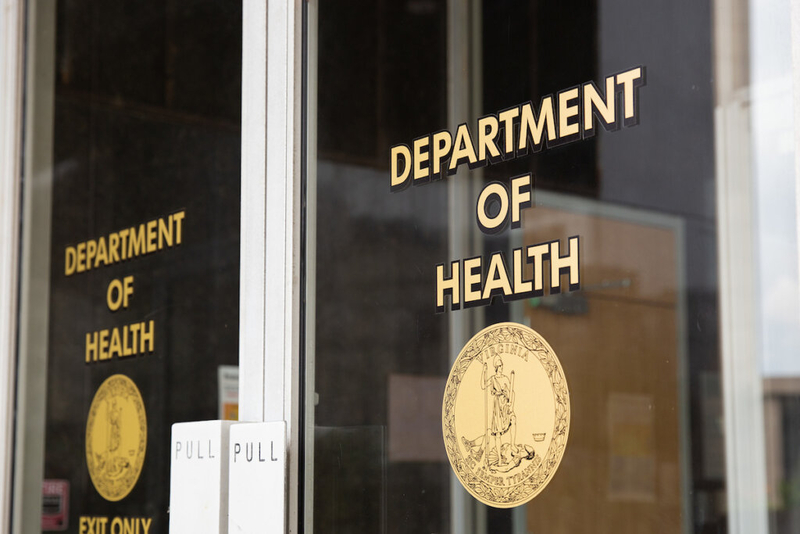
Virginia Department of Health offices in Richmond. (Photo by Parker Michels-Boyce for The Virginia Mercury)
Sesame has now been added to the state’s major food allergen list, the Virginia Department of Health announced along with several regulation updates and revamped guidance for food establishments that will go into effect on Thursday.
The ingredient joins fin fish, crustacean shellfish, tree nuts, milk, peanuts, soy, wheat and eggs as items that restaurants, food trucks and other food vendors must disclose in packaged and unpacked items on their menus for consumers’ awareness.
Businesses are not required to reprint existing menus and can offer a standalone handout or a QR code so customers can access the information.
The protocols stem from the most recent food code update from the United States Food and Drug Administration — a mandate last revised in 2022.
Brookie Crawford, a communications manager with VDH, explained that implementing FDA food code updates takes time because they “must go through an executive branch review and then to the General Assembly.”
Virginia’s last food code update was in 2021 and aligned with the 2017 FDA Food Code. The federal code is updated every four years.
Beyond adopting the latest federal guidance, VDH is also in the process of implementing new state laws that build on food safety protocols.
House Bill 373 by Del. Marty Martinez, D-Loudoun and Senate Bill 248 by Sen. Kannan Srinivasan, D-Loudoun, will require VDH to post guidance in multiple languages on its website for restaurant staff who encounter customers with food allergies.
The measure will also require restaurants to post signage or update menus to include the phrase “if you have a food allergy, please notify us” in multiple languages.
When implemented, VDH will provide a sign that establishments can use, though they can also create their own sign.
Additionally, SB 183 by Sen. Angelia Williams Graves, D-Norfolk, is meant to enhance transparency about food safety for people with allergies or sensitivities that order carry-out of delivery items.
The law directs the state health board to promote regulations requiring restaurants that alter or substitute food due to consumer-identified food allergies or sensitivities to place an identifying marker on items that have been altered.
Though the legislation officially became law on July 1, implementing the requirements from the state lawmakers will take time and VDH anticipates the new regulations taking effect in 2027.
“Agency staff are actively working on proposed regulations and will be convening a public stakeholder group of industry and public representatives shortly to gather feedback on language,” Crawford said.
Richmond, VA