Groups opposing Utah monument cuts say a new survey supports their cause
Sep 10, 2026 | 7:03 am ET
Description
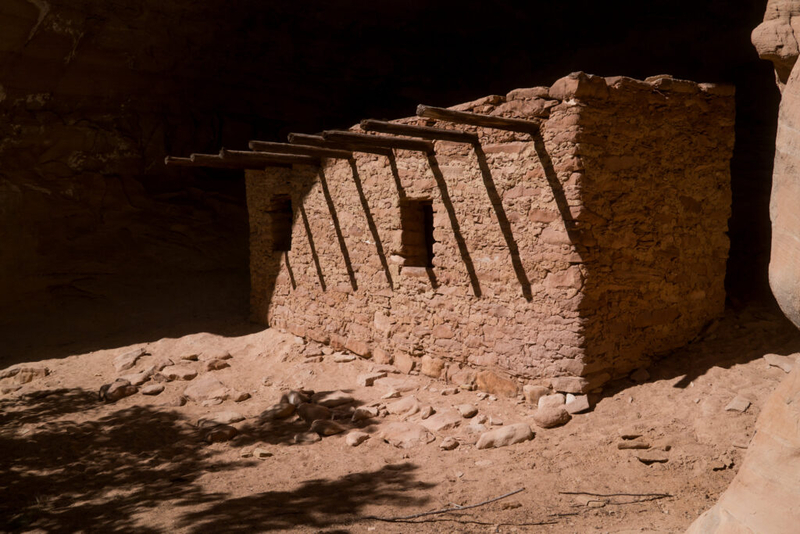
The Doll House, an Ancestral Puebloan structure within Bears Ears National Monument, is pictured on Friday, Sept. 19, 2025. (Photo by Spenser Heaps for Utah News Dispatch)
Republican leaders in Utah have long criticized Democratic presidents’ creation of Bears Ears and Grand Staircase-Escalante national monuments, saying the protections are too broad and pointing out that several surrounding communities do not approve of them.
Conservationists and tribal coalitions sought to push back on those points of view Wednesday, armed with results of an August poll commissioned by the Grand Canyon Trust. The organization is one of many suing President Donald Trump for recently shrinking the two national monuments.
In a virtual news conference, they reported that 66% of a total 500 Utah voters said greater protections for the monuments should be restored within their prior boundaries, with a majority saying the same across the political spectrum and around the state.
Wednesday’s announcement follows an unrelated Utah poll conducted in the same month that indicated 56% of participants opposed the reductions, the Deseret News reported.
In July, President Donald Trump slashed the size of the two national monuments by 90% and terminated the Bears Ears Commission that had managed the monument jointly with the federal government.
The collaboration was considered historic when Bears Ears was established by then-President Barack Obama in 2016 and seen as a possible model for other protected public lands. The commission’s members included five tribal nations — the Hopi Tribe, Navajo Nation, Ute Mountain Ute Tribe, Zuni Tribe and Ute Indian Tribe.
Davina Smith-Idjesa, Navajo Nation representative and co-chair of the Bears Ears Inter-Tribal Coalition, said this sort of framework is not just symbolic.
“It’s about respecting tribal sovereignty, indigenous knowledge, and the responsibilities tribal nations have carried for these places since time immemorial,” Smith-Idjesa said.
The president’s order disbanded the commission and gave each of the five tribal nations a spot on an advisory committee including representatives from neighboring municipalities and others selected by the governor to represent certain interests like archaeology, ranching and recreation.
Patagonia, environmental groups revive old legal fights against new cuts to Utah monuments
The poll also surveyed Utahns about how important it is for tribes to have a strong role in managing public lands containing sacred or culturally significant sites. In response, 82% said it was important, according to the research firm that conducted the poll, New Bridge Strategy.
New Bridge prefaced the question by noting Native American tribes had entered into an agreement with the U.S. Forest Service and Bureau of Land Management to collaboratively manage Bears Ears National Monument. It also told survey participants that tribes were not consulted about the decision ahead of time.
Autumn Gillard, coordinator for the Grand Staircase-Escalante Inter-Tribal Coalition, said the results point to broad support in Utah for ensuring that tribal nations have a meaningful, lasting voice in matters of national monuments. When they’re excluded, she said, generations of knowledge about the land are left out of consideration.
“Whether every elected official agrees with the results or not, these findings are profoundly telling, and should not be ignored,” Gillard told reporters.
A group of top GOP state officials — Gov. Spencer Cox, Attorney General Derek Brown, Senate President Stuart Adams and House Speaker Mike Schultz — have applauded Trump’s orders and said that they envision a collaborative approach for the new boundaries that will involve tribal representatives.
“Monument management will bring together representatives from tribes with historic connections to the areas, local governments, and the state to help guide decisions,” the leaders said in a joint statement in July.
Trump’s order on Bears Ears stipulated that Interior Secretary Doug Burgum and Agriculture Secretary Brooke Rollins “have no obligation to engage, consult, or coordinate with” the Bears Ears Commission. However, it directed them to “consult with Tribal Nations in accordance with other applicable authorities.”
Salt Lake City, UT