New Hampshire voters have spoken. So what did they say?
Sep 09, 2026 | 2:43 pm ET
Description
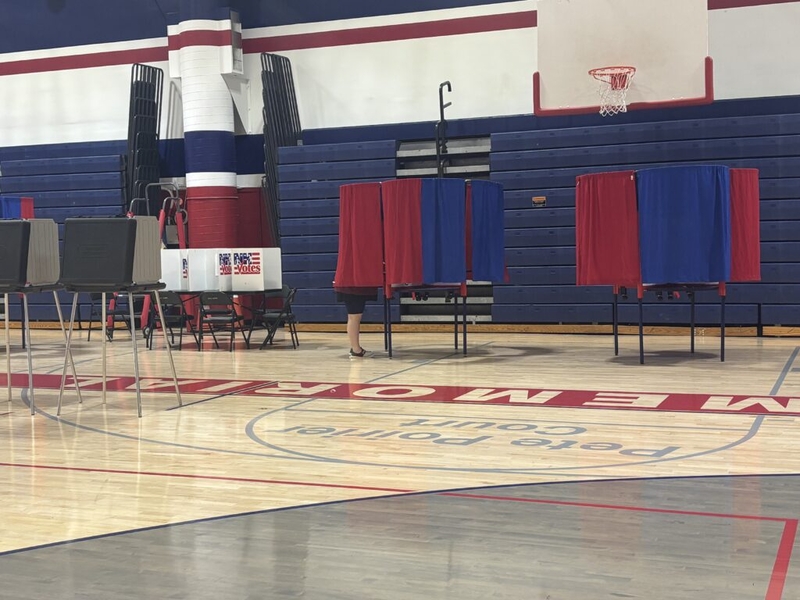
A voter fills out a ballot at Manchester Memorial High School, the poll location for Manchester Ward 8, during the primary election on Sept. 8, 2026. (Photo by Maya Mitchell/New Hampshire Bulletin)
In many ways, the results of Tuesday’s primary elections in New Hampshire played out as same old, same old.
On the Democratic side, the establishment candidates in this purple state ended up winning in both congressional races, as well as the U.S. Senate nomination battle. However much Stefany Shaheen, Maggie Goodlander, and Chris Pappas might claim the progressive mantle when it suits them politically, these are not disrupters by any stretch. They are politicians who like to play it down the middle and keep their heads down, which isn’t particularly inspiring but it is practical. And you can’t argue with Tuesday’s results.
Still, the Pappas and Goodlander votes in favor of the anti-immigrant (and anti-due process) Laken Riley Act continue to draw the ire of the party’s frustrated left, and Pappas’ recent “present” vote on an amendment to strip Israel of billions in aid was not exactly a profile in courage. But that kind of fence-sitting does put him in good U.S. Senate company. Sens. Maggie Hassan and Jeanne Shaheen also voted in favor of the Laken Riley Act, and they abandoned their stand to protect the Affordable Care Act tax credits, and they joined Republicans in confirming some particularly inept Cabinet characters.
To that point, maybe nobody could have foreseen just how disastrous Kristi Noem’s time at the helm of Homeland Security would be, but two longtime New Hampshire political players like Shaheen and Hassan should have picked up on at least one big clue. Anyone who has New Hampshire’s own Corey Lewandowski whispering in her ear is a solid bet to be problematic, but Shaheen and Hassan greenlighted her anyway.
I suppose that’s just the maddening way it goes when your delegation feels compelled to offer the benefit of the doubt to an administration that has never earned it.
And that leads me to the part of Tuesday that didn’t feel like the same old story. Three progressive candidates — Carleigh Beriont in the 1st District, Paige Beauchemin in the 2nd District, and Karishma Manzur on the Senate side — succeeded in making splashes. None were close to winning, which is the official story of the day, but what each of them overcame was significant. With very little name recognition when they launched, and comparatively very little money to spend, here’s the share of the vote each won, as of midday Wednesday: Beriont, 22%; Beauchemin, 18%; and Manzur, 33%.
In the end, these were not quixotic efforts. They were messages, and they will only grow louder in the second half of this current presidential administration. The question is, will the Democratic establishment still listen now that the left flank is back on the electoral sidelines?
There were messages sent on the right, too, but more by the candidates themselves than the voters. In the 1st District, eventual winner Anthony DiLorenzo was routinely targeted by his competitors for what they perceived as a too-empathetic view (gasp!) of immigrants. Lily Tang Williams, who won the 2nd District nomination easily, is leaning more into fiscal conservatism this time around rather than the heartless, pugilistic blueprint her party has followed for the past decade. And John Sununu showed absolutely no interest in running against main challenger Scott Brown, perhaps predicting that any race with Donald Trump as a third wheel could only have negative consequences come November.
In fact, Sununu kept his head so low for so long during the Republican primary that I sometimes wondered if he had dropped out and neglected to tell anyone. But then I would see four or five of his robotic anti-Pappas ads in a row and realize he’s just really uncomfortable running on the right. And I suppose that’s to his credit.
Whatever concerns voters may have about the harmful Trump administration policies Sununu, Williams, and DiLorenzo might support should they join the Republican congressional hive mind — and those concerns are fully warranted — there is good news for everyone who is tired of all the chaos: All three seem to be more interested in being wonky than provocative.
Baby steps, people. Baby steps.
The most important takeaway from Tuesday, though, has nothing to do with the political personalities. No matter how much of a carnival politics becomes, and no matter how hard the barkers work to redirect people to their sideshows, the domestic needs of the people don’t really change very much from year to year.
They want affordable healthcare and good wages. They want job security and a chance at home ownership. They want fair taxation and access to affordable childcare. They want clean air and water, and they don’t want to end every month in the red because of the inescapable costs of electricity, gasoline, and food.
They want a future they can believe in, and not just for themselves but for their children, their neighbors, their communities.
In short, they want their leaders in Washington and Concord to understand who they work for — even after the final ballot is counted.
Concord, NH