For this Mama Bear, home is a right worth fighting for
Sep 09, 2026 | 10:00 am ET
Description
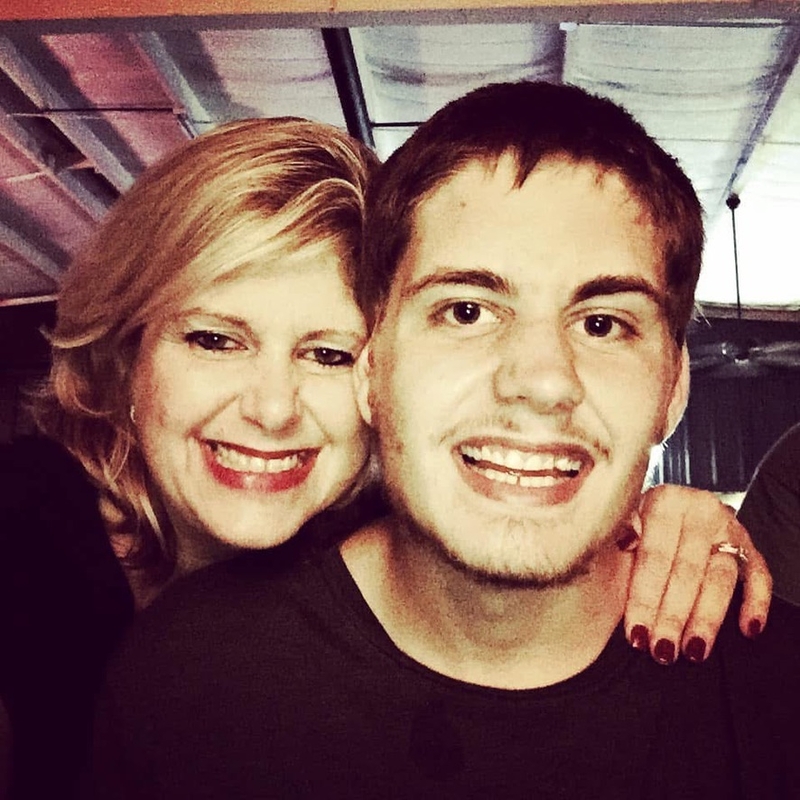
Lynn Maranville Martin pictured with her son, logan. (Courtesy photo)
I’m a mama bear.
Most parents are. We want our children to be safe, to have a life of their own, and to know they will be cared for when we’re no longer here.
For parents of children with disabilities, that instinct takes on a different shape.
My son Logan is 30. He was diagnosed on the autism spectrum at two and a half and, as a teenager, after contracting Epstein-Barr virus, developed a cascade of health conditions: a seizure disorder, PANS, dysautonomia, sick sinus syndrome and more. He is mostly non-verbal.
But that’s not the whole story.
Logan was fully included in regular education classes. He is an honors graduate and N.C. Scholar. He played in high school band. Since graduating, he has run a small business, BeachBum Logan Designs. And he lives at home, with his family, in the community he calls home.
That life is possible because of a promise made in a 1999 U.S. Supreme Court decision called Olmstead v. L.C.
The promise
In Olmstead v. L.C., the Supreme Court ruled that needlessly isolating people with disabilities in institutions is a form of discrimination under the Americans with Disabilities Act. People with disabilities have a right to receive services in the most integrated setting appropriate to their needs – in their communities, not warehoused away.
Home and Community-Based Services (HCBS) Medicaid waivers allow Medicaid dollars that might otherwise pay only for institutional care to support people in their own homes and communities.
Without them, the “choice” for many families is institutional placement, or a parent leaving the workforce to become a full-time, unpaid caregiver.
Logan began receiving services at age 6 through a home and community-based waiver. Since 2019, as his own legal guardian, he has self-directed his care, choosing who supports him and how.
This has included community living, job coaching for his business, community engagement and respite care that has allowed our family to sustain caregiving for decades. As Logan’s health conditions multiplied, his support adapted with him.
My husband and I are aging now. We’ve planned, including a special needs trust, a living trust, lifetime rights to our home. But none of that planning matters without services to go with it.
When we’re gone, Logan’s brother will oversee – but not replace – the same supports that have carried Logan throughout his life. That continuity of care is the second half of what Olmstead promises. It isn’t just the right to live in the community today. It’s the chance for the life a person has built to continue when their parents can no longer provide the care.
Under attack
That guarantee now sits on far less solid ground.
On June 18, 2026, the U.S. Department of Justice’s Office of Legal Counsel issued a formal opinion arguing that neither Section 504 of the Rehabilitation Act nor Title II of the ADA requires states to serve people with disabilities in the most integrated setting. In other words, the federal government’s own legal office concluded that the “integration mandate” was never really a mandate at all.
Disability rights organizations including The Arc, NAMI and AAPD have condemned the opinion as a threat to decades of progress.
Weeks later, DOJ went further, declaring that its longstanding guidance for enforcing the ADA’s integration mandate – guidance that agencies and courts have relied on for more than a decade – is “not enforceable,” and that it will no longer use that guidance to enforce Title II.
Olmstead is still the law of the land. The Supreme Court’s decision hasn’t been overturned, and no memo can undo it.
But rights mean little if the federal government won’t defend them.
If DOJ steps back, families like ours may have to rely far more on private lawsuits and state-level advocacy to protect what once carried the full weight of federal enforcement.
Why this matters now
Twenty-seven years after Olmstead, HCBS waivers remain chronically underfunded, and waiting lists in many states stretch a decade or more.
Logan’s three decades of continuous support are a powerful example of what happens when Olmstead’s promise is kept. The fight in Washington now will help determine whether the next generation of people with disabilities gets that same chance.
I’m scared. But I’m also a mama bear.
For 30 years, we’ve fought to make sure Logan can live at home, in his community, surrounded by the people who love him. I’m still his mama. I’m still his bear.
And I’m still fighting.
Lynn Maranville Martin is a retired human services professional with 30 years of experience. She lives in Maiden, NC.
Raleigh, NC