SC to rebuild 169-year-old slave cabin destroyed by Hurricane Helene
Sep 08, 2026 | 3:17 pm ET
Description
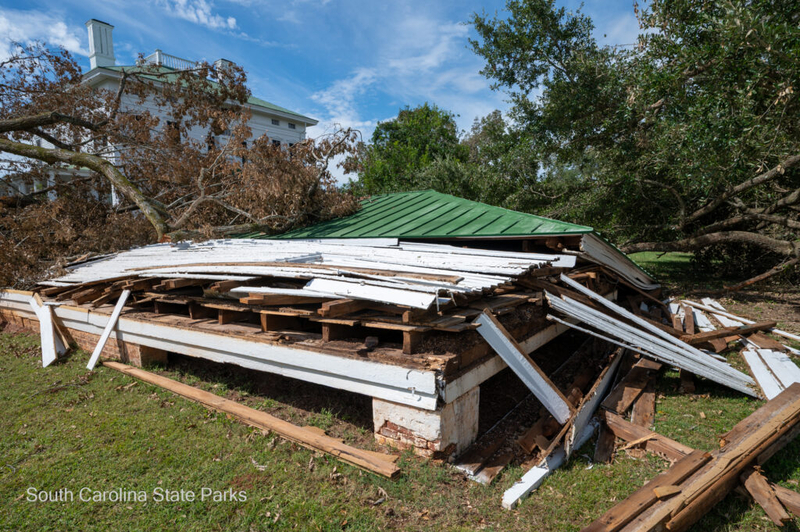
A former slave quarters on South Carolina's Redcliffe Plantation was destroyed by Hurricane Helene. Nearly two years later, the state is rebuilding the 169-year-old structure. (Photo courtesy of SC Parks and Recreation)
For more than a decade, the descendants of sharecroppers and people once enslaved on South Carolina’s Redcliffe Plantation gathered each year inside the former slave quarters on the property — now a state historic site — that their ancestors once called home.
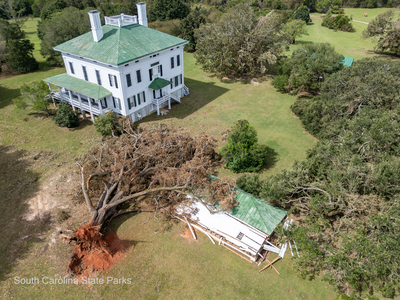
Two remaining buildings out of four, arranged in a square, that served as the slave quarters at Redcliffe stood in the shade of a more than 200-year-old cherry bark oak.
But on Sept. 27, 2024, when Hurricane Helene reached the Palmetto State as a tropical storm with drenching rains and 75 mph winds, the tall oak fell. It leveled the nearly 170-year old building that had hosted so many annual gatherings, where descendants shared meals, conversations and read through historic documents about how their ancestors had lived.
“At the height, there were folks traveling from New York, Minnesota, California, probably close to 100 people,” said South Carolina State Parks Director Joy Raintree.
“With that building damaged and gone, you only have the one,” added Raintree, who started her career at Redcliffe. “It’s hard to recreate that open square that would have been the yard where enslaved housekeepers and gardeners would have lived and worked.”
Now, two years after the storm, the state park service is preparing to reconstruct the destroyed building, which the agency called “a rare and essential resource for understanding the site’s history.”
A legislative panel that oversees state spending last month approved using $755,000 in federal historic preservation grant funds to rebuild it, restoring the clapboard-sided structure as close to its original construction as possible.
Redcliffe’s history
Redcliffe, in present-day Aiken County, was one of four plantations owned by former South Carolina governor, congressman and U.S. Sen. James Henry Hammond. In all, the attorney and politician owned 14,000 acres of prime cotton-growing land along the Savannah River.
Hammond enslaved some 300 men, women and children across his properties. Between 20 and 50 of them lived at Redcliffe, his non-working estate in Beech Island. The freed descendants of the five or six families of slaves continued to live on the property until the 1990s.
Hammond’s great grandson, John Shaw Billings, donated Redcliffe to the state in 1973. Two years later, the state park service opened it to the public as a historic site.
When people, including about 2,000 school children on field trips each year, come to Redcliffe, they start at the visitor center with a small exhibit about all of the properties Hammond owned from the 1830s until his death in 1864 — Redcliffe but also Silver Bluff, Cowden, and Cathwood plantations. From there, they may explore the property and two-story Greek Revival mansion on their own or participate in a guided tour.
Park employees take those who opt for the tour to the slave quarters to begin. The last of the buildings that still stands today contains an exhibit, which opened last year, about the lives of its former inhabitants.
“Hammond was a prolific writer. He kept crop notes, plantation manuals, overseer’s manuals,” Raintree said. “Of course, all of that is from his perspective, but if you read it and study it you learn about how people were impacted by the things he was saying and the things he was doing.”
“We’re using James Henry Hammond’s words, but we are using them for the purpose to tease out what life was like for the people that lived there and lived under those rules and guidelines,” she added.
In all, Redcliffe has about 4,000 artifacts.
“We use all of those things as vehicles, as lenses,” Raintree said. “But at the end of the day, it’s the modern day conversations about what happened in the past that are important and Redcliffe provides space for that.”
Rebuilding
The building destroyed in the storm started out as slave quarters but was converted into a garage in the 1930s, with living space for a driver. While the outside changed, the inside remained largely the same, Raintree said.
“You could still see all of the original framing and the original sills were exposed,” she said, so visitors could get a sense of how the building was made.
As the park agency rebuilds the 800-square-foot structure, it plans to salvage as much of the original material as possible. The work will include timber framing, pine siding, doors and windows, brick piers and pine tongue and grove flooring. The park will reuse for exhibits that which workers can’t salvage.
“It is important to us to to preserve that tangible memory that allows us to tell the stories that we want to tell,” Raintree said.
Completion is expected by June 2029.

Columbia