Meta settlement brings questions about where and how to use the money
Sep 08, 2026 | 4:03 am ET
Description
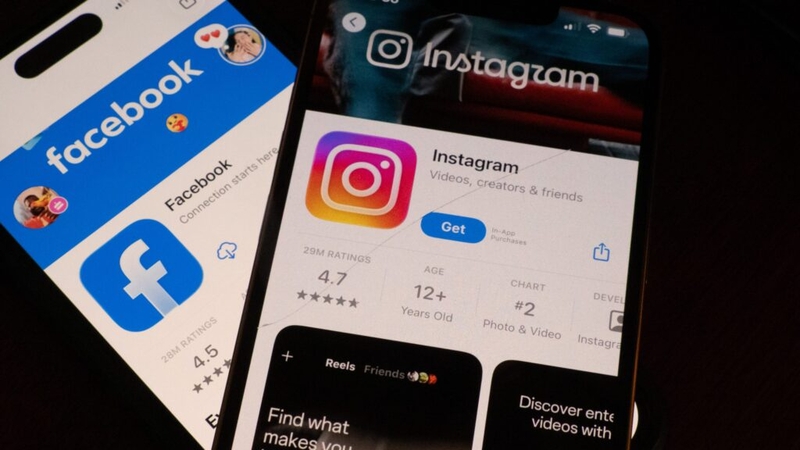
The parent company of Instagram and Facebook agreed to settle a nationwide lawsuit by paying up to $17.1 billion and implementing safety features on its platforms to protect children. (Photo by Anna Kaminski/Kansas Reflector)
Social media giant Meta settled claims by 47 states that its platforms were harmful to children by agreeing last month to pay up to $17.1 billion and place strict controls on how teens can use its apps.
Now, those states, including Pennsylvania, must decide for themselves how the money should be distributed to mitigate the impacts of social media saturation on children’s mental health.
The settlement agreement itself prescribes broad uses to remedy the increase in teen mental health issues — such as body dysmorphia and suicide — that has stemmed from the rise of social media.
But public health experts say details of what government and community entities receive the money and in what amounts are important questions the commonwealth must answer.
“A third question is how will the decision be made,” said Dr. Joshua M. Sharfstein, vice dean for public health practice at Johns Hopkins Bloomberg School of Public Health. “Is it just the attorney general sitting there by herself or himself … or is it a process that engages people.”
There are also significant lessons to be learned from earlier nationwide settlements over the pharmaceutical industry’s sales of opioid painkillers, leading to an addiction epidemic that swept across the country in the 2010s, said Dennis P. Scanlon, director of Center for Health Care Policy Research at Penn State University.
The terms of the opioid settlements were informed by mistakes made in the 1998 master tobacco settlement, which placed few restrictions on government spending of the proceeds.
“There’s published stories of how some of that money was spent on sprinkler heads for golf courses, subsidizing tobacco farmers,” Scanlon said. “You know, things that were non-health related.”
Pennsylvania will receive a maximum of $705.2 million over 10 yearly installments, according to the settlement agreement, but that amount will only be realized if states succeed in litigation against other social media companies to get them to agree to the same teen controls.
The commonwealth is guaranteed, however, to receive $493 million plus another $23.8 million to settle claims over Facebook sharing users’ data in 2014 with Cambridge Analytica, a British company that used it to profile users and target political advertising.
A spokesperson said Pennsylvania Attorney General Dave Sunday’s litigation team was prepared to be in California for a trial on the states’ allegations when the settlement was announced Aug. 26. The attorney general’s office declined interview requests.
“Instead, we were very pleased to secure over half a billion dollars for Pennsylvania and significant injunctive relief that will better protect young people on those platforms,” spokesperson Brett Hambright said in a statement.
He said the office is already reaching out to stakeholders to direct the “sudden influx of funds.”
“Transparency and accountability are critical as we move forward to ensure these funds are used to do the most good for those harmed by these platforms and further protect Pennsylvanians,” Hambright said.
Last month, Sunday’s office also announced it is suing TikTok and the app’s parent company ByteDance, and Snap Inc., the owner of the messaging platform SnapChat alleging they violated Pennsylvania’s Uniform Consumer Protection Law.
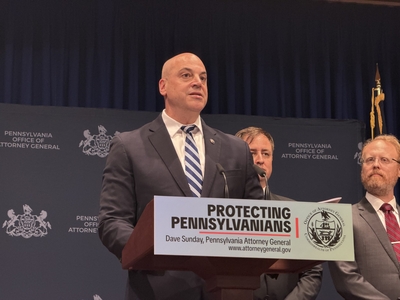
Hambright noted the suits “have taken on added financial significance given the incentive to achieve industry-wide adoption of the standards secured in the Meta settlement.”
In addition to the monetary settlement, Meta has agreed to sweeping changes to its platforms, Facebook and Instagram, which include limiting screen time for minors to two hours a day and blocking access from midnight to 6 a.m.
The apps will also remind kids to take breaks from scrolling, eliminate photo filters experts say contribute to body image issues and implement stronger safeguards against bullying and violent and harmful content.
If Snap, ByteDance and Google, which owns YouTube, each agree to the time management requirements in the Meta settlement, the states will receive as much as $502 million in contingency payments.
Each of the 47 states in the Meta settlement have individual terms of payment that differ depending on applicable state laws. Some, like Alaska, dictate that a portion of the money will go to the state’s general fund, where its legislature will have discretion over the spending, and a portion goes to the attorney general’s office.
Pennsylvania’s payments will be directed to the state attorney general’s office for “any lawful purpose” including but not limited to uses related to mental health and wellness outlined in the settlement.
Those include the operation and expansion of the 988 suicide and crisis hotline, after school and summer youth programs, public education, digital literacy counselors, training for medical providers and grants to school districts or local government entities.
Tobacco settlement money went to states, not local entities
The 1998 master settlement agreement between 52 state and territorial attorneys general and the nation’s four largest tobacco companies was intended to reduce smoking among young people.
Much like the terms of the Meta agreement, the tobacco settlement required changes in the way tobacco companies marketed their products. In addition to required price increases, it restricted advertising, marketing and promotions by banning actions to target youth; the use of cartoons in advertising, such as R.J. Reynolds’ ubiquitous Joe Camel mascot; and the use of tobacco branding on merchandise, in media such as films and video games and sponsorship of sports teams.
The settlement agreement, which eventually included 45 tobacco companies, resulted in an estimated $206 billion that was to be paid to the states over 25 years. The money, however, remained in the exclusive control of state governments, Scanlon, the Penn State professor, said.
“The cities and counties basically said we got none of this money, and the damages are in our communities,” he said.
Opioid settlement included guardrails
The opioid settlements, in which attorneys general across the nation sued drug makers and distributors, netted more than $50 billion for state and local governments. And in light of the criticism of the tobacco settlement, it included guardrails on how the money could be spent.
The scope and scale of the litigation against defendants including Purdue Pharma, Johnson & Johnson, CVS and Walmart set it apart from the tobacco industry lawsuits, Scanlon said. More than 3,000 city, county and tribal governments filed lawsuits. Under terms of the settlement with the state attorneys general, each of those entities had to agree to end its litigation in order for states to receive the full amount.
“So it was very interesting because it became a political, socio-economic, or a political-economic discussion,” he said. Scanlon was part of a team hired by the trust created for the opioid settlement money to develop a framework for its distribution in Pennsylvania.
The commonwealth, counties and cities reached an agreement by which the counties would receive 70% of the money, the state Department of Drug and Alcohol Programs would receive 15% and the local governments that sued would share an additional 15%.
Although the agreement included a list of permissible uses for the money, the process has not been without controversy, Scanlon noted.
“Some states are basically … saying, ‘Hey, you can spend your money to hire police to go out and find the criminals, find the drug dealers, find the people that are trafficking opioids or opioid-like substances,” he said.
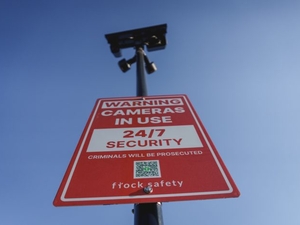
An investigation by KFF Health News and the Johns Hopkins Bloomberg School of Public Health found $61 million was spent on law enforcement in 2024. That includes money spent for Flock cameras and other automatic license plate readers, which are the subject of massive public pushback over concerns about misuse and government surveillance.
“In Pennsylvania, they’ve said you know that’s not what the money should be used for,” Scanlon said.
Sharfstein, of Johns Hopkins, said the Meta settlement will require a robust discussion about how the issues with teen social media use are manifesting in different areas of the state.
“One of the lessons of the opioid settlement is that there’s a lot that can be done around these issues that’s outside the settlement,” he said. “But the settlement can provide an opportunity to really focus attention and bring people together. So the actual process of figuring out where to spend the money can be helpful above and beyond just figuring out where to spend the money.”
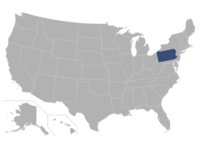
Harrisburg, PA