Trump’s beef import plan draws criticism from Alabama organizations, politicians
Sep 08, 2026 | 6:01 am ET
Description
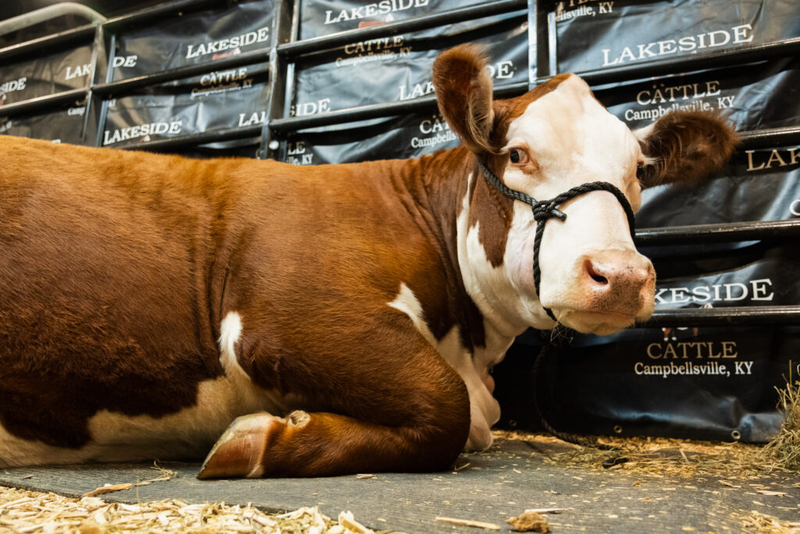
A cow rests at the Kentucky State Fair in Louisville, Kentucky on Aug. 27, 2026. President Donald Trump's plan to import 300,000 metric tons of beef has drawn rebukes from farmers and ranchers' organizations. (Chris Hughes for Kentucky Lantern)
President Donald Trump’s plan to import 300,000 metric tons of beef priced under market value drew rare rebukes from Alabama organizations generally supportive of him and provided an opening for an incumbent U.S. representative facing a difficult battle for re-election.
Trump’s proposal, which he said aimed to address high beef prices, garnered backlash from farmers and politicians across Alabama for having a negative impact on domestic agriculture.
Alabama Cattlemen’s Association Chief Executive Officer Erin Beasley wrote in a statement on social media last month that “flooding the market with subsidized foreign beef only discourages cattlemen from making investments in their operations, ultimately slowing down herd rebuilding.”
“This administration needs to focus on policies that will encourage herd expansion and lower the input costs that have burdened the industry for some time,” the statement said. “Market manipulation will never be the answer, and (last month’s) announcement is another slap in the face for cattlemen everywhere, especially the more than 10,000 members in our organization.”
U.S. Rep. Shomari Figures, D-Mobile, who is seeking re-election in a district the Republican-controlled Legislature redrew in May to favor Republicans, introduced legislation last week that would nullify the president’s proclamation and prevent the president or other elected officials from suspending, waiving or reducing any tariff, fee or duty on beef products unless Congress moves to do so first.
“The initial reaction was somewhat surprised that he would be so disconnected from the struggle that cattle farmers are having right now, that the (agriculture) industry as a whole is having right now,” Figures said in an interview last week. “But on the other hand, we’ve seen several actions coming out of this administration that display a similar level of either a lack of understanding or just simply not caring about the impact of their policies on farmers.”
Rep. Rhett Marques, R-Enterprise, the Republican nominee for Alabama’s 2nd Congressional District, did not make a public comment on Trump’s proclamation last week. A message seeking comment was left with Marques Friday afternoon.
Amid the outcry, Trump Friday afternoon signed an executive order to make it easier for ranchers and farmers to process their own beef products and sell directly to consumers.
Certain organizations, such as the National Cattlemen’s Association, are opposed to allowing farmers and ranchers to sell products without the inspection citing food safety concerns.
The Alabama Cattlemen’s Association reported in January 2026 there were 1.2 million head of cattle and calves on Alabama farms. Alabama Cooperative Extension System reported that in 2022, there were 273,271 jobs in Alabama’s food, fiber, forestry, and green industries which accounted for 10% of the state’s workforce.
According to Federal Reserve Economic Data, ground beef prices first spiked in June 2020 costing $4.74 per pound before dropping to $3.96 per pound in December 2020. As of July 2026, ground beef prices are $6.86 per pound.
Higher prices can likely be attributed to a smaller head of cattle. At the beginning of the year, the USDA reported 86.2 million head of cattle which was down from 86.5 million head in January 2025.
Rick Pate, the commissioner of Agriculture and Industries, said in a statement the proclamation is “unlikely to provide lasting relief” due to its temporary nature.
“Demand for beef remains strong during the recent higher prices. If prices rise too high, consumer demand will ease leading to price adjustments and producers retaining more heifers,” Pate said. “While I understand the intent behind federal actions, market forces will ultimately determine long-term outcomes.
Montgomery