Union healthcare workers protect NJ patients when laws and regulators cannot
Sep 07, 2026 | 6:45 am ET
Description
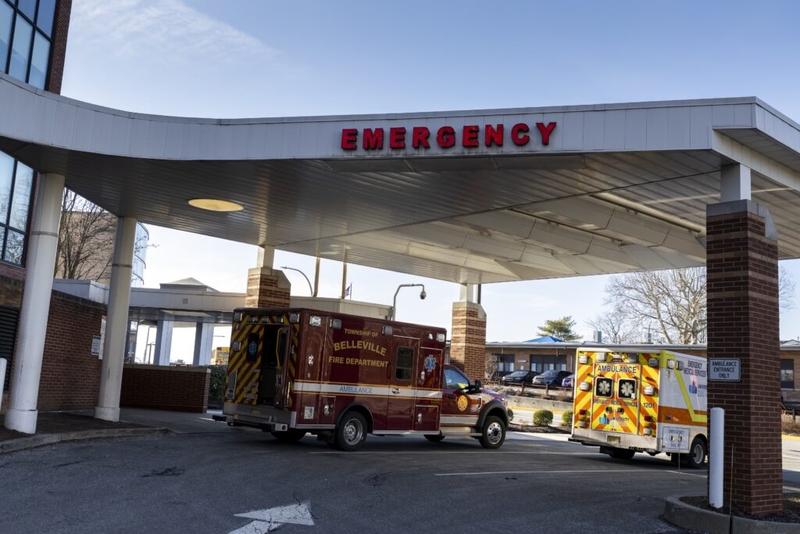
Healthcare workers and patients alike face a growing threat that cannot be addressed through collective bargaining alone, nurse and union leader Debbie White writes. (Photo by Anne-Marie Caruso/New Jersey Monitor)
This Labor Day, New Jerseyans should take a moment to appreciate the nurses, healthcare professionals, and support staff who care for our communities every day. When healthcare workers have the protection of a union, patients benefit too. Union members can speak up about unsafe conditions, advocate for their patients, and fight for quality healthcare without fear of retaliation.
Over the past three years, Health Professionals and Allied Employees healthcare workers have negotiated stronger staffing protections and safer working conditions in hospitals across New Jersey. These improvements did not come easily, but they have made a real difference for patients and caregivers because we knew the improvements were grounded in science.
Today, however, healthcare workers and patients alike face a growing threat that cannot be addressed through collective bargaining alone. Increasingly, hospital operators are making decisions that endanger access to care, while government regulators lack the authority and enforcement needed to stop them.
Over the last year, New Jersey has witnessed two alarming examples of hospital systems disregarding state requirements and reducing critical healthcare services, even closing hospitals, before receiving the necessary approval from the New Jersey Department of Health.
Last year, Hudson Regional Health abruptly cut inpatient services at Christ Hospital in Jersey City despite assurances that it had the money and resources to sustain and improve the facility. Hudson Regional acquired the system in bankruptcy only months earlier. First, the hospital cut services dramatically, then, over the next few months, closed its doors entirely, leaving a community without a neighborhood hospital and healthcare workers without jobs.
Hospitals are not shopping centers or office buildings. They are essential community institutions that provide lifesaving care. When a hospital closes or services disappear, patients suffer the consequences and neighboring hospitals are forced to deal with the displaced patient population.
After the Christ Hospital closure, the patient wait times in Jersey City Medical Center shot up dramatically because it remained as the only acute care hospital in one of New Jersey’s largest cities. Patients continued to come to Christ Hospital, unaware it had closed.
Unfortunately, despite a clear violation of the law and without the required approval of the Department of Health, Hudson Regional Health had closed a hospital and opened the door for other hospital operators to recklessly flout state Department of Health regulations.
The closure of Christ Hospital exposed a troubling reality: New Jersey’s healthcare oversight system lacks the enforcement tools needed to hold bad actors accountable before irreversible harm is done and it seems other health systems may be learning this as well.

Earlier this year, Inspira Health applied to eliminate inpatient critical care services at its hospitals in Elmer and Mannington, which would leave Salem County residents without local ICU care. Salem County is a largely rural area where many residents rely on these hospitals as their nearest source of critical care, and questions remain about whether alternative transportation and EMS capacity are sufficient to reliably reach other Inspira facilities. Even though the Department of Health has not approved the closures, most of the affected critical care nurses have already accepted alternate positions and are no longer working in the ICUs — underscoring that Inspira is proceeding with the transition before regulatory approval is final.
Healthcare workers depend on the Department of Health to inspect facilities, enforce regulations, and protect patient safety. Workers are often the first to identify unsafe conditions and report them. Union contracts help protect those who speak out, but healthcare workers cannot enforce state law. That responsibility belongs to government regulators.
Recognizing these shortcomings, legislation introduced earlier this year, S4395/A5185, would strengthen the Department of Health’s enforcement powers. The proposal would greatly increase financial penalties for violations and allow the state to appoint a receiver to manage hospitals whose operators repeatedly disregard critical requirements and violate laws.
Those changes are badly needed. Current penalties are often treated as just another cost of doing business. Meaningful consequences are necessary if we expect healthcare operators to meet their obligations to patients and communities.
The closure of Christ Hospital by Hudson Regional and the loss of Inspira ICU beds in Salem County should be viewed as urgent warning signs. Health Professionals and Allied Employees unionized workers were instrumental in sounding the alarm in both cases. The nurses in Jersey City and in Salem County are, first and foremost, patient advocates and recognized and reported these illegal actions.
When hospitals lose inpatient services, emergency departments, or critical-care capacity, the effects ripple throughout entire regions. Patients wait longer for care. Ambulances travel farther. Neighboring hospitals face greater strain. Families without reliable transportation encounter even more barriers to treatment.
Healthcare workers also pay a steep price. Dedicated professionals lose jobs, careers are disrupted, and remaining staff face heavier workloads under increasingly difficult conditions. Communities lose experienced caregivers whose knowledge and commitment cannot easily be replaced.
Operating a hospital is a privilege that carries profound responsibility. Healthcare systems exist to serve the public, not simply to maximize financial returns. When owners choose to operate these essential institutions, they must be held accountable for maintaining safe, reliable access to care.
New Jersey cannot become a healthcare desert and a place where rules are optional, and enforcement comes too late to prevent harm. Patients deserve better. Healthcare workers deserve better. Our communities deserve better.
This Labor Day, let us recognize the union healthcare workers who continue to fight not only for fair treatment on the job, but for stronger protections for patients, stronger hospitals, and a healthcare system that places community needs above corporate convenience.
Debbie White, RN, is president of the Health Professionals and Allied Employees, the largest union of registered nurses and healthcare professionals in New Jersey. It represents more than 15,000 nurses, social workers, therapists, technicians, medical researchers, and other healthcare professionals in hospitals, nursing homes, home care agencies, blood banks, and university research facilities, and is affiliated with the American Federation of Teachers, AFL-CIO.

Trenton, NJ