Arkansas students learn about 9/11 attacks through oral histories
Sep 07, 2026 | 6:00 am ET
Description
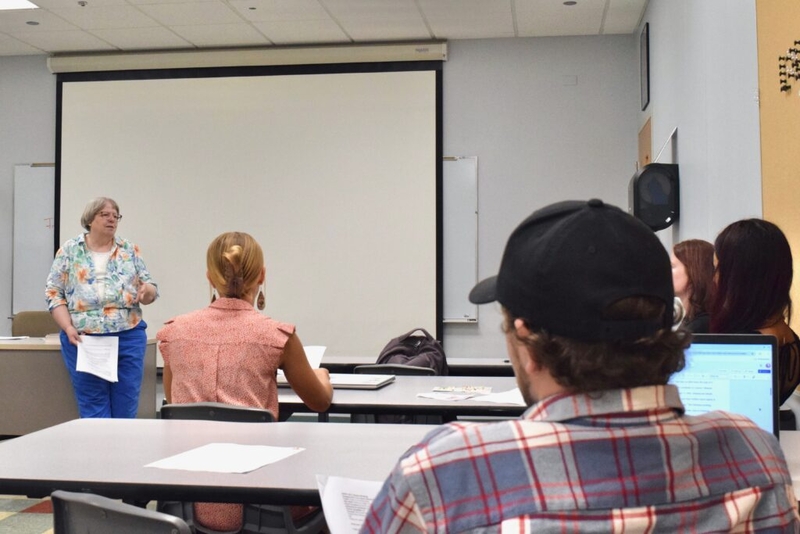
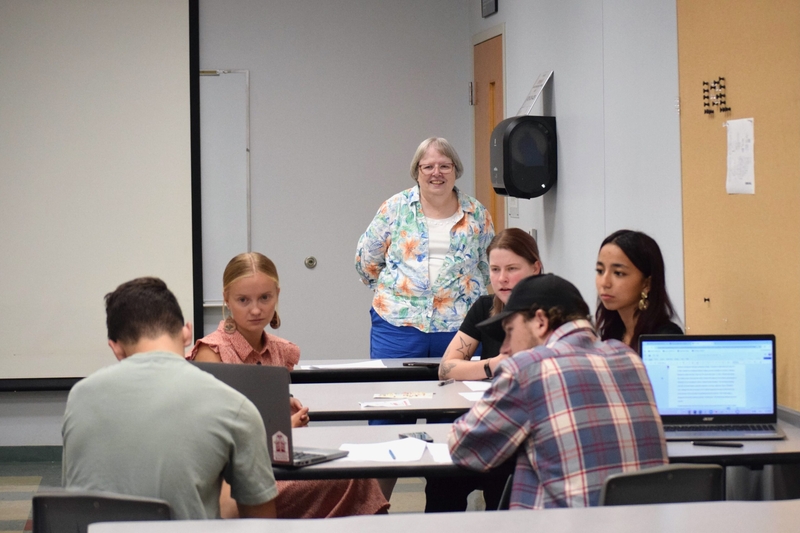
Debbie Miller, a journalism instructor at NorthWest Arkansas Community College in Bentonville, discusses a 9/11 assignment with her students on Sept. 3, 2026. (Photo by Antoinette Grajeda/Arkansas Advocate)
Army veteran Wesley Jackson remembers his confusion when co-workers told him two planes struck the World Trade Center on the morning of Sept. 11, 2001.
After processing the news of the terrorist attacks, Jackson realized his days as a peacetime soldier were over, and it was only a matter of time before he was deployed to the Middle East.
“My whole life changed in an instant,” he said.
Twenty-five years later, Jackson is teaching Arkansas State University students about the impact of that day as an assistant professor of history.
Friday marks the anniversary of the attacks that killed nearly 3,000 people when hijacked planes crashed into the World Trade Center, the Pentagon and a rural field in Pennsylvania. Arkansas history, journalism and political science teachers with vivid memories of that day are using oral histories to better explain its significance to students who weren’t alive in 2001.
Learning history for students isn’t about dates and people, Jackson said.
“It’s the skills they’re learning about — critical thinking, decision making and being good stewards of the future,” he said.
‘The uncertainty of it all’
Marie Totten, a visiting assistant professor in the University of Central Arkansas’ history department, said her students often hear about 9/11 in the context of conspiracies, and want to learn how to sift through false information.
“They recognize that they’re addicted to their phones and their phones are created to make them addicted, that the algorithm is created to show them information that may not be true, and they want to learn the skills to combat that,” she said.
Some misinformation is dispelled through an oral history assignment that involves Totten’s students interviewing someone, often a grandparent, about their memories of Sept. 11. Talking to a trusted source can help push back against conspiracy theories students see online, she said.
“They’re a very curious generation, they just don’t know who to ask or what questions to ask,” Totten said.
Jackson said conspiracy websites often use cherrypicked or misleading information, which is why he teaches students the importance of looking at all available evidence.
Although he can share his personal experiences as a soldier sent to Afghanistan and Iraq because of the Sept. 11 attack, Jackson said like any primary source, he’s just one piece of the puzzle and it’s important to look at multiple sources to see the broader story.
Jackson also teaches students that the narrative around historical events continuously changes as more information is uncovered.
TSA shares passengers’ personal information with immigration enforcement, documents show
“That’s why I tell them it’s important to understand that history is an ever-evolving thing,” he said. “It’s a living creature. It’s not set in stone.”
Aneyda Reynaga, a journalism student at NorthWest Arkansas Community College, was born three years after the attacks and said she grew up learning about it at school through sometimes “graphic documentaries” that could make you feel “queasy.”
Education about the attacks typically focuses on the event itself, but it’s also important to discuss what happened after, Reynaga said.
“Growing up, I didn’t even know TSA was because of 9/11, I thought it was always a thing,” she said, referring to the Transportation Security Administration established after the attacks.
Reynaga recently learned more about the event while interviewing her dad and aunt for a class assignment, and said she was most surprised to hear that their lives went on as usual, with her aunt still expected to go to work that day.
The assignment also helped Reynaga understand how the attacks affected the entire country.
“It made me see the uncertainty of it all because Arkansas is so far from New York, and the fact that people felt scared or they felt uncertain of what was going to happen all the way over here, I think it really gave me a new perspective on everything,” she said.
‘How history transpires’
Debbie Miller, a veteran journalist and instructor at NorthWest Arkansas Community College, said she’s had students like Reynaga write about Sept. 11 over the years, but it felt particularly relevant to discuss this semester in light of the 25th anniversary.
Interviewing family allows novice journalists, who may prefer communicating via text or email, to have a comfortable space to practice talking and interacting in person, Miller said. The assignment also allows students to connect with family in a way they might not have, she said.
The attack on Pearl Harbor during World War II was a significant moment for Miller’s parents’ generation, but Miller said she doesn’t recall ever thinking to ask her parents about their experiences. Looking back, Miller said she wishes she had listened more when they were sharing stories.
“I want to encourage curiosity in a safe space and encourage them to make more connections with their family members that they haven’t really thought about,” she said.
At John Brown University, political science professor Daniel Bennett has students read a Politico Magazine oral history that describes what it was like aboard Air Force One for the eight hours it was in the air following the attacks.
Something that resonates with students today is how technologically different the world was 25 years ago, Bennett said. The lack of social media or smart phones and the inability to communicate as easily is “pretty striking for what today’s students are typically familiar with,” he said.
“We’ll also raise it in the context of how did this affect future conversations about civil liberties in the scope of protecting national security versus individual freedoms, as well as maybe this being the last unifying moment in American politics,” Bennett said.
For many of today’s students, 9/11 is becoming just another major moment in American history, the same way Pearl Harbor or President John Kennedy’s assassination was remembered by older generations, he said.
“I think for future generations, it’ll lose the magnitude of how important of a moment it was for myriad reasons,” Bennett said. “I don’t think that’s something to be happy about or even lamentable, it’s just kind of how history transpires.”

Little Rock