An out-of-state private equity firm shouldn’t have ownership of 13 Michigan dams
Sep 04, 2026 | 7:00 am ET
Description
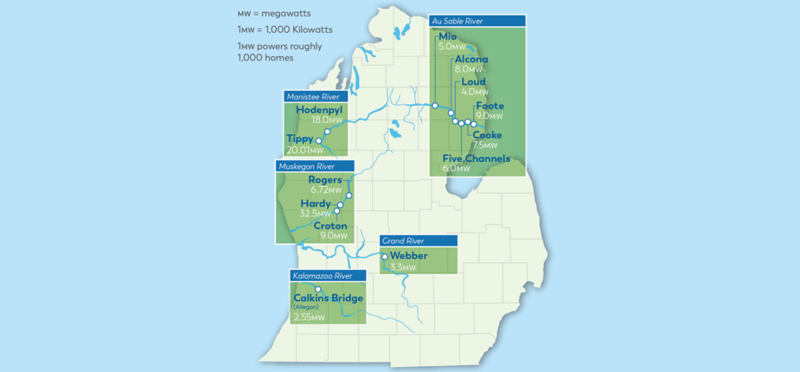
Map of the 13 hydroelectric dams proposed for sale by Consumers Energy. (Graphic by Consumers Energy)
In June, a Michigan judge overseeing deliberations regarding Consumers Energy’s proposed dam sale recommended that the Michigan Public Service Commission (MPSC) reject the proposed sale of 13 dams to an out-of-state private equity firm. Consumers’ plan would sell the aging and expensive dams to private equity-backed Confluence Hydro for just $1, while requiring ratepayers to purchase the electricity generated by the dams at an inflated price. Meanwhile, Consumers would walk away with hundreds of millions of dollars in profit.
As a Michigander who researches the impacts of private equity ownership across the country, I believe the Public Service Commission should follow this recommendation.
This proposal also comes at a time when Wall Street firms are increasingly targeting regulated utilities and other essential infrastructure. BlackRock recently acquired Minnesota Power’s parent company despite significant community opposition. Blackstone is seeking to acquire TXNM Energy in New Mexico. And shareholders recently approved the sale of utility giant AES to BlackRock. With multiple utility transitions proposed by private equity firms currently, regulators must carefully examine whether the financial incentives driving these investments are compatible with the public interest.
Michigan’s dams unquestionably require investment. But the source of that investment matters. Dams are long-lived public infrastructure that require continuous maintenance, long-term planning, and investments that may not generate immediate financial returns. That makes ownership incentives and transparency especially important. Private equity firms pursue investments with the expectation of generating strong financial returns over relatively short timelines, raising legitimate questions about whether those incentives align with assets that demand decades of stewardship to keep communities safe.
Critics of the Consumers proposal have already raised concerns about whether Confluence Hydro’s ownership model reflects the kind of long-term commitment these dams require. Since 2017, Hull Street Energy, the private equity firm behind Confluence Hydro, has sold 46 of the 47 dams it acquired. That history raises an obvious question: is this the type of ownership model Michigan should rely on for infrastructure that requires sustained investment over generations?
Michigan has already experienced the devastating consequences of deferred maintenance. The failures of the Edenville and Sanford dams in 2020 came after their private owners delayed critical safety upgrades for years. The resulting disaster displaced thousands of residents, caused hundreds of millions of dollars in damage, and left hard-working Michigan taxpayers helping shoulder the cost. We should not ignore those lessons when evaluating who should own and operate our critical infrastructure today.
When we look at private equity’s track record in utilities more broadly, Michiganders have additional reasons for caution. In 2014, the Upper Peninsula Power Company was acquired by a private equity firm. Soon afterward, the utility sought significant rate increases, including another $10 million increase just four years later. Similar concerns are emerging just across the state line. After Blackstone acquired roughly a 20% ownership stake in Indiana utility NIPSCO and secured a seat on its board, customers experienced some of the largest electric rate increases in the state, with bills rising by roughly 20% in recent years.
Michigan’s dams undoubtedly need investment should they continue to operate, but not all investment is the same. Assets that protect communities, generate electricity, and require decades of maintenance should be owned by organizations whose incentives align with long-term stewardship, not financial models built around maximizing investor returns.
The MPSC should ensure these dams remain in the hands of those committed to the long-term public interest of our state.

Lansing, MI