US Supreme Court declines to hear application on Michigan citizens-only voting ballot measure
Sep 03, 2026 | 5:35 pm ET
Description
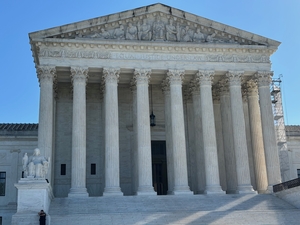
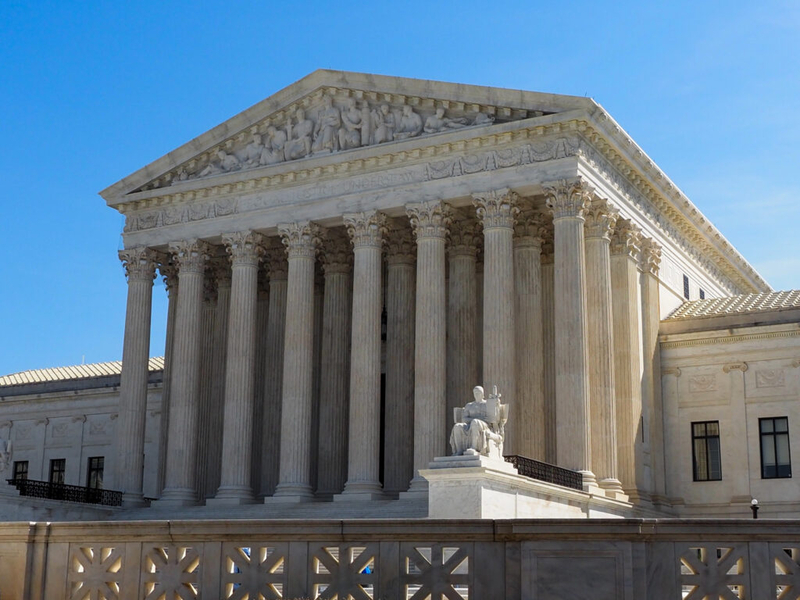
The U.S. Supreme Court, on April 9, 2026. (Photo by Ashley Murray/States Newsroom)
U.S. Supreme Court Justice Brett Kavanaugh declined an application from Americans for Citizen Voting-Michigan seeking to appeal a deadlocked decision by the Michigan Board of State Canvassers that left a citizens-only voting proposal off the November general election ballot due to a lack of valid petition signatures. The decision was posted without a filing or opinion on the court’s docket Thursday, the day before the November ballot must be finalized.
Sponsors of the ballot measure filed the application Monday, requesting an emergency injunction from the nation’s highest court. They argued that the due process rights of Michiganders who signed the petition were violated when the Board of State Canvassers determined that affidavits validating nine rejected signatures were submitted too late and as such could not be used to validate those signatures, which would have put the petition over the required threshold.
However, in the state’s response to the application, filed on Wednesday, lawyers argued that the relief requested by the sponsors — an injunction that would force the state to place the referendum on the November general election ballot — would be granting the applicants “all the relief they could ever recover for their claims.” The state argued that the application does “little to justify such an unusual request, other than to repeat the number of signatures they gathered—without acknowledging or contending with the high number of signatures that were found to be invalid.”
Mark Brewer, a lawyer for the opposition to the proposal, wrote in a message to the Michigan Advance that his clients are “pleased with the decision by Justice Kavanaugh.”
Lawyers for the applicants did not immediately respond to requests for comment. This story will be updated when a response is received.
Americans for Citizen Voting also filed a petition with the Michigan Supreme Court — the more standard avenue for recourse against the Board of State Canvassers’ decision — four days before filing its application with the U.S. Supreme Court. The response from the state notes that, as there has been no hearing or opinion issued by the state court, the application is highly unusual for asking the nation’s highest court to be the first court to review their claims.
As of Thursday evening, the only order issued by the state Supreme Court was to accept a number of amicus briefs, but no order had been made on the actual application from the ballot petition sponsors.
The measure, if passed, would have established strict voter ID rules — which opponents argued would have disenfranchised many legal voters.
The Board of State Canvassers will meet on Friday morning to finalize the ballot — including voting on ballot language for the citizens-only voting measure, though it is still not expected to be on the ballot.
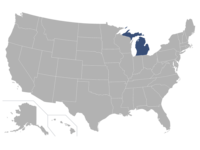
Lansing, MI