USPS whistleblower predicts ‘catastrophic’ effect on elections under Trump vote-by-mail order
Sep 01, 2026 | 4:15 pm ET
Description
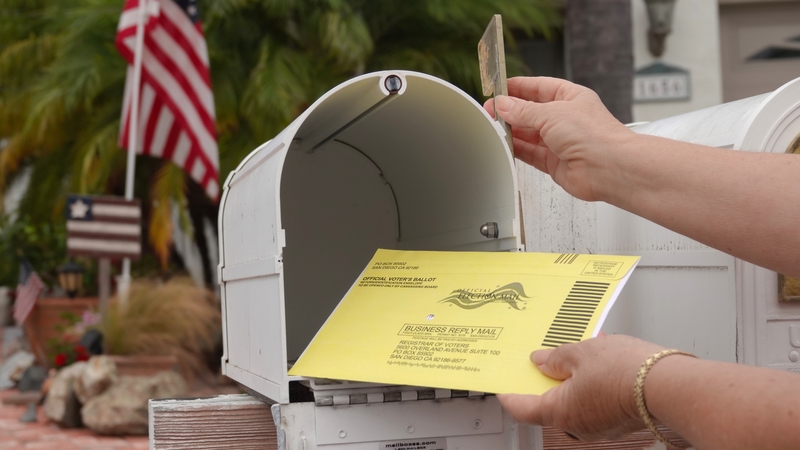
A U.S. Postal Service whistleblower in a report published Sept. 1, 2026, alleged that USPS rushed the development of electronic tools to comply with a Trump administration policy placing new restrictions on mail-in voting. (Photo by Simone Hogan/Getty Images)
The U.S. Postal Service rushed the development of electronic tools to comply with a Trump administration policy placing new restrictions on mail-in voting, and defied a court order to stop work on the system, according to an explosive whistleblower complaint published Tuesday by Democratic U.S. Sen. Richard Blumenthal.
The unnamed whistleblower predicted the result could be “foreseeable catastrophic disruption to our coming nationwide elections based on the reckless pursuit of readying a new, insufficiently tested, poorly planned mail-in ballot screening system.”
The system contains several massive flaws and, with virtually no time to spare before the November elections, USPS officials kept on developing an online verification system in violation of a Massachusetts judge’s injunction, the whistleblower said.
The system’s verification standard is “a zero percent failure rate,” meaning that any batch of ballots that contain any single ballot with an error would result in an entire batch being rejected, the whistleblower said.
The verification system itself is suspect due to a hurried and untested development of an online portal that states were to use to upload voter and ballot information for verification by federal officials, the whistleblower said.
Up against a tight timeline ahead of the midterm elections, the agency also continued to develop an online tool related to the regulation, despite the federal court order to pause the work, according to the whistleblower.
No specific USPS officials were named as responsible for directing the work to continue in defiance of the courts. USPS did not immediately return a request for comment from States Newsroom.
States were expected to begin using the system as soon as Tuesday, according to the whistleblower.
Potential for millions of missing ballots
The allegations from the whistleblower, a federal official whose exact role is not specified, were detailed in a report by Whistleblower Aid, a nonprofit legal group that is representing the whistleblower.
Blumenthal, of Connecticut, attached the report to a letter to U.S. Postmaster General David Steiner.
“The apparently sloppy and rushed manner in which the Federal Ballot Mail Portal and supporting IT systems are being built poses significant risk,” the report said. “Potentially millions of American voters may not receive their mail-in ballot this election cycle in a timely manner, or at all.”
The new policy, which President Donald Trump initiated in a March executive order, has been the subject of intense legal fighting over the past few weeks that continues with an appeal now sitting at the 1st Circuit Court of Appeals. Democratic state officials and voting rights groups have said the regulation would likely disenfranchise voters.
Blumenthal said the USPS should reject the policy entirely.
“We urge you to abandon this ill-conceived, unconscionable plan and ensure that all Americans can exercise their constitutional right to vote, including by mail, without interference by USPS,” he wrote.
‘Problems at every stage’
In a final rule published Aug. 21, the Postal Service said states would use a to-be-developed online portal to upload information about the envelopes being used for mail ballots and the voters who received them. USPS would also use the portal to verify that all ballots and voters complied with the requirements set out in the new rule.
But the project was beset with several challenges, in part spurred by the unrealistic timeline for development, the whistleblower said.
The whistleblower’s disclosure “identifies problems at every stage of USPS’s development of the Portal, demonstrating deeply flawed plans for implementation,” Blumenthal wrote.
A project of the portal’s size and importance would normally “take nine months to a year or more” to finish, according to the whistleblower’s disclosure. Smaller current Postal Service IT projects have been given eight-month timelines, according to the whistleblower.
USPS began developing the mail ballot portal in June, just three months before it was to be introduced and less than five months before Election Day, according to the disclosure.
Individual elements of the tool have not been sufficiently tested, “rendering meaningful testing of the project impossible,” the whistleblower said.
“The Whistleblower believes that there has been insufficient internal testing of the system,” the disclosure said. “Such testing is critical to determine whether it will work on September 1, when states could be expected to start using it.”
Software developers on the project have “considerable concern” that the project skipped “standard principles of testing and debugging new software before launch,” the whistleblower said.
One faulty barcode
The IT problems heighten the danger of another major issue: a policy of rejecting entire batches of ballots based on a faulty barcode on a single ballot.
According to the whistleblower, “the administration has hidden the high likelihood” that standard raises for major disruptions in ballot delivery.
“As presently designed, if even one bar code on one single ballot in a bulk-mailing of 10,000 ballots fails to properly scan during the verification process, the entire batch is rejected and sent back to the state - effectively stopping the ballots from being mailed to voters,” the report said.
A misread barcode could result from something as simple as a voter’s changed name after marriage or a move of address, Blumenthal said.
Court order
The whistleblower said the USPS paused work for about a month after Judge Indira Talwani in the U.S. District Court of Massachusetts issued an injunction against Trump’s executive order, finding, in part, that it likely violated the U.S. Constitution’s provision granting states the power to administer elections.
But USPS officials then ordered work to resume on the project, in defiance of the judicial order that remained in effect, the whistleblower said.
The whistleblower added that the agency ignored another temporary restraining order Talwani, who was appointed by former President Barack Obama, issued last week and upheld Monday, and continued to work on the project.
In his letter to Steiner, Blumenthal asked if that was true and posed several other questions stemming from the whistleblower's report, and asked for a response by Friday.
All States Newsroom content is free to republish. Read our republishing policy for more information.