Miller-Meeks pledges to continue support for cancer research, prevention measures
Aug 31, 2026 | 1:14 pm ET
Description
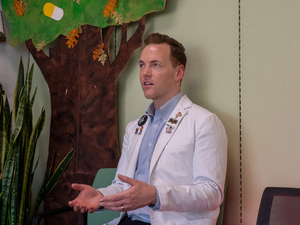
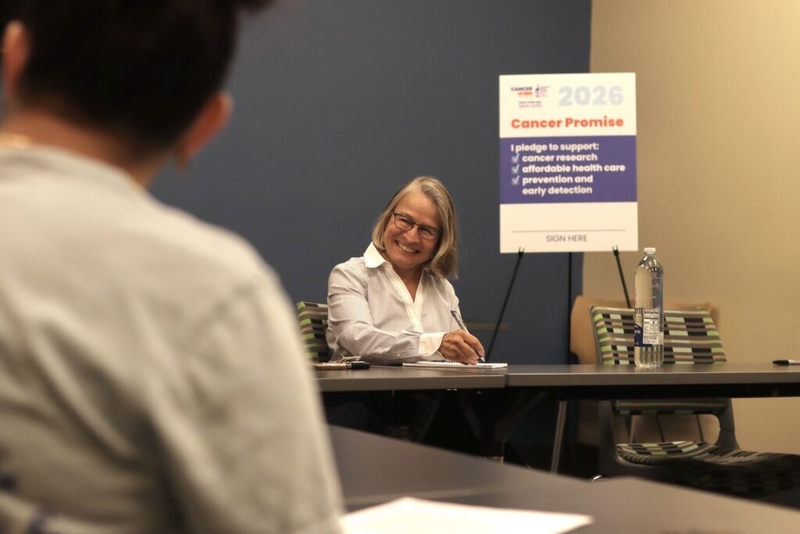
U.S. Rep. Mariannette Miller-Meeks spoke with cancer survivors and researchers in Iowa City Aug. 31, 2026. (Photo by Cami Koons/Iowa Capital Dispatch)
IOWA CITY — U.S. Rep. Mariannette Miller-Meeks spoke Monday with cancer survivors and researchers and signed the American Cancer Society Cancer Action Network’s promise to support the network’s priorities to end cancer.
Miller-Meeks, who is running for reelection in Iowa’s 1st Congressional District, spoke about her efforts in Congress to support cancer research, early detection, screenings and cancer prevention.
The Republican from Ottumwa is an ophthalmologist and said that while her current job is in Congress, “you don’t ever take the doctor out.”
Miller-Meeks said similarly, she also carries the “pain” of her sister dying of breast cancer and her brother from lung cancer.
Volunteers and cancer survivors at the Iowa City event said they had spoken with Miller-Meeks frequently and appreciated her support of cancer issues. At the close of the event, Miller-Meeks signed the American Cancer Society Cancer Action Network’s “Cancer Promise” which is a pledge to “help advance policies and legislation” that support cancer research, access to affordable healthcare and ensure access to cancer prevention services.
The event was part of a series of “coffee cancer chats” hosted by the network to speak with Iowa candidates ahead of the November election about cancer in Iowa, where cancer rates are among the highest in the nation.
Miller-Meeks’ opponent, Democrat Christina Bohannan, participated in the cancer chat in mid-August and agreed to questions posed by the network about increasing cancer research funding, expanding the scope of clinical trial participants and funding for smoking-cessation programs.
Miller-Meeks also answered in the affirmative to the same questions asked of her Monday and noted bills she has already worked on to help address some of the same issues.
Prevention and detection
A bill sponsored by Miller-Meeks to provide Medicare funding for multi-cancer early detection tests was signed into law in February. Miller-Meeks said Monday these blood tests will be a “game changer” for overall cancer detection and “help level the playing field” for rural residents since the blood test can be done anywhere.
“It’s one of the things that is going to really help transform the ability for people, no matter where they live, whether it is, you know, in a healthcare desert in an urban area or whether they’re in a rural area, to have access by a blood test, which then can be sent to a laboratory,” Miller-Meeks said.
She also spoke about bills she has worked on to increase access to 3D mammography for veterans and members of the military.
Miller-Meeks said often when people talk about cancer, they try to say that it’s attributed to one thing – tobacco use or water quality, for example.
“When you actually look at the Iowa Cancer Registry and you look at who has cancer, what kind of cancer, what groups is it most prevalent in, and then you look at their individual data — then you find it’s not as simple as people are trying to make it out to be,” Miller-Meeks said.
She also said prevention is more than just screening, but programs and technology that help to improve overall health.
“I do think that technology has the ability to change behavior, and when it comes to cancer prevention, whether it’s tobacco cessation, whether it’s obesity, whether it’s a sedentary lifestyle, all of those things are impacting our health,” Miller-Meeks said.
Rural care
Miller-Meeks talked about rural healthcare closures, including the recent closure of MercyOne’s clinic in her hometown of Ottumwa. This closure, she said, was due to an “over saturation” of primary care in the region.
Miller-Meeks said lack of access in rural areas was part of the reason she was passionate about initiatives like multi-cancer early detection tests and other efforts that increase cancer screening and prevention.
Iowa was the first state in the nation to receive funds from the Rural Health Transformation program, which was funded in the Republican bill known as the One Big Beautiful Bill Act. Iowa received $209 million from the program, which aims to improve rural healthcare access and the quality of outcomes with a hub-and-spoke model.
Miller-Meeks said she has spoken with Dr. Mehmet Oz, administrator of the Centers for Medicare and Medicaid Services, and said that if other states don’t “get their act together” to apply for the Rural Health Transformation fund, “we’re more than happy to have more awards.”
Miller-Meeks has faced criticism over her support of the One Big Beautiful Bill Act in part because of its cuts and changes to Medicaid programs. According to the health policy publication KFF, changes to the program from the spending bill are expected to result in an increase of 10 million people by 2034 who will be without health insurance.
Research
Miller-Meeks said it was “nice” to be joined by several University of Iowa cancer researchers who spoke with her during the cancer chat. She agreed to support increased funding for the National Institutes of Health, and other federal agencies that do cancer research, but she noted it’s important to look at what’s being funded in addition to the amount.
“It’s not just … how much funding goes to the NIH, but what the NIH does with that funding,” Miller-Meeks said.
She said she wants that funding to go to research that is “taking a risk” and not doing the same trials that another institution is looking at. And, she said she wants to support research happening across the country, not just “on the coasts” or at Ivy League schools.
“Great research happens right here in Iowa, right here at the university,” she said.
Des Moines, IA