LGBTQ Arizonans emerge as a voting bloc that could tip close races
Aug 28, 2026 | 6:00 pm ET
Description
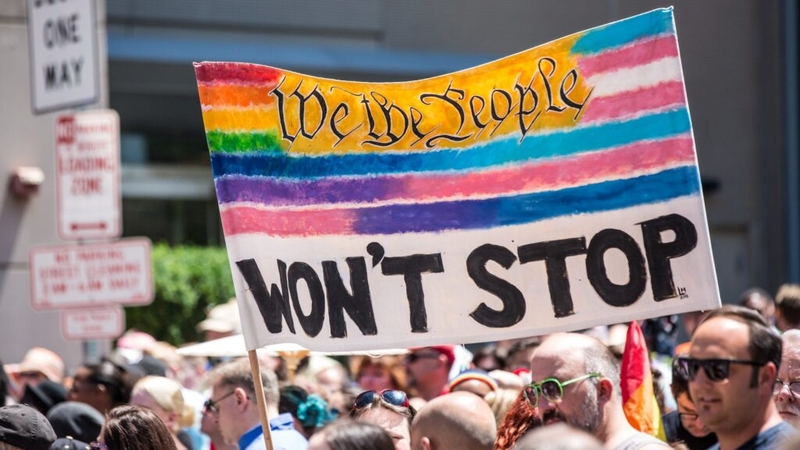
Photo by Devon Christopher Adams (modified) | Flickr/CC BY-NC 2.0
More than one in every eight Arizonans identify as LGBTQ, making up a demographic group that may prove consequential in the state’s close elections.
A recent analysis of federal data across four years conducted by the Human Rights Campaign, the country’s largest LGBTQ advocacy organization, estimated that 13.34% of Arizonans identify as LGBTQ. Ramiro Sarmiento, a spokesperson for the organization, said the number signifies electoral power.
“We’re not a demographic footnote,” he said. “The LGBTQ community is a voting bloc that can decide control.”
Although long a stronghold for Republicans, Arizona in the past decade has transformed into a battleground state where top races are decided by slim margins. In 2022, Gov. Katie Hobbs defeated her Republican opponent, Kari Lake, by a little over a percentage point. That same year, Attorney General Kris Mayes eked out a victory over Republican Abe Hamadeh by a mere 280 votes.
Sarmiento warned that politicians who refuse to court LGBTQ voters — or outright antagonize them with anti-LGBTQ policy positions — risk electoral consequences. He pointed out that voters who identify as LGBTQ are more involved in politics than the rest of the electorate.
“We’re talking about a demographic that is highly engaged, that is very energized to vote,” he said. “And now, with the growing influence, we are going to be a consequential and politically motivated constituency that is poised to deliver a winning margin in competitive races, including in Arizona.”
A survey of voters across several states earlier this year found that 92% of people who identify as LGBTQ plan to vote in this year’s midterms, while only 68% of respondents who don’t identify as LGBTQ expressed a similar intent.
In Arizona, LGBTQ rights are on the ballot in November. Republican lawmakers placed a wide-ranging proposal on the ballot that would make it impossible for trans girls to join sports teams, even privately run ones like Little League, that reflect their gender identity. The measure would also open up schools to lawsuits if a trans person uses a bathroom or locker room that best fits who they are.
And while candidates for the state’s top leadership positions aren’t running on a campaign that emphasizes LGBTQ issues, the question about whether the state has a right to legislate LGBTQ people out of existence remains an underlying theme.
Hobbs spent the last four years consistently vetoing discriminatory proposals from the GOP-controlled legislature that sought to make it more difficult for trans and LGBTQ students to be themselves at school. Meanwhile, U.S. Rep. Andy Biggs, who hopes to convince voters to award him the governorship, supported legislation as a state legislator that would have allowed businesses to refuse service to LGBTQ customers based on their religious beliefs, and claimed that trans kids are “children infected by the woke mind virus.”
In the attorney general’s race, Mayes faces a challenge from state Sen. Warren Petersen, who has repeatedly authored and supported anti-LGBTQ legislation. The Gilbert Republican, who is president of the Arizona Senate, helped pass a 2022 law barring trans girls from joining school sports teams that align with their gender identity and pushed a proposal that would have prohibited trans minors from receiving hormone therapy or puberty blockers. When two trans teens filed a lawsuit against the state’s athletic ban, Petersen went to court to argue for its preservation when Mayes refused to defend it.
Despite the increasing electoral power of LGBTQ Arizonans, Republican politicians continue to pursue policies that are actively hostile towards them in an effort to attract base voters. Sarmiento said that strategy won’t be successful for long.
“The things that play with the base don’t play with the general electorate,” he said. “As this community grows, it will eventually eclipse the political benefits that (Republicans) have seen and exploited for years. They’re doing that at their own electoral peril.”
More than half of LGBTQ adults, 54%, are younger than 35, according to the analysis from the Human Rights Campaign. Sarmiento said that means the demographic is set to stick around and continue adding political pressure.
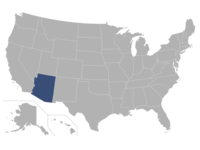
Phoenix, AZ