At their 1876 convention, Colorado Democrats hoped for an upset in the first state elections
Aug 28, 2026 | 6:10 am ET
Description
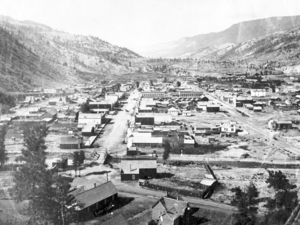
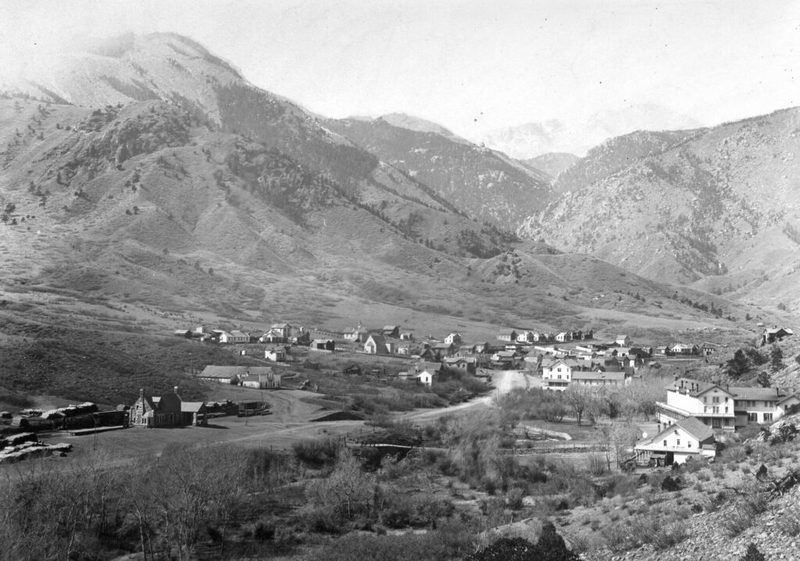
The town of Manitou Springs is pictured in this photograph dated between 1881 and 1883. Colorado Democrats held their first-ever state political convention there in 1876. (Courtesy of Denver Public Library Special Collections, X-1527)
One week after Republicans met in Pueblo, Colorado Democrats convened their first state convention at Manitou Springs on Aug. 29, 1876.
A special train from Denver, ferrying as many as 200 convention-bound passengers, “was handsomely decorated with flags and banners bearing the name of (Democratic presidential and vice-presidential candidates Samuel) Tilden and (Thomas) Hendricks,” reported the Colorado Springs Gazette. “All the vehicles in this place and Manitou were pressed into service to convey the delegates and others to the Springs.”
One nomination to be made by the convention was never in doubt. Thomas Patterson, an Irish-American Denver lawyer, had become the first Democrat ever elected to higher office in Colorado in 1874, when voters elected him as the Territory’s non-voting delegate to Congress.
The “Little Democratic Tiger,” as the Gazette called him, represented the party’s best hope in a state that was otherwise expected to lean Republican. Patterson opened the convention with a speech made to “deafening cheers,” and he was unanimously acclaimed as the Democratic nominee to return to Congress, this time as the state’s at-large representative.
In the Centennial State’s first election, scheduled for the first Tuesday in October, Coloradans would in fact vote for the office twice — first to fill out the remainder of a term in the 44th Congress, and separately for a full term to begin in 1877.
Though William A.H. Loveland, a prominent railroad investor from the Democratic stronghold of Golden, was tipped as a possible favorite to win the party’s nomination for governor, in the end it was Denver businessman Bela M. Hughes who got the nod. Like the GOP, the Democrats offered the lieutenant governor post as a concession of sorts to delegates from southern Colorado, nominating Michael Beshoar, a physician and prominent citizen of Las Animas County, as Hughes’ running mate.
The Golden Transcript, a Democratic newspaper, applauded the convention’s nomination of a slate “well calculated to satisfy all portions of the state and all elements in the party,” and predicted that with Hughes “so well and favorably known to every citizen of the state,” Democrats could hope to pull off a major political upset in October.
But most other Colorado papers leaned Republican, and their published accounts of the Democratic convention made no attempt to hide their partisan loyalties. Rocky Mountain News publisher William Byers had been a GOP delegate in Pueblo, and his paper denounced speeches by Democrats for their “extreme partisan bitterness” and “vituperation and personal abuse of Republican leaders.”
“The speaker would undoubtedly have hissed it through his set teeth if had not been so unfortunately deficient in those members,” wrote the News’ correspondent of one delegate. “As it was he breathed out threatenings and slaughter and railing accusation very much as if his mouth had been full of hot mush.”
The News, however, wasn’t entirely incapable of printing kind words about its political opponents, praising the Democratic convention’s “most admirable secretary — Mr. Alva Adams, of Del Norte.”
“Alva is so clever that he is sometimes taken for a Republican,” the correspondent wrote. “He is a candidate for the legislature, and if it is necessary to have a Democrat in that body, he is my choice.”
The 26-year-old Adams would, in fact, be elected to the first General Assembly, and eventually served three nonconsecutive terms as Colorado governor. Both his brother and son would follow him in high office, making 1876 the start of a political dynasty that would last until World War II.
Denver, CO