As September weather turned in 1876, campaigning in Colorado reached a fever pitch
Sep 18, 2026 | 6:00 am ET
Description
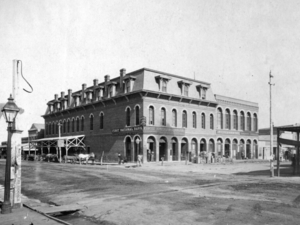
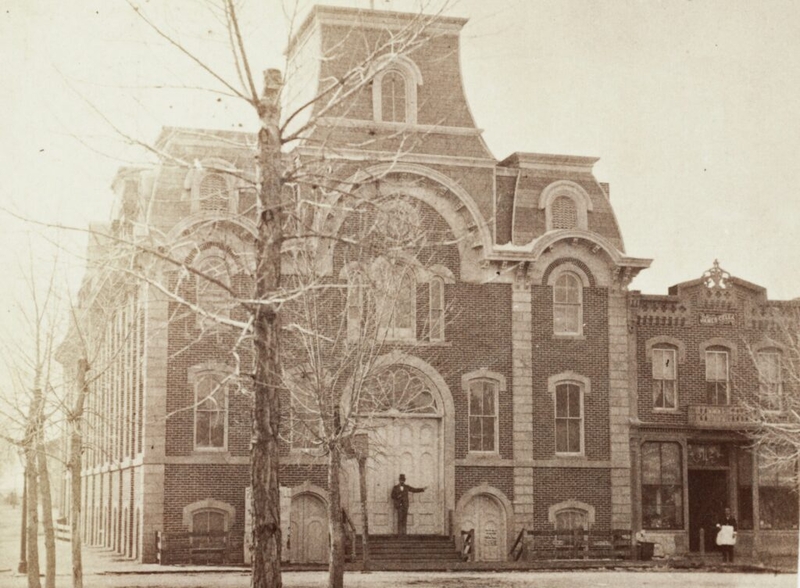
Guard's Hall, at 15th and Curtis streets in Denver, is pictured in this photo from the 1870s. (Courtesy of Denver Public Library Special Collections, X-18553)
The U.S. Army Signal Service recorded a high of 56 degrees Fahrenheit in Denver on the rainy afternoon of Sept. 18, 1876, and the next day the Front Range was “white with snow,” reported the Denver Times.
Along with the first state elections, scheduled for the first Tuesday in October, the changing weather brought the return of evening programming at many of the city’s social clubs and its handful of entertainment venues. At Guard Hall, at 15th and Curtis streets, the Forresters, a family theater company, opened a run of shows on the 18th, with Mrs. Forrester starring as Lady Isabel Vane in a stage adaptation of Ellen Wood’s “East Lynne.”
“The playing of Mr. and Mrs. Forrester in ‘East Lynne’ was very fine, and was so acknowledged by all,” raved the Times. “Mrs. Forrester is a charming actress, and wins the hearts of her audience at the start.”
After brief residencies in Idaho Springs, Georgetown and Golden, the Forrester troupe’s arrival in Denver meant “a fair prospect of a somewhat extended season of dramatic amusements,” said the Rocky Mountain News. General admission was 50 cents, with reserved seats available for an extra 25 cents.
“It is hoped that sufficient encouragement will be given Mr. Forrester to warrant him in running his new enterprise through a greater part of the winter,” the News continued. “It has long been known and asserted by theatrical managers that if there was an opera-house in this city, capable of seating enough people to make it a paying venture for troupes to visit here, they would come oftener and bring stronger companies.”
Meanwhile, “the canvass” in Colorado’s 1876 election, as the newspapers called the month-long sprint of campaigning leading up to Oct. 3, reached a fever pitch, with candidates for statewide office appearing nightly for public addresses in cities across the state. Partisan newspaper editors urged voters to make sure they were registered before the deadline — Sept. 26, one week before Election Day.
“The Democrats are actively hunting up their men and the name of every one of them will be on the list,” warned the pro-Republican News. “There is an undoubted Republican majority in Denver. The one thing necessary is to bring it out, and the first step to secure that result is to register.”
Despite some earlier confusion, state and county officials clarified in mid-September that two different elections for Colorado’s at-large congressional seat would be held in the coming weeks. Democrat Thomas Patterson and Republican James Belford would face off in the Centennial State’s inaugural Oct. 3 election to fill the seat for the remaining months of the 44th Congress. Coloradans would then vote again on Nov. 7 to elect a member of Congress for the full two-year term set to begin in March 1877.
Before either election, however, Coloradans were scheduled to gather in Denver for their first-ever state fair — technically, the annual exposition of the Colorado Industrial Association, the forerunner of the event that would be incorporated in Pueblo in 1886. The News congratulated “our merchants and mechanics (for) taking such an interest in the Fair this season.”
“It is known that there are several who will make large displays of their goods,” the paper reported. “Dealers in agricultural implements will also take advantage of the occasion, to make an extensive exposition in their line to the most appreciative crowd that could possibly be brought together.”
Denver, CO