Our new age of atrocity echoes the darkest days of political persecution in Latin America
Aug 28, 2026 | 4:33 am ET

Description
A U.S. Immigration and Customs Enforcement agent watches a crowd of protesters at Delaney Hall in Newark, N.J., on May 25, 2026. (Photo by Ben Ackman/New Jersey Monitor)
Día de Detenido-Desaparecido — Day of the Detained-Disappeared — occurs Aug. 30.
It was introduced in 1981 by the Latin American Federation of Associations of Relatives of Disappeared-Detained Persons (FEDEFAM) and later adopted and formalized by the United Nations in 2010 to honor victims of enforced disappearance worldwide as the International Day of the Victims of Enforced Disappearances.
This day of commemoration and awareness was born from the struggles of families in Latin American countries tormented by dictators throughout the 1970s and 1980s. These leaders included the likes of Augusto Pinochet of Chile, Jorge Rafael Videla of Argentina, Alfredo Stroessner of Paraguay and Hugo Banzer of Bolivia.
During this period, military-backed rightwing dictatorships conspired with the support of the United States to persecute and eliminate political, social, student and trade-union activists. This deliberate, organized attack on refugees and dissidents was a well-documented transnational operation dubbed Operation Condor. It terrorized Latin American countries in the Southern Cone region.
The mission of the secret police forces was to specifically target political opponents, whom they kidnapped, tracked, and assassinated.
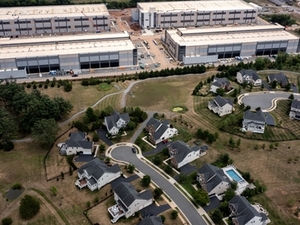
We are experiencing the onset of the same state-sanctioned terror here and across the United States today. The increased activity and presence of U.S. Immigration and Customs Enforcement agents in Kansas and, more directly, the reopening and recent acquisition of the Leavenworth Detention Center by the Department of Homeland Security is just the beginning.
We are witnessing tactics similar to those of Operation Condor. For that reason, I have decided to label our current age of barbarism Operation Eagle.
As of late July 2026, more than 400 people are believed to be detained at the Leavenworth facility. Local police and sheriff departments, deputized as ICE agents through the 287g agreement, are harassing, kidnapping and detaining people in Kansas.
But this is just one part of a larger xenophobic and racist operation that continues to terrorize our nation. Since Donald Trump took office for the second time, his administration has reported that 605,000 people have been deported.
There are currently more than 65,000 people detained. More than 70% of them have no criminal history.
Being an undocumented individual is not a crime. It’s a civil offense, like jaywalking. Every politician or news outlet using the dehumanizing misnomer “illegal alien” is complicit in the degradation of our inalienable rights, and I’d argue they may be, at their core, racist or xenophobic.
People are being disappeared over a misdemeanor in America, while some have chosen to race-bait to score political points with the intention of scaring and angering their base to win elections. They are not informing the general public. They are inflaming them with hateful rhetoric and endangering the lives of Kansans like myself.
I hope for a moment of truth and solidarity Aug. 30th. I hope Kansas and other states recognize the International Day of the Victims of Enforced Disappearances. Let us gather and hold vigils, name these victims together to shed light on those harmed by the current administration’s policies.
Let us continue moving away from isolated mourning and towards collective survival.
And lastly, let us not forget to name the perpetrators and call out those supporting this new American atrocity.
Huascar Medina is a poet, writer, and performer who lives in Topeka. His latest book is Protest as Love Poem. Through its opinion section, the Kansas Reflector works to amplify the voices of people who are affected by public policies or excluded from public debate. Find information, including how to submit your own commentary, here.
Topeka, KS