Rising energy, fuel costs cut into bottom line for Pa. businesses
Aug 27, 2026 | 5:20 pm ET
Description
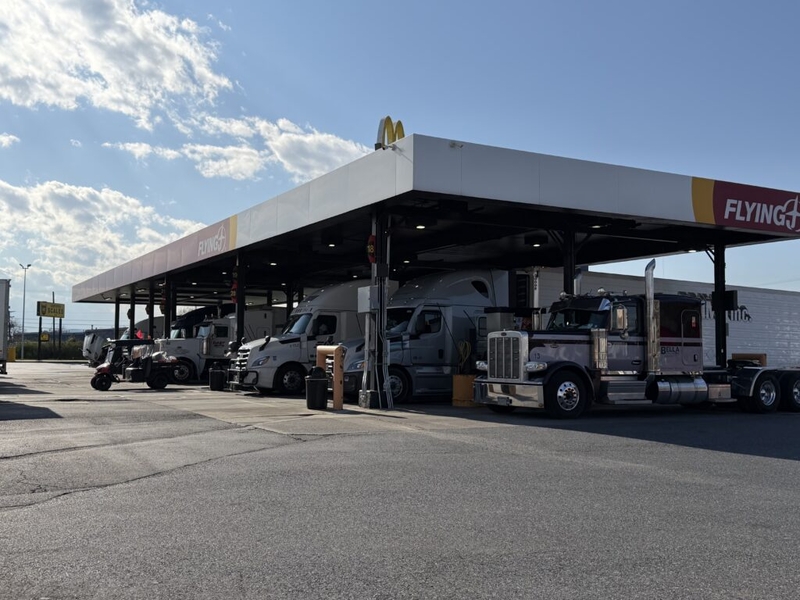
Trailer-tractor drivers fuel up in Harrisburg on April 6, 2026. Diesel fuel prices are a concern among some Pennsylvania businesses. (Photo by Whitney Downard/Pennsylvania Capital-Star)
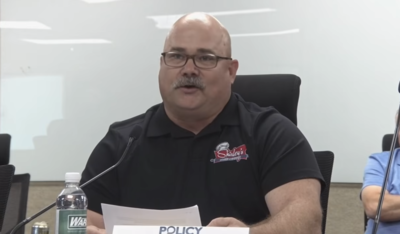
At Shirley’s Cookie Company, Facilities Maintenance Manager Richard Weyant detailed the efforts he’d overseen to keep utility costs down at their Blair County facility. They included thousands of dollars invested to upgrade to LED lighting alongside new and more efficient HVAC systems.
While electricity use went down by 5.7% over four years, he told Republican state lawmakers at an Altoona policy committee meeting on Thursday, their bills increased by 17.4%.
“These numbers show that those investments are working and we’re using less electricity,” Weyant said. “The problem is that the increases in electricity are overtaking all the savings we are trying to get from those investments.”
Their facility needs power to mix, bake and store their products and can’t do without, he continued. But growing energy expenses also eat into the budget when ordering ingredients or delivering baked goods.
“We can’t simply pass every increase along to our customer. We compete with manufacturers in other states and other countries,” he added. “Our customers have choices. If the prices get too high, they can just go buy somewhere else. So a lot of these increases have to be absorbed by us as the business to the best of our ability.”
According to the August 2026 Franklin & Marshall College poll, 57% of Pennsylvanians reported it was very or somewhat difficult to afford monthly utility costs. Nearly half of those surveyed said they were “worse off” financially than they were a year ago.
Both Republicans and Democrats have made affordability a core part of their campaign platforms ahead of the November elections, during which half of the state Senate and all 203 state House seats are up for election. Thursday’s GOP-run hearing initially focused on energy and fuel costs, but quickly turned into a larger critique of their colleagues across the aisle.
For conservative politicians, the answer is simple: Pennsylvania should tap into the extensive natural gas reserves underneath its soil to increase the supply and bring prices down.
“Bad energy policy coming out of Harrisburg is why we are where we are,” said Rep. Josh Kail (R-Beaver), placing the blame squarely on Democratic policies like the “political malpractice” of the Regional Greenhouse Gas Initiative.
Also known as RGGI, the program required power plant owners to invest in clean energy to reduce climate-warming carbon dioxide emissions. Legal action has kept the program on hold in Pennsylvania for years until Shapiro Administration officials agreed to formally withdraw from it in last year’s budget negotiations.
“We have a solution within the commonwealth of Pennsylvania. We just need a Harrisburg that understands that so we can leverage our own resources,” Kail continued.
Adding to the demand are data centers, which have been the topic of other hearings.
But while participants pointed to Pennsylvania’s higher-than-average diesel prices as an expense, none directly mentioned national actions influencing fuel costs, such as the monthslong U.S.-Iran War.
Downstream impacts
Diesel prices in the state have climbed up to $5.93, nearly 32 cents above national prices and $3 more than one year ago, according to AAA.
That “cuts into our margin,” said Bill Ward, Jr., the president and CEO of Ward Transport and Logistics. “And makes offering outstanding benefits and wage increases to all employees challenging.”
Employees, who also juggle rising fuel costs in their daily lives, in turn ask for higher wages or “are forced to take a second job to make ends meet,” he continued.
Weyant added that “money spent covering these higher operating costs is money we can’t use somewhere else,” such as new equipment and automation alongside wages and benefits. He shared that “six automation upgrades totaling half a million dollars (are) on hold, just because of this uncertainty.”
“Automation is especially important to our survival. It helps us remain competitive while removing employees away from the repetitive and physically demanding work into safe, more skilled positions,” he said.
Among the solutions he encouraged lawmakers to investigate on behalf of manufacturers were solar, battery storage, demand reduction technologies, grants and tax incentives.
“When considering your energy policy, I ask you to look beyond just the electric bill or the price at the diesel pump and look at how those costs work their way through a business and what that money could have been used for: an employee raise, adding another job, a safer piece of equipment, an automation project or an expansion,” Weyant said.
“We want to keep investing in Pennsylvania and we want to keep investing in our employees. Affordable, reliable energy helps Pennsylvania manufacturers’ ability to do both,” he continued.
The committee’s third panelist, industry executive Stephanie Catarino Wissman with the American Petroleum Institute Pennsylvania, pushed for more natural gas investment, saying permitting delays and regulatory reviews impeded growth.
“The question is not whether Pennsylvania has the resources necessary to support the growth, but whether policies will allow those resources to be developed and delivered efficiently and effectively,” she said. “If we unleash natural gas, there’s no stopping us.”
Approximately half of the state’s electricity is generated by gas, while environmentalists have pushed for more diversified energy sources, including renewable energy. Natural gas is less polluting than coal, but still contributes to climate pollution.

Harrisburg, PA