A Kentucky law meant to increase housing is now being wielded by a data center developer
Aug 27, 2026 | 5:30 am ET
Description
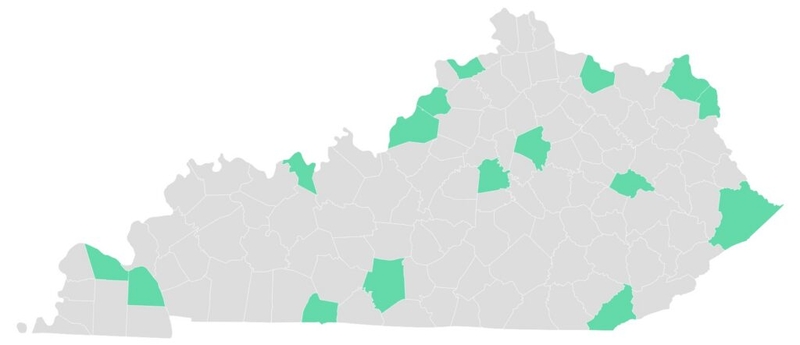
This map shows proposed hyperscale data centers across Kentucky. (Lantern Screenshot)
Last year, very late in the legislative session, Kentucky lawmakers were moving a bill meant to require training for local planning and zoning officials when they added more language.
Sen. Robby Mills, R-Henderson, said legislators had heard about delays involving “business and subdivision development” and litigation “holding up” development.
The solution lawmakers added: limiting who can sue in state courts over planning and zoning decisions to people who live in the same zone as the challenged project.
The new language added in House Bill 321 would go unprotested by lawmakers in both parties — though one long-time environmental attorney raised alarms at the time — passing unanimously through the GOP-controlled legislature and signed into law by Democratic Gov. Andy Beshear.
But more than a year later, that law is now being wielded by a hyperscale data center developer looking to build an approximately 200-acre data center campus and on-site natural gas-fired power generation in Simpson County. The developer TenKey LandCo is trying to use the law to dismiss a lawsuit brought by a local citizens group that has strong concerns about the project.
In March, the Franklin Planning and Zoning Commission, the zoning body for the Simpson County seat of Franklin, approved a preliminary development plan for the data center. The citizens group Franklin Citizens for Responsible Development then sued the commission and TenKey LandCo in April, arguing the commission improperly approved the plan.
Attorneys for the citizens group argue the significant narrowing of who can sue over local zoning decisions, enacted through House Bill 321, is unconstitutional. The constitutionality of the law, and whether the citizens group can sue, is now being weighed by Simpson County Circuit Court Judge Mark Thurmond.
In an Aug. 25 Facebook post, the citizens group wrote the ramifications of how Thurmond rules could extend far beyond just their opposition to the data center project.
“This started with a proposed data center in Simpson County, but the legal question has become much bigger: If a planning or zoning decision directly affects you and your property, should you have the right to challenge that decision in court?” the group wrote in its post.
The group wrote it believed those legal interpretations of KRS 100.347, the state statute that HB 321 changed, could “potentially affect the rights of Kentuckians facing planning and zoning decisions for years to come.”
“That is why we believe every Kentuckian should be paying attention to what happens with KRS 100.347 and our case,” the group wrote.
Mills did not respond to a text message requesting an interview about the law and the Simpson County lawsuit. The Lantern also sent an emailed request for an interview with Mills to spokespeople for the Kentucky Senate GOP caucus, seeking to understand if Mills intended for House Bill 321 to be utilized beyond housing developments.
In response, Kentucky Senate GOP caucus spokesperson Angela Billings wrote in an email they “typically don’t provide comments on pending litigation.”
Emails sent to an email address listed for Franklin Citizens for Responsible Development were not returned Tuesday and Wednesday.
The court fight over who can sue
The way House Bill 321 limits who is eligible to sue over local zoning decisions has to do with how a county or city with planning and zoning rules organizes and designates various “zones” of land within their limits.
Counties and cities with planning and zoning bodies can designate land zones — residential, commercial, industrial and agricultural — and set rules for each type of land zone for what can be built on the land.
Before HB 321, anyone who was “injured or aggrieved” by a decision made by a board of adjustment could sue in their local circuit court over the decision. With the passage of HB 321, only those who own property in the same type of land zone as the proposed project can sue. For example, if a project is in an “industrial” zone, then only people who also own “industrial” land can sue over a zoning decision.
In the case of the Simpson County data center, TenKey attorneys argue the citizens group doesn’t represent businesses and residents, in the same zone as the proposed data center.
Therefore, TenKey attorneys argued in a May filing, the citizens group “does not comply with the strict requirements” of the changed state law to sue, and the lawsuit should be dismissed. Gregory Dutton, one of the TenKey attorneys, declined an emailed interview request citing the pending litigation.
In response, attorneys for the citizens group argue that the judge can still hear the case through other legal avenues and that the changes made to state law under House Bill 321 are unconstitutional because it arbitrarily and irrationally limits who can sue.
Long-time environmental attorney Tom FitzGerald, the former executive director and currently of counsel for the legal nonprofit Kentucky Resources Council, is one of the attorneys representing the citizens group.
In a column published last year, FitzGerald wrote the limitations created by House Bill 321 were “an affront” to Kentuckians by depriving them “access to the courts where a local government decision affects their quality of life and the homes they own or rent.”
FitzGerald wrote that controversial zoning decisions often involve situations where land from two different zones abut each other. For example, he wrote, that could include a farmer who has agricultural zoned land next to land that’s been rezoned as commercial land.
“Under HB 321 neighborhood associations, renters, homeowners living near properties whose zoning has been changed to commercial or industrial, groups concerned with demolition of historic properties or impacts on public parks, and others injured or aggrieved, would be barred from the statutory right to judicial review of action by local governments and their agencies on land use matters,” Fitzgerald wrote in his column.
Another attorney for the citizens group declined to comment on behalf of the plaintiffs, citing the pending decision from the Simpson County judge.
In a June filing, attorneys for the Franklin Planning and Zoning Commission, which is a defendant in the lawsuit, wrote it would be a “huge and unjustified ‘ask’” of the circuit court to declare House Bill 321 as unconstitutional and that the citizens group hadn’t proved the limitations were unconstitutional.
“FCRD’s argument and citations fail to support such drastic action by the court,” attorneys for the commission wrote.
In an Aug. 24 court hearing, Simpson County Circuit Court Judge Mark Thurmond said he had a “pretty good idea” of where he was headed regarding the efforts to dismiss the lawsuits but that there were issues he wanted to “look more carefully at.” Thurmond planned to schedule another hearing in October.

Frankfort