After decades of overhunting, black bears are slowly recolonizing the lower Mississippi River basin
Aug 27, 2026 | 6:01 am ET
Description
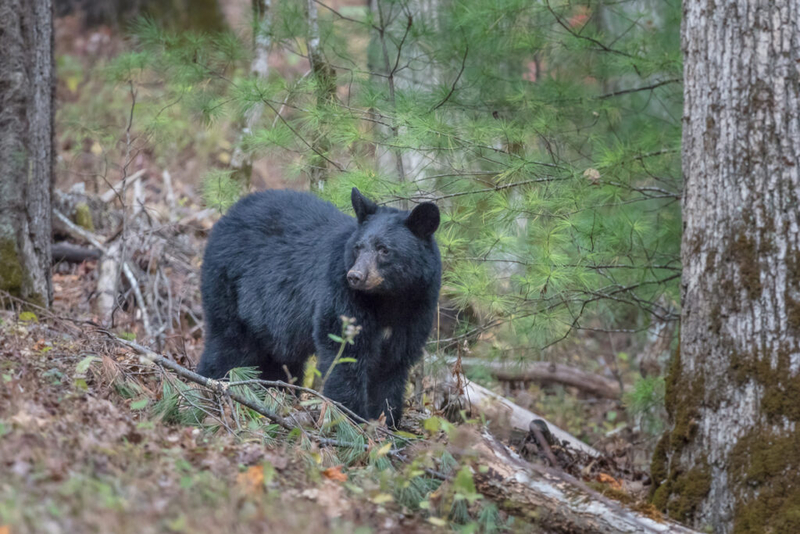
Black bears are typically associated with forest and mountainous habitats, but were once abundant throughout the southeast, including in the Mississippi Alluvial Valley and the Atchafalaya Basin. (Courtesy of Tennessee Wildlife Resources Agency)
On the Fourth of July, a picture of a black bear sitting on the edge of a Tennessee cornfield sparked a social media flurry.
It was the beginning of a deluge. Over the next month, bears would be recorded running through yards and sprinting through a golf course on a rainy day.
Reactions ranged from bewilderment to humor. Many responded with shock — mainly over the location. Because these bears were not being observed in the rolling mountains and hollows of East Tennessee. They were hundreds of miles away, on the opposite side of the state, in the flatlands of West Tennessee.
But these sightings did not surprise Dan Gibbs, black bear coordinator at the Tennessee Wildlife Resources Agency. While most black bears in Tennessee are concentrated in the east, reports from Middle and West Tennessee residents have steadily streamed in over recent years.
The recent sightings are likely several bears, and probably came from bordering states with expanding populations, like Kentucky, Mississippi, Arkansas and Missouri.
“It will be a slow process, but bears are going to recolonize Middle and West Tennessee,” Gibbs said. “You can’t stop it … they’re going to be in Northern Mississippi, they’re going to be in Eastern Arkansas, Eastern Missouri, Western Kentucky. That’s just their historical range, and they’re going to reclaim it.”
Mississippi Alluvial Valley was ‘breadbasket’ for black bears
Black bears were once abundant across most of the United States, including the lower Mississippi River basin. But decades of habitat destruction and overhunting in the 1800s and 1900s threatened to wipe out the population altogether. In Tennessee, the animals’ range shrunk to just 10 secluded, mountainous counties along the state’s eastern border by the early 1970s.
In Mississippi, the population was estimated at just 12 bears when the Mississippi Game and Fish Commission (now Mississippi Department of Wildlife, Fisheries and Parks) was founded in 1932.
One of the biggest misconceptions about black bears is that they are a mountain species.
They’re really “generalists” that can survive — and thrive — in a variety of ecosystems, including swamps and wetlands. In Tennessee, European settlement and hunting pushed bears into the Great Smoky Mountains and the Cherokee National Forest, large areas of conserved land and places that were harder for people to reach. But wetlands are rich, productive ecosystems that make great food sources for black bears.
“The whole Mississippi Alluvial Valley … the historical floodwaters that used to flood miles and miles before the levee system, that was kind of the breadbasket of the black bears in this part of the southeast,” said Anthony Ballard, black bear program leader for the Mississippi Department of Wildlife, Fisheries and Parks.
Mississippi’s core black bear population is concentrated along the Mississippi River in the bottomland hardwood systems — frequently flooded, low-lying areas where oak, hickory, and old-growth cypress trees are common. Increasingly, bears are colonizing the state’s southeast corner, establishing home ranges in a very different habitat: pine stands with thick underbrush, Ballard said.
Another myth about black bears is that they form their dens in caves, according to Janelle Musser, TWRA’s assistant black bear coordinator. In reality, caves are damp and not particularly attractive.
“They are great at finding dens in the habitat that they are living in,” Musser said.
In Southern Alabama, bears often create dens in shallow depressions in brush on the ground. In the Mississippi Delta, dens can be found in cane thickets and tree tops, Ballard said, sometimes as high as 50 feet off the ground in old-growth cypress.
Black bear populations take decades to recolonize.
Female black bears don’t begin to have cubs until they reach 3 years of age, and if they’re eating natural foods, they’ll have a couple of cubs every other year. Young males begin to move away from their mothers at around a year and a half old, sometimes traveling tens or hundreds of miles to establish their own home range, Ballard said. “It’s kind of nature’s way of making sure that there’s not inbreeding.”
Male black bears can have home ranges anywhere from 25 to more than 60 square miles, depending on the availability of food and presence of female bears. Females’ home ranges are much smaller, and a female cub’s home range may overlap with her mother’s.
These large home ranges and frequent movement make it difficult to survey bear populations, Gibbs said.
A population of black bears is generally considered “established” if there are breeding females in the area.
Tennessee has received cub sighting reports in counties just east of Nashville, Gibbs said. But it will probably be another 10 to 15 years before Middle and West Tennessee have a bear population large enough to survey.
Bear hunting
Hunting black bears was a “part of life” in the southeast in the 1800s and early 1900s, Ballard said. “It was as much a part of the hunting world as whitetail deer are today.”
Davy Crockett wrote about killing dozens of bears in a personal account of his life published in 1834. “Of all the hunting I ever did, I have always delighted most in bear hunting,” he wrote. When Crockett arrived in Lincoln County, just north of the Alabama-Tennessee border, around 1809, he noted an “abundance” of deer and smaller game, “but the bear had been much hunted in these parts before, and were not so plenty as I could have wished,” Crockett wrote. He had better luck along the Obion River in the western-most part of the state.
Almost a century later, President Theodore Roosevelt went on a storied hunting trip in Mississippi in 1902, failing to find a bear. When assistants located a bear, tied it to a tree and suggested he shoot it, Roosevelt refused. The story led to the invention of the Teddy Bear.
Mississippi put protections in place preventing black bear hunting in 1932, when the estimated population dropped to around 12 bears.
Arkansas — once called the Bear State — was home to an estimated 50,000 black bears before settlement began, according to the Arkansas Game and Fish Commission. The state banned black bear hunting in 1927 due to declining populations. By the 1950s, an estimated 40 to 50 bears remained in the state, according to an article published in The Mountain Echo in 1979.
Arkansas officials trucked in more than 250 black bears from Minnesota and Manitoba, Canada, to the Ozark and Ouachita Mountains in western Arkansas in the 1960s in an attempt to bolster their population. Today, the Arkansas Game and Fish Commission estimates there are around 5,000 black bears in the state.
Louisiana’s Wildlife and Fisheries Commission closed all bear harvest seasons temporarily in 1956 as the population there plummeted. The state similarly brought 161 bears from Minnesota to the Mississippi and Atchafalaya River basins from 1964 through 1967, but continued habitat destruction as agriculture replaced forest land contributed to continuing population decline, according to Louisiana’s Black Bear Management Plan.
The state banned bear hunting in the late 1980s, and the Louisiana black bear was listed as a federally threatened species in 1992.
At least two dozen of the bears relocated to Louisiana were recorded as killed, according to a 1968 article in The Times-Picayune. Others wandered far from their release sites, with one recorded traveling 260 miles. Musser said moving bears away from their home range is not considered effective practice now, because bears frequently attempt to find their way back, increasing the chance that they are killed on the journey.
A 2003 study found that bears in the Arkansas mountains have genetics indicating they descended from bears released in the reintroduction program.
After population growth, the Louisiana black bear was removed from the federally threatened species list in 2016, and the state opened a limited December hunting season in 2024. Louisiana issued 26 tags to hunters in 2025, allowing each to bag one bear. The number of tags increased to 42 this year, and the state’s wildlife department expanded hunting boundaries. The Louisiana Department of Wildlife and Fisheries estimates there are now around 1,500 black bears in the state.
Black bears were thought to be all but wiped out in Missouri by 1931, but sightings began to tick up after Arkansas began its reintroduction program in the late 1950s. Missouri opened a limited, highly regulated hunting season in 2021, and the University of Missouri Extension now estimates there are around 1,000 black bears in the state.
Tennessee closed its hunting season from 1970 through 1972, and partnered with North Carolina and Georgia in 1976 to share management information, ultimately adding Kentucky, South Carolina and Virginia to the fold. Tennessee’s black bear hunting regulations are focused on reducing poaching and protecting breeding females. Bear hunting is prohibited in more than 450,000 acres of bear sanctuary reserves, including the Great Smoky Mountain National Park. Tennessee estimates its current population at around 6,000 bears.
Mississippi has yet to reopen a hunting season for black bears. The state has been studying its black bear population in a standalone program since 2002, initially collaring individual bears to document their home range habitat and reproduction. The population has since grown to the size that it’s no longer feasible to track each individual.
The program is expected to release its most up-to-date population estimates in the coming weeks. (The state typically waits 10 years between estimates to measure a full generation.) The most recent estimate from 2012 put the bear count between 150 to 300.
“Obviously, there’s a lot more now,” Ballard said.
A bill that would have forced a hunting season in 2027 passed through Mississippi’s Senate last year but stopped in the House. Ballard said there’s no set bear population that the state needs to reach before granting hunting licenses, but there are many considerations, including different management objectives for different populations and parts of the state.
“We don’t shy away from the fact that we want to have a season, because that’s a natural outgrowth of having a sustainable population,” Ballard said. “We just want to make sure that we’re not doing it at the risk of potentially over-harvesting an animal that’s just made a recovery to a point where we can harvest.”
Mississippi wouldn’t want to over-harvest its “core population” along the state’s western edge, he said, but in the southeast, where there are more human developments and less ideal habitat, there may be a different hunting strategy.
Coexistence
Residents and visitors to areas with black bear sightings should start preparing now to live alongside established bear populations, Musser said.
“We don’t know exactly how long that will be until it’s more common per se, but if they continue to wait (to adjust), that’s when we’re going to see those (human-) bear conflicts,” she said.
That means learning more about black bears using resources like bearwise.org and transitioning to using bear-resistant trash cans in residential and public areas.
“We have many people in East Tennessee living with bears, and throughout the country, living in areas with bears, and it’s not a huge safety risk as long as you do a few simple things,” Musser said.
One of those things is preventing bears from eating human food. In Tennessee, it is now a Class B misdemeanor to feed a black bear or fail to secure trash in areas where the state fish and wildlife commission prohibits it.
“I try to impress upon people just how good of a sense of smell that bears have. It’s about seven times better than a bloodhound,” Ballard said. “Anything that a dog can get into, a bear is going to be able to smell better and is going to be much more able to get into that.”
Farmers may see bears attempting to eat crops, mostly corn, Ballard and Gibbs said. But populations in West Tennessee and Mississippi are not dense enough to make a noticeable difference.
Compared to other animals like deer, Ballard said, bears cause much less crop damage. Gibbs said people have had success using herd dogs to keep bears, coyotes and other animals away from livestock and crops.
For smaller-scale farms and chicken coops, electric fences may be a solution, Musser and Ballard said.
And then there’s hazing — using loud noise deterrents or paintball guns to scare bears away.
“Stuff that doesn’t cause long-term harm, but enough that it makes that bear uncomfortable,” Musser said.
Chris Dowdy, 52, grew up in Paris, Tennessee. He has a picture of his grandmother from the 1950s standing next to a bear in her yard. He describes himself as an outdoorsman and hunter. “Ironically,” he said, “my grandmother … and myself are descendants of Davy Crockett.”
He now lives in Dover, which has had several recent reported bear sightings. Dowdy said he welcomes the animals’ return to their original habitat.
Their presence in West Tennessee is literally written into the region’s maps, he said: Dover abuts the Cumberland River, and has an area called “Cub Creek.” To the east, an unincorporated town called Bear Spring was named for the place where the supposed last bear in Stewart County was killed, according to a 1928 article in the Nashville Banner.
“It’s not abnormal (for bears to coexist with people), it’s just abnormal to us because it’s not something we’re used to having,” he said.
This story is a product of the Mississippi River Basin Ag & Water Desk, an independent reporting network based at the University of Missouri in partnership with Report for America, with major funding from the Walton Family Foundation.
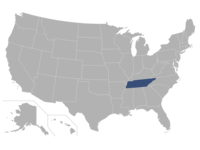
Nashville, TN